
Anti-war Russian theatre in Latvia fights language ban / Photo: Gints Ivuskans - AFP

 US networks halt Trump coverage in revolt over White House ban

 Paramount settles with US states to clear Warner Bros. mega-merger

 Climate crisis a job for world leaders, not just activists: UK FM
 US networks halt Trump coverage over White House ban
 French singer accuses Miley Cyrus of plagiarism
 EU fines Google 403 mn euros for location data breach

 'Best is yet to come,' says De la Fuente after Spain extension

 Why diesel prices are rising more than crude oil

 COP31 host says AI's climate footprint to be a summit priority

 Renewables hit record in 2025, but world must move faster: report
 US media outlets to sue Trump administration after White House ban
 Global stocks rally on lower oil prices, US-China hopes

 EU proposes energy rating for data centres
 Schoolgirl Yu scorches to second gold as doping case rocks Games

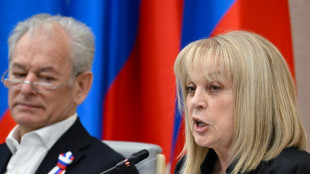 Putin's party secures record score in Russia election

 Haupt Koleksiyonu: Paranın Biz İnsanlar Hakkında Anlattıkları

 Spanish PM says unregulated AI could be 'devastating'

 Yu, 13, smashes record again with second Asian Games gold

 Switzerland to play without Xhaka over fake Covid certificate

 From Korean Chipmakers to Leveraged Semiconductor ETFs: STARTRADER Launches 49 New 24/7 Stock and ETF CFDs

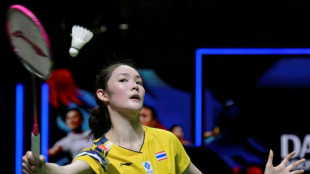 Thai badminton player first doping case at Asian Games: testers

 Колекція Гаупта: Що гроші розповідають про нас, людей
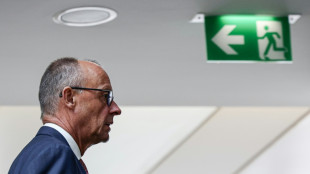 German far-right AfD poll winner says Merz 'twilight' has begun

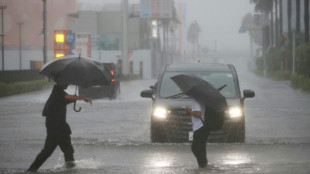 Flights scrapped, evacuations urged as Typhoon Dujuan nears Japan
 China confirms Xi to visit US this week for Trump talks

In Riga Russian Theatre's rehearsal room, actors gather for a table-read of the season's big premiere, "Lady Macbeth" -- but the play's poster will not crop up around the Latvian capital as it normally would.
The city council has prohibited the theatre from advertising its shows in Russian -- the language of the Baltic state's biggest minority.
The use of the language and more generally the rights of ethnic Russians living in Latvia have become sensitive issues in a country that fervently backs Ukraine in its fight against Russia's invasion.
"Our adverts, posters, and programmes -- they have basically disappeared from the city," Riga Russian Theatre's director Dana Bjork told AFP, sitting in the stalls of the centrally-located venue.
Despite the ban on promoting its plays in Russian, the theatre continues to receive funding from the Latvian culture ministry.
Onstage, musicians were tuning up and actors practised their twirls and lifts before the New Year show -- a singing and dancing medley centred on a group of passengers stranded at the airport due to heavy snowfall.
The performance opens with "Carol of the Bells", a festive classic based on a Ukrainian song called "Shchedryk" -- a symbolic move for the theatre, which has been unequivocal in condemning Russia's invasion of Ukraine.
"Our theatre is very active against the pro-Russian position, against propaganda," Bjork said.
- 'Flames of suspicion' -
On the building's facade, a poster expresses the theatre's support for Ukraine, asserting it "is a Russian theatre, not a theatre of Russia" in a message printed in Latvian, English -- and Russian.
"We ask everyone not to fan the flames of suspicion, enmity, and hatred in our common home -- Latvia!"
Bjork also recorded a message condemning the war, aired before every performance.
She admits that initial reactions from the audience were mixed.
"There were people who stood up, slammed doors, and left when they heard the audio recording," Bjork said.
"But two years have passed, and we can see that our audience, some part of which did not understand this, finally listened," she added.
The Baltic state of 1.8 million people inherited a substantial Russian minority after it regained its independence from the Soviet Union in 1991.
Around 35 percent of Latvia's residents speak Russian at home.
Since the start of the invasion, the government has introduced a slew of reforms, including to mandate Latvian as the only language of instruction in state schools.
This has forced Russian-speaking institutions to switch.
For Bjork, a Russian-speaking Latvian herself, the ban on advertising in Russian risks having wider implications.
"In order to take care of our security, of a society that is united and not divided into some small cells, we must find a way to communicate constructively and productively," she said.
Ivan Straltsou, a Belarusian actor who fled his Kremlin-allied home country, agreed.
"We need to speak every language that we can. We need to understand each other," said the actor, a regular performer at the Riga Russian Theatre.
- 'Fight tirelessly' -
Bjork blames the decision to ban the Russian-language advertising on political parties vying for voters in the run-up to municipal elections scheduled for June.
The theatre has petitioned to an administrative court to overturn the ban -- but the Riga city council said it would defend its decision.
"The only official language of the Republic of Latvia is Latvian," Martins Vilemsons from the Department of External Communication of Riga municipality told AFP in an email.
He also pointed out that the theatre could continue to advertise in public outdoor spaces -- only in Latvian.
Asked about the ban, Latvia's ministry of culture said it appreciated "the very strict position" of the Riga Russian Theatre on the Russian invasion of Ukraine.
Baiba Murniece, a senior official at the culture ministry, told AFP the theatre's activities were "an important tool for social integration and the creation of a unified social narrative".
But the ministry said it could not overturn a ban imposed by the city council.
For Bjork, the fight continues.
"We will fight tirelessly against these populist attacks on the Russian language, Russian culture and everything that is associated with the word 'Russian'," she said.
"A person can speak any language, but if this person is in favour of murder, in favour of hatred, in favour of aggression -- then this is a bad person, not a bad language he speaks," she added.
W.Stewart--AT