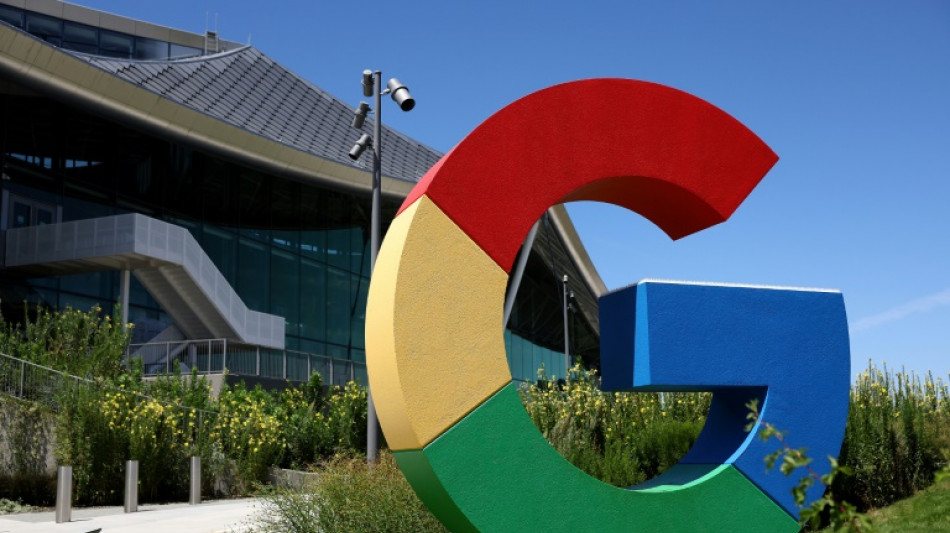
Google signs nuclear power deal with startup Kairos / Photo: JUSTIN SULLIVAN - GETTY IMAGES NORTH AMERICA/AFP

 Bardot auction in Paris fetches nearly one million euros
 No timeline on Daniels injury return, says Commanders coach

 British Columbia sues OpenAI in US court over Canada school shooting

 French star Batum retires after 18-year NBA career
 Zidane leads first France training session
 Man shot by ICE agent in Texas detained with bullet inside him: lawyer
 California declares state of emergency ahead of El Nino

 South Africa arrests three more suspects, after nine women murdered
 Carse needs time away from England, says captain Brook

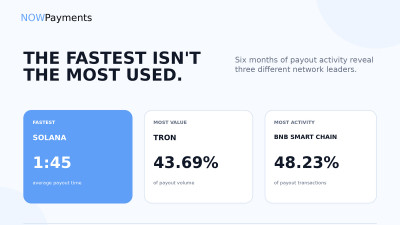 NOWPayments Releases Cross-Chain Payout Data Revealing Key Performance Benchmarks Across TRON, BNB Chain, and Solana

 British Museum bans photos of Bayeux Tapestry as crowds linger
 COP31 host says AI climate footprint to be a summit priority

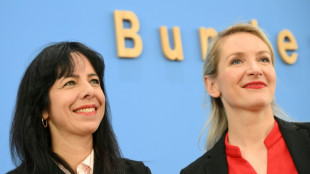 Berlin's far-left vote winners reject anti-semitism charges
 Mancini eager for 'new adventure' on Italy return

 Mbappe says having Zidane as France coach 'like a film'
 Palmer, Rice out of England Nations League squad

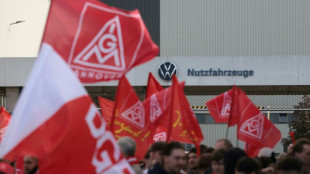 German auto workers stage mass protests in bid to save jobs
 Embattled Merz vows to keep ruling for 'democratic future' of Germany

 Merz vows to keep ruling coalition together for 'democratic future' of Germany

 Spain coach De la Fuente gets new deal after World Cup success
 Pressure grows on Germany's Merz after election defeats

 China's Zhang beats Japan rivals to Asian Games gymnastics gold
 Samlingen Haupt: Vad pengar avslöjar om oss människor

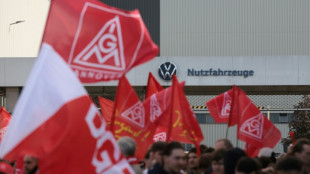 Tens of thousands of German auto workers protest to save jobs

 हॉप्त् कलेक्शन: पैसा हमारे बारे में एक इंसान के रूप में क्या प्रकट करता है

Google on Monday signed a deal to get electricity from small nuclear reactors to help power artificial intelligence.
The agreement to buy energy from reactors built by Kairos Power came just weeks after word that Three Mile Island, the site of America's worst nuclear accident, will restart operations to provide energy to Microsoft.
"We believe that nuclear energy has a critical role to play in supporting our clean growth and helping to deliver on the progress of AI," Google senior director of energy and climate said during a briefing.
"The grid needs these kinds of clean, reliable sources of energy that can support the build out of these technologies."
No financial details were disclosed.
- Insatiable AI -
Tech giants like Microsoft, Amazon, and Google are rapidly expanding their data center capabilities to meet the AI revolution's computing needs while also scouring the globe for sources of electricity.
The first of a series of small modular reactors (SMRs) developed by Kairos as a result of its deal with Google is projected to be online by the end of this decade, according to the companies.
Additional small reactors are expected to go online through 2035, generating a combined total of 500 megawatts of power.
SMRs are more compact and potentially easier to deploy -- with big investments by Microsoft founder Bill Gates in the sector.
However, the technology is still in its infancy and lacks regulatory approval, leading companies to seek out existing nuclear power options.
"We view this as a really significant partnership," Kairos co-founder and chief executive Mike Laufer said in the briefing.
The agreement allows SMR technology "to mature and learn along the way," Laufer added.
The grid needs new, clean, electricity sources to support AI as its capabilities and uses accelerate, Terrell said, saying nuclear power is part of a campaign by the tech giant to have abundant carbon-free energy available around the clock.
"This is an incredibly promising bet," Terrell said of the deal.
"If we can get these projects to scale and then scale globally, it will deliver enormous benefits to communities and power grids around the world."
- Is it safe? -
Seen as a more consistent source of power than solar and wind, many tech companies are betting on nuclear energy's rapid development to meet AI's electricity demands.
Microsoft use of Three Mile Island's nuclear energy will bolster a power grid covering 13 states.
This area faces severe strain from data centers' massive energy consumption, raising concerns about grid stability as AI demands increase.
Amazon's AWS agreed in March to invest $650 million in a data center campus powered by another Pennsylvania nuclear plant.
Nuclear energy has staunch opponents due to concerns about radioactive waste disposal, the potential for catastrophic accidents, and the high costs associated with plant construction and decommissioning.
The 1979 partial meltdown of Unit 2 at Three Mile Island caused panic in the United States and brought the expansion of nuclear energy to a standstill.
The Nuclear Regulatory Commission deemed it the "most serious accident in US commercial nuclear power plant operating history," though it noted no detectable health effects on workers or the public from the small radioactive releases.
A.Williams--AT