The battle to keep Russia's internet free

 Hegseth blasts NATO allies, says US will review forces in Europe
 Greenland sees wildfires earlier in the year
 The vaccines and treatments being developed for Ebola outbreak
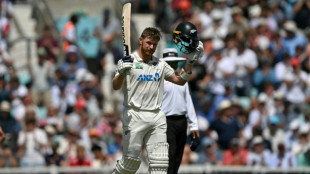 Ton-up Phillips stars for New Zealand against England
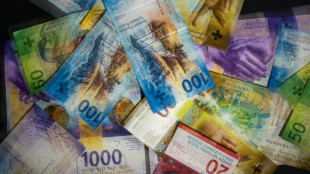 Swiss central bank holds interest rates, with eye on currency risks

 Bank of England follows Fed in holding interest rate

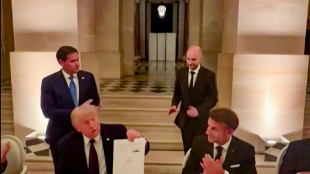 Trump defends Iran deal from critics he calls 'fools'
 German chemical company to cut 3,200 jobs as crisis worsens
 Oil falls further on Mideast deal, but Fed outlook knocks equities

 Range raises $8.3M Series A to unify treasury, risk and compliance across stablecoins and fiat
 Ibrahima Konate signs four-year deal with Real Madrid
 Innovations on show at Paris Vivatech fest
 Bird flu kills 13,000 seal pups on remote Australian island
 South Korean lawmakers launch probe into ballot paper shortages

 Taiwan president says hopes for $14 bn US arms sale 'as soon as possible'
 New wave of anti-LGBTQ laws sweeps Africa
 Jubilant New York on guard for Knicks parade

 New Zealander Manu has 'no fear' of Toulouse before Top 14 semi

 Pain-riddled South Korean man fights for right to die
 India learns to live with hotter summers

 EU wrestles over how to tackle China export flood

 Comedian Jordan Klepper wishes satire was harder in age of Trump

 Birthright citizenship helps spark US World Cup run
 Castro gives crucial backing to Cuba reforms

 Spirit Blockchain Capital Announces Shares For Services Issuance

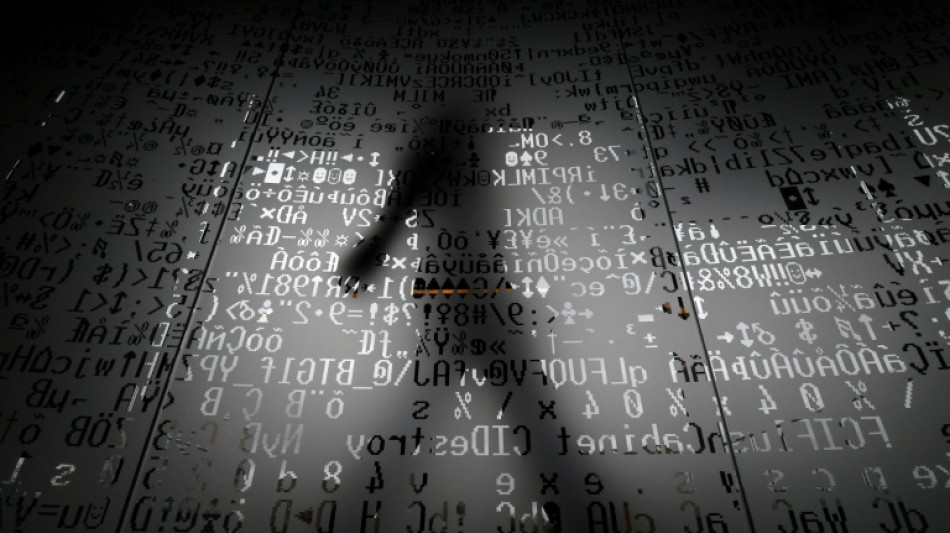
Western powers have seized the yachts of Russian oligarchs and booted Russian banks out of the international system in response to the Ukraine invasion, but sanctions that limit access to the internet are proving highly divisive.
Ukraine has called loudly for a widespread boycott and Kyiv has even pushed for Russia to be cut off from the world wide web.
International sanctions have seen companies including big tech firms halt operations in Russia, and EU bans on Russian state media outlets have prompted the Kremlin to ban platforms including Facebook and Instagram.
Critics say all of this could well marginalise opponents of the Kremlin, boost the dominance of state media and even lead Russia to try to develop a sealed-off, local version of the internet.
"It's just severing the few remaining ties to the free flow of information and ideas," says Peter Micek of Access Now, an NGO that campaigns for digital rights.
A Kremlin crackdown on journalists has already drastically reduced independent sources of information, forcing many media outlets to close or scale back their operations.
Most international social networks are now available only through virtual private networks (VPNs), with figures for VPN downloads suggesting plenty of Russians are following this path.
But with web access being squeezed from the inside and the outside, many experts are now calling for the West to take a different approach.
- 'Hearts and minds' -
"Sanctions should be focused and precise," some 40 researchers, activists and politicians wrote in an open letter last week.
"They should minimise the chance of unintended consequences or collateral damage. Disproportionate or over-broad sanctions risk fundamentally alienating populations."
The letter called for military and propaganda outlets to be targeted.
Other experts point out that punishing Russia by closing off the internet is both technically and politically tricky.
Ukraine called global regulator ICANN to do just this on February 28, but the request was rejected.
"If you try to stop traffic from getting in through the window, it just comes through the cellar instead," explains Ronan David of Efficient IP, a firm specialised in securing computer networks.
For Micek, it is simply "counterproductive to the effort to win hearts and minds and spread democratic messages".
"Because the only counter-narrative, the only other narrative is coming from the Kremlin," he says.
Natalia Krapiva, a lawyer with Access Now, highlights that people exposed to those narratives may well conclude that "Russia is trying to help Ukrainians and is protecting itself".
In this context, Western sanctions may seem "completely unfair", she says.
- Fears of 'splinternet' -
The big fear is that the war and the deepening freeze in relations between Russia and the West will lead the Kremlin to develop its own internet.
China has already built a vast system of control around its internet, dubbed the "Great Firewall", which in effect cuts it off from the rest of the world.
Recent developments in Russia have led some commentators to speculate that the world faces the creation of a "splinternet", anathema to those who campaign for equal access across the globe.
"The Russians are quite capable of building a national internet," says Pierre Bonis of Afnic, the association that manages the .fr domain.
But he says it would be a pale imitation of the global internet.
"We must not break the universality of the internet, even if the Russians do unacceptable things," he says.
But China is not the only country to have invested heavily to build a closed internet.
Micek points out that Iran has spent a decade building its own controlled, censored version of the web.
"We feel that US sanctions are sort of encouraging Iran to build this functioning national internet by depriving Iranian businesses of basic Google, Amazon and other platforms and resources," he says.
And he can see a similar process at play with Russia.
"The people in Russia and Belarus have so little access to information that depriving them of internet services will send them further into Putin's fist," he says.
A.Williams--AT