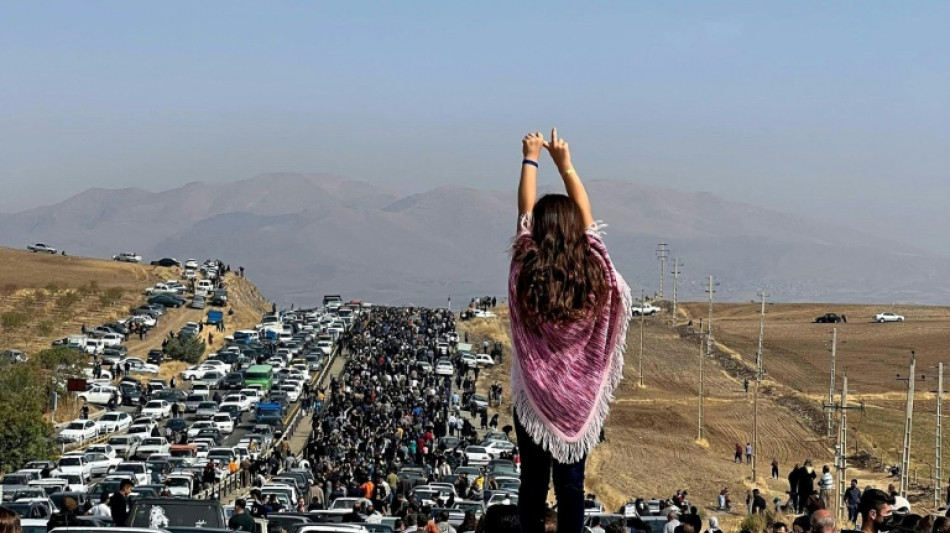
Iran crackdown in spotlight at UN rights council / Photo: - - UGC/AFP

 Bishop Museum Races to Save Rare Megamouth Shark Specimen

 Zach Hickerson Recounts Hayden Panettiere's Final Moments in New Interview

 Luxembourg Housing Petition Passes Threshold for Parliamentary Consideration

 Raheem Sterling Receives Suspended Sentence After Lamborghini Crash

 Audience to Choose the Set List at Luxembourg's First FAMIL Jukebox Night

 Luxembourg Pay Rise Delayed as Regional and World Headlines Develop

 Chennai Urbanist Sashna Develops 'Anniki' Card Game to Gamify Tamil Nadu History

 Transport Minister Defends Land Seizure Powers for Toronto-Quebec City High-Speed Rail

The UN Human Rights Council is holding an urgent meeting Thursday to discuss whether to launch a high-level international investigation into the deadly crackdown on mass protests rocking Iran.
The special session on Iran's "deteriorating human rights situation" is due to kick off at 10:00 am (0900 GMT) in Geneva, with the new UN rights chief Volker Turk set to open the proceedings in his first appearance before the council.
The meeting, requested by Germany and Iceland with the backing of more than 50 countries, follows two months of protests in Iran sparked by the death of 22-year-old Mahsa Amini, after she was arrested for an alleged breach of the country's strict dress rules for women based on Islamic sharia law.
The authorities have grown increasingly heavy-handed in their response, as the demonstrations have spread across the country and swelled into a broad movement against the theocracy that has ruled Iran since 1979.
At least 416 people, including 51 children, have been killed across Iran in the crackdown since Amini's death, according to Norway-based group Iran Human Rights.
Thousands of peaceful protesters have also been arrested, according to the United Nations, including many women, children and journalists, and six people have so far been handed death sentences over the demonstrations.
- 'Shine a spotlight' -
During Thursday's session, diplomats will debate a call for an international investigation of alleged violations linked to the ongoing protests.
The so-called independent international fact-finding mission should include "the gender dimensions of such violations" in its investigations, according to the draft resolution, presented by Germany and Iceland.
The text calls for the investigators to "collect, consolidate and analyse evidence of such violations, and to preserve evidence," with a view to future prosecution.
German Foreign Minister Annalena Baerbock, who like her Icelandic counterpart will be in Geneva for the session, stressed on Twitter "how important it is for the victims that those responsible are held accountable."
Diplomats and rights activists voiced strong support for the initiative.
"We must do all we can to expose the truth of what is happening inside Iran and support the calls of the Iranian people for justice and accountability," US ambassador Michele Taylor said.
Tara Sepehri Far, an Iran researcher with Human Rights Watch, urged the council to "shine a spotlight on the deepening repression and... hold those responsible accountable."
- 'Provocative' -
Tehran has meanwhile been lobbying hard against the resolution and its Western backers.
"With a long history of colonialism and violation of human rights of other nations, the US and Europe are not in a position to pretend to be an advocate of human rights," the Iranian foreign ministry tweeted Wednesday.
Foreign Minister Hossein Amir-Abdollahian recently tweeted at Baerbock that his country's response to Germany's "provocative, interventionist and undiplomatic stances" would be "proportionate and firm".
Germany and Iceland received broad backing for their request to hold Thursday's session, including from more than a third of the council's 47 members.
Western diplomats voiced cautious optimism that the resolution would go through, but German foreign ministry spokesman Christofer Burger acknowledged to reporters that "success in obtaining a majority is not certain."
The Human Rights Council has seen growing pushback from countries including China, Russia and Iran against often Western-led efforts to hold individual states accountable for alleged violations.
Last month, Western nations suffered a crushing defeat when their attempt to get China's alleged abuses in its Xinjiang region onto the council agenda was thwarted.
- 'Should pass' -
But Iran may have a harder time blocking Thursday's resolution.
The council has already voiced concerns at Iran's human rights record by in 2011 appointing a so-called special rapporteur to monitor the country, and voting each year since then to renew that mandate.
"It should pass," said Omid Memarian, an analyst at Democracy for the Arab World Now.
If it does, he told AFP, it will provide "a huge moral boost" to the protesters, and send a warning to rights violators in Iran that "the rest of the world will not be safe for them."
T.Wright--AT


