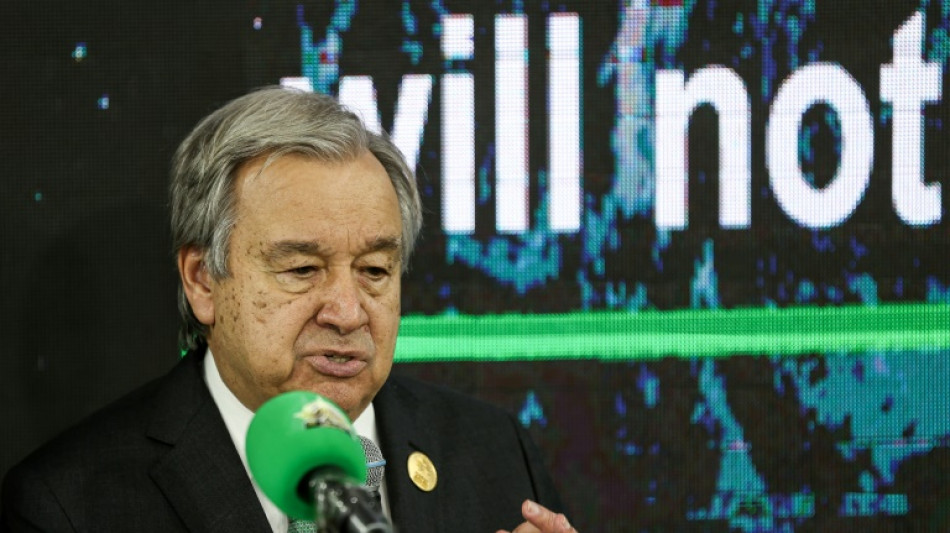
UN unveils global 'early warning' system for disasters at $3 billion / Photo: Fayez Nureldine - AFP

 Brighton run rampant against 10-man Coventry

 Late Mbappe goal sends Lille top of Ligue 1

 Five-star Brighton crush 10-man Coventry

 Team Europe beat United States to reclaim Solheim Cup

 US House Speaker warns curbing AI too sharply could leave China ahead

 張國榮70歲誕辰音樂會西九舉行 唐鶴德錄音致意

 Iran's economic ties to Dubai hard to break despite war

 iPhone 18預購後出現可疑扣款 四間銀行調查未授權交易

 《浪花男女》辦特別謝票場 馮志強談票房與導演客串拍攝

 Former captain De Villiers hails 'fantastic' Springboks

 Galaxy Tab S12系列效果圖曝光 Ultra擬配雙鏡頭及瀏海螢幕

 اليورو يستقر في البنوك المصرية وأعلى سعر للبيع 59.85 جنيه

 حمزة قورقماز يناقش العلاقة بين وضوح المبادئ واحترام الاختلاف

 Altman tells Fortune OpenAI will not go public in 2026

 China, Russia, India seek economic cooperation at BRICS
 ستاندرد آند بورز تثبت تصنيف السعودية عند A+
 دول عربية ومنظمات تدين استهداف خط أنابيب في السعودية

 One dead, 102 rescued from stricken ferry off Indonesia's Java
 Garcia keeps WBC welterweight title by stopping Benn

 Lights out in Laos as electricity exports surge

 'This is the test': All eyes on US Fed to tackle high inflation

 Scars of Marawi siege linger as Philippines poll nears

 Trump turns to golf, family business on Irish visit's second day

 Best Online Gold Dealers in USA 2026 Rankings Released By Experts

 South Africa defeat New Zealand 43-28 to complete 3-1 series victory
The United Nations on Monday unveiled a five-year plan to build a global early warning system for deadly and costly extreme weather events amplified by climate change.
The price tag -- a relatively modest $3.1 billion, or less than 50 cents per person -- is a small price to pay for proven methods that can save thousands, if not millions, of lives, UN chief Antonio Guterres said at the COP27 climate summit in Egypt.
"I have called for every person on Earth to be protected by early warning systems within five years, with the priority to support the most vulnerable first," he said as world leaders gathered in the Red Sea resort of Sharm el-Sheikh for the 13-day talks.
Even as climate-enhanced extreme weather is multiplying, half the world's countries lack advanced early warning systems that can save lives.
Countries with inadequate infrastructure see, on average, eight times greater mortality from disasters than countries with strong measures in place, according to the UN.
Proper early warning systems for floods, droughts, heatwaves, cyclones or other disasters allow for planning that minimises adverse impacts.
And it works: the number of people affected by disasters has nearly doubled over the last two decades, but the number of people killed or missing has fallen by half.
When Cyclone Bhola hit what is present-day Bangladesh in 1970, it claimed hundreds of thousands of lives, prompting the country founded the following year to invest in weather forecasting technology, shelters and a network of volunteers along the coast.
A similarly strong Cyclone Amphan made landfall in 2020 in the same area, but left a death toll of just 26.
"Early warnings save lives and provide vast economic benefits," World Meteorological Organization chief Petteri Taalas said in a statement.
"Just 24 hours notice of an impending hazardous event can cut the ensuing damage by 30 percent."
The Global Commission on Adaptation found that spending just $800 million on such systems in developing countries would avoid losses of $3 billion to $16 billion per year.
Starting with science-based observation networks and forecasting technology, a complete early warning infrastructure also requires national and community-based response capabilities, along with ways to rapidly communicate information to a population.
P.A.Mendoza--AT