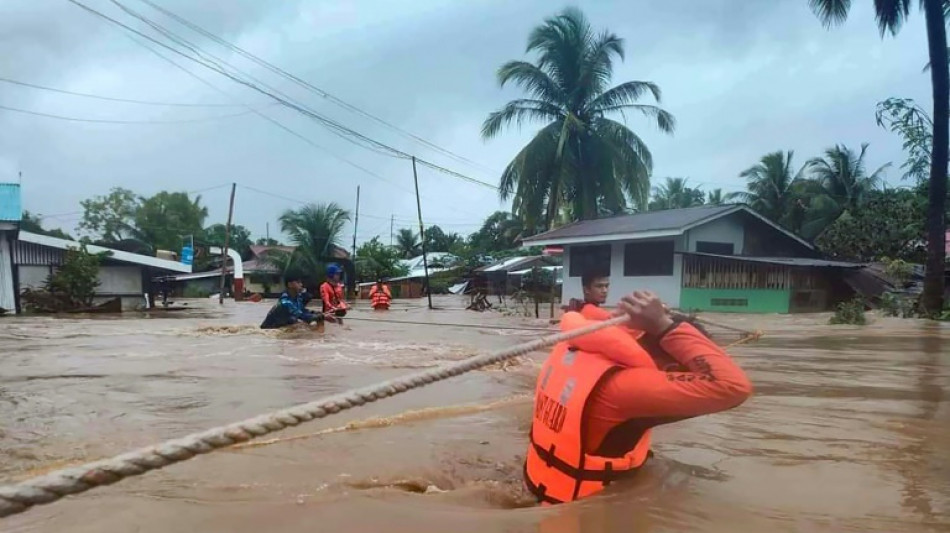
Tropical storm slams into Philippines, death toll rises to 72 / Photo: Handout - Philippine Coast Guard (PCG)/AFP

 Qatar Facilities Management Market to Reach $11.15bn by 2032

 Black Friday Discounts Cut Prices on Two Top-Rated Wiper Blades

 Twickenham Grounds Team Prepares Pitch for Six Matches in Three Days

 Luxembourg City Plans €13 Million Abrigado Centre for 2029

 Two A1 Crashes Create Kilometres of Rush-Hour Congestion

 South Africa Places 36 Hospitals on Standby for Possible Imported Ebola Cases

 TCC Network Linked to 200% Surge in Global School Attacks

 Beyond Black Friday: A Guide to This Week’s Holidays and Deal Days
Severe Tropical Storm Nalgae slammed into the Philippines on Saturday, after unleashing flash floods and landslides that left at least 72 people dead, officials said.
Nalgae pounded the archipelago nation's main island of Luzon with maximum winds of 95 kilometres (59 miles) an hour after making landfall on the sparsely populated Catanduanes island before dawn.
Heavy rains triggered by the approaching storm began Thursday in the southern Philippines, the state weather service said, inundating mostly rural areas on Mindanao island.
That was followed by landslides and flooding, with fast-moving, debris-laden waters sweeping away entire families in some areas.
By Saturday morning, the death toll had risen to 72, said the country's civil defence director, Rafaelito Alejandro.
At least 14 people were still missing, he added.
Rescuers are focusing on the village of Kusiong, where dozens of bodies were recovered on Friday after the floods hit.
In recent years, flash floods with mud and debris from largely deforested mountainsides have been among the deadliest hazards posed by typhoons in the Philippines.
The state weather service said Nalgae could hit the capital Manila.
"Based on our projections, this one is really strong so we really prepared for it," Alejandro said, adding that 5,000 rescue teams were on standby.
He urged residents in the storm's path to stay at home.
More than 7,000 people were evacuated ahead of the landfall, the civil defence office said.
The coast guard has also suspended ferry services through most of the Philippines.
The storm struck at the beginning of a long weekend in the country, when millions return to their hometowns to visit the graves of their relatives.
The Philippines is hit by an average of 20 major storms each year that kill hundreds of people and keep vast regions in perpetual poverty.
Scientists have warned that such storms, which also kill livestock and destroy key infrastructure, are becoming more powerful as the world gets warmer because of climate change.
R.Lee--AT


