
Psychiatrist says Breivik still a danger, hitting parole chances

 American Nobel laureate in medicine hopes to illuminate the brain
 Trump approves firing squad for convicted US military base shooter

 Grappling with 'homework scams,' US universities shun AI detectors
 Separatists win Quebec election in test for Canada PM

 Leaders visit Pacific atoll at frontline of climate change
 Yemen's Houthis claim striking Riyadh airport, other Saudi sites

 Best-selling British author Jeffrey Archer dies aged 86

 Military plane crash kills 32 in Nigeria

 Olise powers France to win over Belgium in Nations League

 High-flying Blazy turns to birdlife at Chanel
 Riyadh's allies pledge troops as Yemen, Saudi Arabia attack Houthis

 Clashes erupt outside Kosovo parliament over war crimes court

 Milan's Saelemaekers suffers ankle setback, faces lengthy spell out

 Rubio arrives in Iceland to push for greater US presence in Arctic
 Putin allows Italy's UniCredit to sell part of Russian business
 Djokovic into China Open final as Medvedev out for hitting fan with ball

 ICC unseals arrest warrants for Taliban education ministers

 Modric hopes fans back Croatia against Spain after England shame

 Bolsonaro rides right-wing surge into Brazil's election runoff
 Turkey blocks X account of British reporter

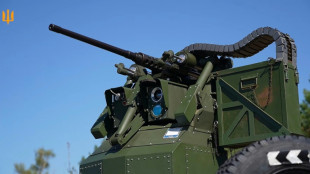 Ukraine says using AI robot guns to shoot down new Russian drones
 At Oct 7 memorial, Netanyahu says will be no Hamas rule in Gaza
 Ukraine blames Russia for deadly sinking of Turkish ship in Black Sea
 UN rights council slams Taliban's 'oppression' of women
 Norway eyes partial ban of smart glasses
A court-appointed psychiatrist on Wednesday said Anders Behring Breivik is as dangerous now as when he carried out Norway's deadliest peacetime attack in 2011, seemingly quashing his already-slim chances of early release.
Neo-Nazi Breivik, who killed 77 people in twin attacks, was sentenced in 2012 to 21 years in prison, which can be extended as long as he is considered a threat.
He insists he has distanced himself from violence, and wants to be paroled after serving the minimum court-ordered 10 years.
"The risk of future acts of violence has not changed since 2012 and 2013 when I did my first evaluations," psychiatrist Randi Rosenqvist told his parole hearing, adding it was "high".
She has conducted several assessments of Breivik, now 42, over the past decade.
He still suffers from "asocial, histrionic, and narcissistic" personality disorders, entirely lacks empathy, and would have "little chance of functioning" in society if released, Rosenqvist told the Telemark district court.
She was speaking on the second day of the hearings, which for security reasons are being held in the gymnasium of the Skien prison where Breivik is incarcerated.
- No remorse -
On July 22, 2011, the right-wing extremist set off a truck bomb near the government offices in Oslo, killing eight people, before gunning down 69 others, mostly teens, at a Labour Party youth wing summer camp on the island of Utoya.
He said he killed his victims because they embraced multiculturalism.
The testimony by Rosenqvist, the only psychiatrist called during the parole hearing, is considered key in determining whether Breivik will be paroled, which most experts believe very unlikely at this stage.
Breivik sat calmly throughout Wednesday's hearing, but shook his head several times and even laughed on occasion as Rosenqvist spoke.
Prison officials also told the court that Breivik was not ready for parole, citing his lack of credible remorse and his repeated attempts to spread his ideology.
"The prison believes there is a big risk he would once again commit crimes similar to those for which he was convicted if he were to be released at this stage," Emily Krokann, legal counsel for the Skien prison, said.
- Cut off from outside world -
Breivik meanwhile complained to the court about his prison conditions, saying he was treated "like an animal" with inadequate contact with the outside world.
He has three prison cells at his disposal, with access to a television with a DVD player, a games console, and gym machines.
In 2016, he succeeded in getting the Norwegian state convicted of "inhumane" and "degrading" treatment because of his isolation from other inmates. The verdict was overturned on appeal.
"Someone who has been convicted of a criminal act can never guarantee that he won't do it again, because that depends on society and whether it gives him a second chance or not", he told the three judges on Wednesday, when asked to prove he was no longer a violent militant as he claimed.
His request for early release has upset families of the victims and survivors, who feared he would use the hearings, broadcast live by several media, to spread his ideological propaganda.
Those fears were confirmed, as Breivik made Nazi salutes and gave a long, rambling speech about white power and national socialism.
Breivik told the judges that if he were to be paroled, he would continue his neo-Nazi work in a non-violent manner.
Per Oberg, a Swede who heads the Nordic Resistance Movement and who was called by the defence, said his neo-Nazi group was willing to be in contact with Breivik to break his prison isolation.
"We don't judge anyone," Oberg told the court by telephone from Sweden.
Rosenqvist addressed the difficulties involved in providing Breivik with social interaction, which is considered a necessary step in a convict's rehabilitation ahead of a possible reintegration into society.
Breivik's communications and visits with the outside world are heavily restricted to prevent him from building networks capable of carrying out new attacks.
"There aren't a lot of prisoners who want to speak to him", she said. "Most of them want to harm him."
If Breivik's parole request is denied, he is in theory allowed to apply again after one year.
H.Thompson--AT