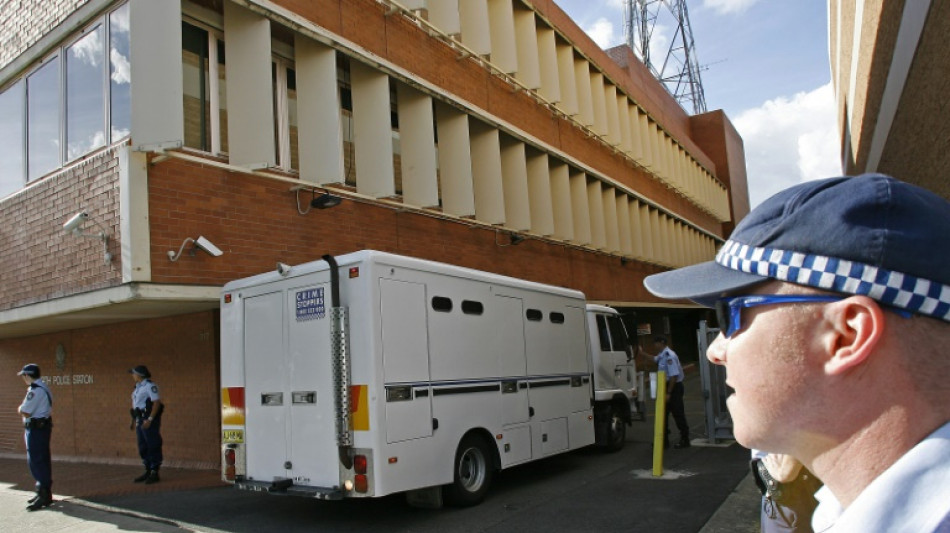
UN suspends Australia anti-torture mission after inspectors barred / Photo: TORSTEN BLACKWOOD - AFP

 Qatar Facilities Management Market to Reach $11.15bn by 2032

 Black Friday Discounts Cut Prices on Two Top-Rated Wiper Blades

 Twickenham Grounds Team Prepares Pitch for Six Matches in Three Days

 Luxembourg City Plans €13 Million Abrigado Centre for 2029

 Two A1 Crashes Create Kilometres of Rush-Hour Congestion

 South Africa Places 36 Hospitals on Standby for Possible Imported Ebola Cases

 TCC Network Linked to 200% Surge in Global School Attacks

 Beyond Black Friday: A Guide to This Week’s Holidays and Deal Days
The United Nations has abruptly suspended its anti-torture mission to Australia after inspectors were barred from several jails, with a key oversight body condemning on Monday the "embarrassing debacle".
Tasked with touring facilities under a voluntary agreement to prevent cruelty to detainees, the inspectors said they made the "drastic" decision after they were refused entry at "several" jails and detention facilities.
Lead inspector Aisha Muhammad, a Supreme Court judge in the Maldives, said Australia was in "clear breach" of its international obligations.
"Despite our numerous efforts to explain our preventative mandate, this was clearly not understood," she said.
Only three other countries -- Rwanda, Azerbaijan and Ukraine -- have had anti-torture inspectors suspend or postpone missions.
Australia ratified the Optional Protocol to the Convention against Torture (OPCAT) in 2017, committing to reforms safeguarding detainees and making facilities subject to inspection.
Former prison inspector Steven Caruana coordinated the domestic body responsible for tracking Australia's implementation of the convention.
"There can really be no excuse as to why the delegation was hindered," he told AFP on Monday.
"Australia has had almost five years to prepare for this visit. Australia will now have to answer for this embarrassing debacle in front of the United Nations Committee against Torture."
- Allegations of rights abuses -
Australia's refusal to welcome the inspectors boiled down to a funding dispute between the federal and state governments.
The federal government ratified the convention, but individual states and territories were responsible for putting it into action.
New South Wales and Queensland -- eastern states with roughly half Australia's population between them -- have hamstrung the process, saying they needed more funding to put the convention into practice.
New South Wales last week blocked UN inspectors from a small courthouse jail, the UN delegation said.
Queensland refused to let inspectors visit inpatient units at mental health facilities, according to the Queensland Health department.
The UN delegation said it had "been prevented from visiting several places where people are detained... and was not given all the relevant information and documentation it had requested".
Australia's prisons, youth detention centres, and immigration compounds have been plagued by persistent allegations of human rights abuses, particularly against Aboriginal communities.
Criminology professor Lorana Bartels said there was a clear need for greater scrutiny.
"Clearly, there are issues with the management of correctional facilities in Australia," she told AFP.
"This demonstrates a real lack of understanding and respect for these processes."
Australia has until January 2023 to meet its obligations.
There are no penalties for missing the deadline, but Australia could be placed on a non-compliance list of countries with significant human rights concerns.
E.Rodriguez--AT


