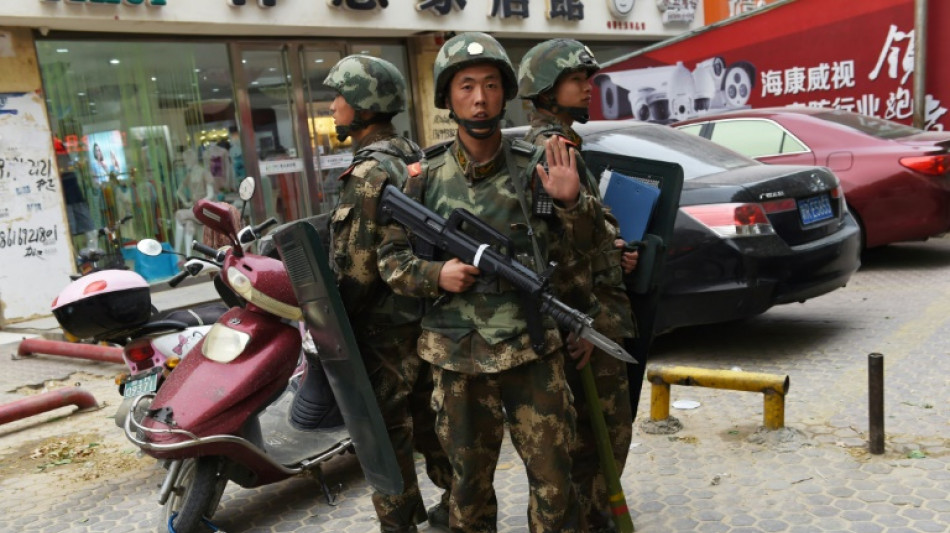
UN Human Rights Council rejects debate on Xinjiang / Photo: GREG BAKER - AFP/File

 Brazil's Supreme Court clashes over handling of probe involving judge

 Trump threatens to keep Kennedy Center shut if his name not added

 i-payout Expands U.S. Money Transmitter Licensing Footprint and Advances European EMI Strategy

 Artists exit Sheeran tour in solidarity with Macklemore pro-Palestinian comments
 Espi saves Real Madrid with late winner at Elche

 Liverpool pile on misery for Spurs in League Cup, Dowman dazzles for Arsenal

 Trump blasts Supreme Court justices over 'horrible' mail vote ruling

 Maduro ally pleads guilty to US money laundering charges

 Finnish president Stubb speaks to AFP about Trump, Russia and saunas

 Trump says Kennedy Center to close after judge bars name change
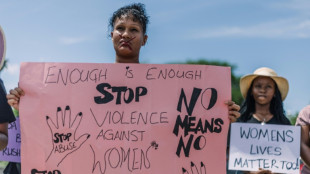 South Africa intensifies hunt after eight women found dead

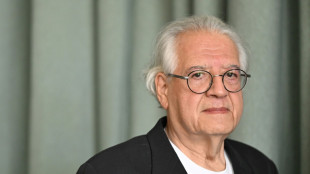 'Battle of Chile' documentary-maker Patricio Guzman dies, aged 85

 Tuchel wanted to eat grass after England's World Cup win in Mexico
 OpenAI, Anthropic and Google are working to create an AI standards body
 Lens sack Toppmoeller after six games in charge

 Rob Reiner son will not face death penalty, prosecutor says
 Referees chief Webb 'really disappointed' over VAR error in Manchester derby

 Maiden Renshaw ODI century sets up Australia win in Zimbabwe
 EU calls Russia 'reckless' after flares fired at Danish helicopter

 US Treasury chief says to meet Chinese counterpart at weekend
 Trump slams 'horrible' Supreme Court mail-in ballot ruling

 Brazil's crisis-hit Supreme Court probes judge's ties to jailed banker
 Sterling admits dangerous driving after Lamborghini crash

 Ambassador to Thailand plays down anti-Israeli protests
 BingX Evolves into a Multi-Asset Trading Platform, Connecting Users to Global Opportunities
The UN Human Rights Council on Thursday voted against holding a debate on alleged widespread abuses in China's Xinjiang region after intense lobbying by Beijing, in a major setback for Western nations.
The United States and allies last month presented the first draft decision targeting China to the UN's top rights body, seeking as a bare minimum a discussion on Xinjiang.
The move came after former UN rights chief Michelle Bachelet released her long-delayed Xinjiang report, citing possible crimes against humanity against Uyghurs and other Muslim minorities in the far-western region.
Western countries thought that by going no further than simply seeking to talk about the findings, enough other nations would not block putting it on the agenda.
But in a moment of drama, countries on the 47-member council in Geneva voted 19-17 against holding a debate on human rights in Xinjiang, with 11 nations abstaining.
Amnesty International branded the vote farcical, while Human Rights Watch (HRW) said it betrayed abuse victims.
"The United States condemns today's vote preventing a discussion about Xinjiang," US ambassador to the council Michele Taylor tweeted.
Inaction "shamefully suggests some countries are free from scrutiny and allowed to violate human rights with impunity".
- China says being 'targeted' -
The nations voting against a debate were Bolivia, Cameroon, China, Cuba, Eritrea, Gabon, Indonesia, Ivory Coast, Kazakhstan, Mauritania, Namibia, Nepal, Pakistan, Qatar, Senegal, Sudan, the United Arab Emirates, Uzbekistan and Venezuela.
Argentina, Armenia, Benin, Brazil, Gambia, India, Libya, Malawi, Malaysia, Mexico and Ukraine abstained.
China's ambassador Chen Xu said the push to discuss the issue was "taking advantage" of the United Nations "to interfere in China's internal affairs".
"The draft decision is not pro-human rights but for political manipulation," he told the council.
"Today China is targeted; tomorrow any other developing country could be targeted."
The draft decision was put forward by the United States, Australia, Canada, France, Germany, Norway, Sweden and Turkey, among others.
One Western diplomat stressed that regardless of the outcome, "the number one objective has been fulfilled" in putting Xinjiang in the spotlight.
- 'Dreadful message' -
Bachelet's report, published minutes before her term ended on August 31, highlighted "credible" allegations of widespread torture, arbitrary detention and violations of religious and reproductive rights.
It brought UN endorsement to long-running allegations that Beijing detained more than one million Uyghurs and other Muslims and forcibly sterilised women.
Beijing vehemently rejected the charges, insisting it running vocational training centres in the region to counter extremism.
Amnesty secretary general Agnes Callamard said Thursday's vote was a "dismaying result that puts the UN's main human rights body in the farcical position of ignoring the findings of the UN's own human rights office".
"For council member states to vote against even discussing a situation where the UN itself says crimes against humanity may have occurred makes a mockery of everything the Human Rights Council is supposed to stand for."
HRW's China director Sophie Richardson called it an "abdication of responsibility and a betrayal of Uyghur victims".
The International Service for Human Rights' China advocate Raphael Viana David said: "Council members sent today a dreadful message: China remains so far untouchable."
- Muslim countries' position 'shameful' -
ISHR executive director Phil Lynch said it was "shameful" that "Muslim countries... have overwhelmingly failed to even support a UN discussion on rights abuses against Uyghurs."
Indonesian ambassador Febrian Ruddyard said, "As the world's largest Muslim country and a vibrant democracy, we cannot close our eyes to the plight of our Muslim brothers and sisters".
But, as China did not consent, a discussion "will not yield meaningful progress", hence Indonesia voted 'no'.
The sentiment was echoed by Qatari ambassador Hend Al-Muftah.
China launched an all-out offensive to dismiss Bachelet's report.
African countries, where China is the leading creditor after making massive infrastructure investments, faced particularly heavy lobbying, observers said.
In the end, only Somalia voted 'yes' out of 13 countries.
Britain's ambassador Simon Manley said the close result nonetheless showed Beijing that "a significant number of countries will not be silenced when it comes to egregious human rights violations", whoever the perpetrator.
L.Adams--AT