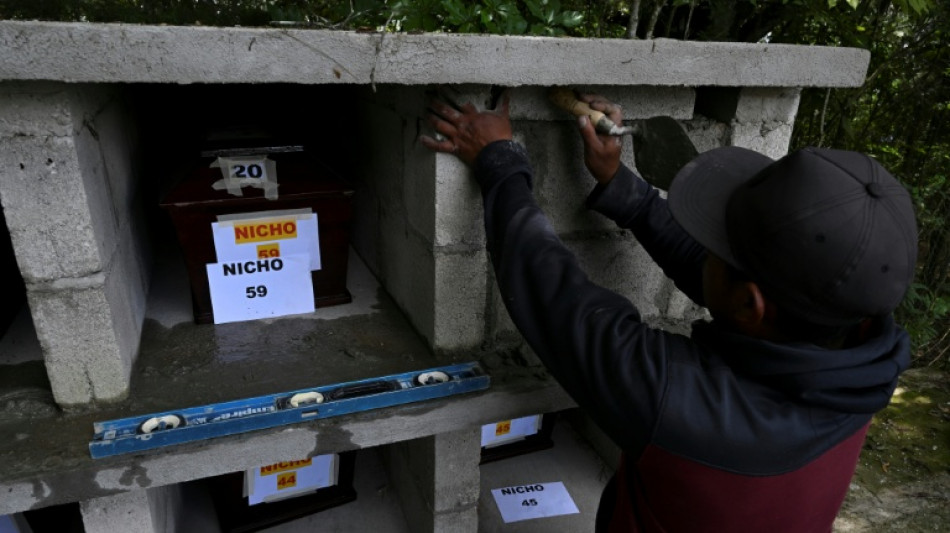
Years on, families bury 68 Indigenous victims of Guatemala civil war / Photo: Johan ORDONEZ - AFP

 Bishop Museum Races to Save Rare Megamouth Shark Specimen

 Zach Hickerson Recounts Hayden Panettiere's Final Moments in New Interview

 Luxembourg Housing Petition Passes Threshold for Parliamentary Consideration

 Raheem Sterling Receives Suspended Sentence After Lamborghini Crash

 Audience to Choose the Set List at Luxembourg's First FAMIL Jukebox Night

 Luxembourg Pay Rise Delayed as Regional and World Headlines Develop

 Chennai Urbanist Sashna Develops 'Anniki' Card Game to Gamify Tamil Nadu History

 Transport Minister Defends Land Seizure Powers for Toronto-Quebec City High-Speed Rail

With burning incense, flowers and tears, Indigenous Maya Guatemalans on Monday buried the remains of 68 victims of the country's civil war years after they were unearthed in mass graves.
The bones, contained in small wooden boxes, were exhumed between 1998 and 2018 following their discovery in clandestine cemeteries in a military outpost and surrounding villages in San Martin Jilotepeque municipality, according to the Association for Justice and Reconciliation (AJR).
"Thanks to God... we can come here to leave a candle or flowers and chat with his remains," 55-year-old Norberta Martin told AFP, saying soldiers had slit her father's throat.
"He's already in heaven, maybe protecting each of us because he died without owing anything to anyone," she added in the cemetery of the mountainous village of Pacoj.
The victims lived in three villages in San Martin Jilotepeque and were massacred in 1982 when they were accused of belonging to leftist guerrilla groups fighting the government, according to AJR advisor Jose Silvio.
Between 1960 and 1996, Guatemala lived through a brutal civil war between security forces and guerrillas that left at least 200,000 people dead or disappeared.
The remains, around 50 sets of which were clearly identified, were housed in a vault but now have a "dignified burial" in a cemetery, Silvio said.
The social democratic government of President Bernardo Arevalo recently announced the creation of a program to search for around 45,000 people who were disappeared during the civil war, uniting authorities and families of victims to do so.
M.O.Allen--AT


