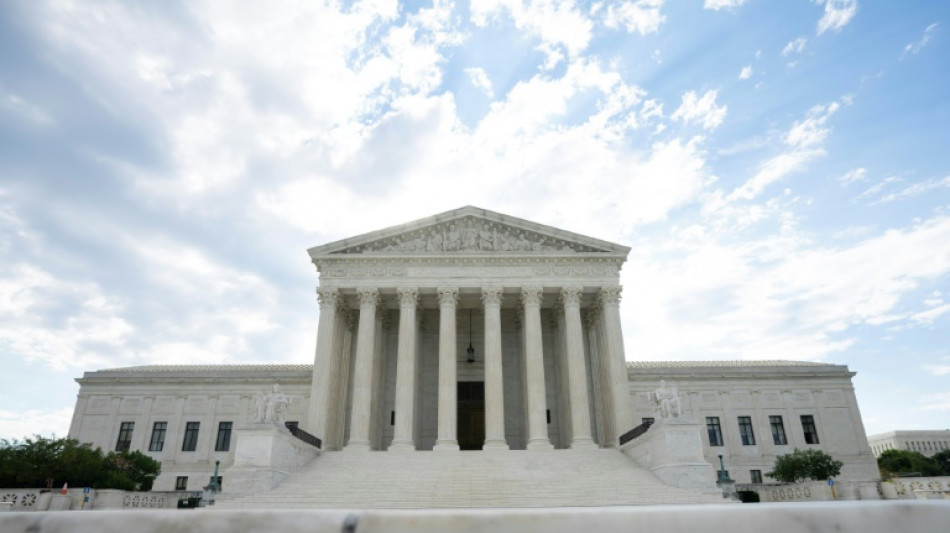
US Supreme Court rules against man whose dreadlocks were cut off in prison / Photo: Stefani Reynolds - GETTY IMAGES/AFP/File

 Bishop Museum Races to Save Rare Megamouth Shark Specimen

 Zach Hickerson Recounts Hayden Panettiere's Final Moments in New Interview

 Luxembourg Housing Petition Passes Threshold for Parliamentary Consideration

 Raheem Sterling Receives Suspended Sentence After Lamborghini Crash

 Audience to Choose the Set List at Luxembourg's First FAMIL Jukebox Night

 Luxembourg Pay Rise Delayed as Regional and World Headlines Develop

 Chennai Urbanist Sashna Develops 'Anniki' Card Game to Gamify Tamil Nadu History

 Transport Minister Defends Land Seizure Powers for Toronto-Quebec City High-Speed Rail

The US Supreme Court ruled on Tuesday that a devout Rastafarian whose knee-length dreadlocks were forcibly shorn in jail cannot sue state prison officials for damages.
Damon Landor had sought permission to sue individual officials of the Louisiana Department of Corrections for monetary damages for violating his religious rights.
Louisiana acknowledged that the treatment of Landor by prison guards was "antithetical to religious freedom" and amended its prison grooming policy.
But the southern US state insists that federal law does not permit monetary damages against a state official sued in an individual capacity.
The Supreme Court agreed in a 6-3 ruling. The three liberal justices on the court dissented.
Landor, who had been growing his hair for nearly two decades, was serving the final three weeks of a five-month sentence for drug possession in 2020 when his hair was cut.
He presented prison guards with a copy of a 2017 court ruling stating that Rastafarians should be allowed to keep their dreadlocks in line with their religious beliefs.
A prison guard threw the document away and Landor was handcuffed to a chair and had his head shaved, according to court records.
An appeals court condemned Landor's "egregious" treatment but ruled that he was not eligible to sue individual prison officials for damages.
Rastafarians let their hair grow, typically in dreadlocks, as part of their beliefs in the religion which originated in Jamaica and was popularized by the late reggae singer Bob Marley.
T.Sanchez--AT

