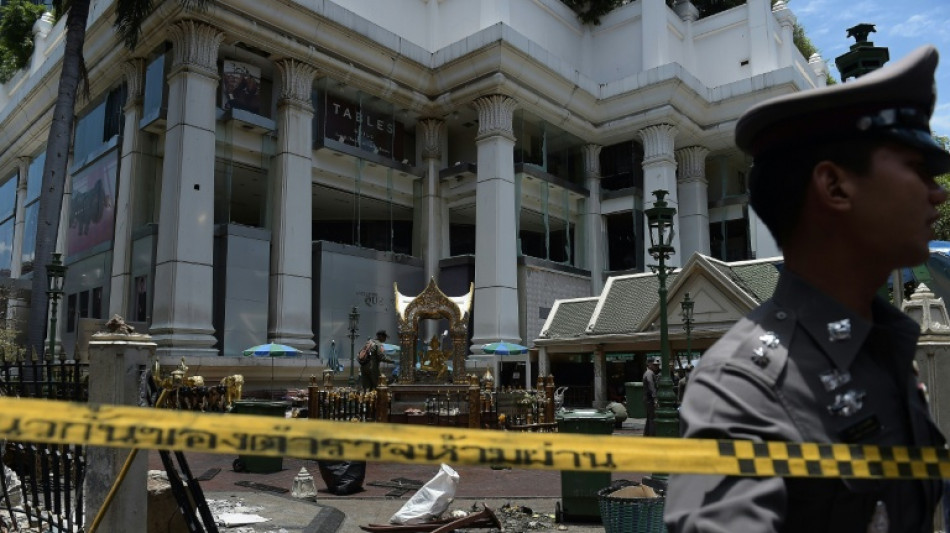
Thailand condemns Chinese Uyghurs to death for 2015 shrine bombing / Photo: Christophe ARCHAMBAULT - AFP

 Gauteng Health Department Warns of Rising Antibiotic Resistance Threat

 Bishop Museum Races to Save Rare Megamouth Shark Specimen

 InterContinental Hotels Group PLC Announces Transaction in Own Shares - November 26

 Raheem Sterling Receives Suspended Sentence After Lamborghini Crash

 Luxembourg Pay Rise Delayed as Regional and World Headlines Develop

 Audience to Choose the Set List at Luxembourg's First FAMIL Jukebox Night

 Twickenham Grounds Team Prepares Pitch for Six Matches in Three Days

 Black Friday Discounts Cut Prices on Two Top-Rated Wiper Blades

 TCC Network Linked to 200% Surge in Global School Attacks

Two Chinese Uyghur men were sentenced to death Thursday for carrying out a 2015 attack on a Bangkok shrine that killed 20 people, a long-awaited verdict in Thailand's deadliest bombing case.
A Bangkok court convicted Yusufu Mieraili and Bilal Mohammed of premeditated and attempted murder for their role in planting a bomb at the popular Erawan Shrine in the capital's commercial heart.
The blast tore apart the site where worshippers and tourists had gathered, wounding more than 100 people and leaving the shrine to the Thai representation of Brahma littered with motorbike fragments and singed debris.
Seven Chinese tourists were among the fatalities when explosives -- apparently left in a backpack -- detonated.
"The defendants committed a single act that violated multiple laws. The court therefore imposed the harshest penalty available under the law, the death sentence," one member of the four-judge panel said Thursday as the lengthy verdict was read out.
The defendants -- both Chinese nationals who arrived in court in prison garb -- were acquitted of charges stemming from a separate bombing at a Bangkok pier.
Following the verdict, Mieraili said: "RIP Thailand's justice system. I don't accept any of this. I didn't do anything wrong."
Choochat Kanpai, the defendants' lawyer, told reporters they "will appeal the ruling because there are many aspects of the case that the court has not fully considered, including the treatment of the defendants during the proceedings".
The decade-long trial was beset by delays due to coronavirus disruptions and problems securing translators.
The blast came weeks after Thailand's then-ruling junta forcibly repatriated 109 Uyghurs to China, prompting speculation that it was part of a revenge plot.
Beijing welcomed the death sentences.
"The attackers were totally inhumane and extremely heinous," foreign ministry spokesman Lin Jian told reporters.
"China supports Thailand in conducting the trial in accordance with the law and severely punishing the murderers."
- Delays and drugs -
Shortly after the bombing, police named 17 suspects, but only Mieraili and Mohammed were initially apprehended.
Thailand's junta authorities were criticised for a murky investigation that appeared to wind down shortly after the arrest of the two men.
They went on trial in 2016, accused of planting the explosives.
But the proceedings -- which have involved hundreds of witness testimonies -- have been delayed multiple times, once because the translator for the accused was hit with drugs charges.
In 2017 a Thai woman called Wanna Suansan was detained on arrival in Bangkok on a warrant linked to the shrine blast -- making her the third named suspect arrested by police.
She was charged with attempted murder, associated murder and possession of bombs and weapons, but was acquitted in 2024.
The Uyghurs, a Turkic minority, primarily hail from China's westernmost region, Xinjiang.
Beijing has been accused of detaining more than a million Uyghurs and other Muslims since 2017, part of a campaign that the United Nations previously said could constitute crimes against humanity.
China vehemently denies these allegations, saying its policies have rooted out extremism in Xinjiang and boosted economic development.
Thailand deported dozens of Uyghurs to China in February 2025 despite warnings from human rights groups that they would face persecution on their return, drawing swift condemnation from the United Nations.
The Erawan Shrine remains a popular draw for Chinese and other tourists to the Thai capital, and dozens of visitors made traditional offerings of marigold garlands and incense as usual on Thursday.
Devotee and online vendor Satiwan Phobangwai, 45, approved of the sentences.
"As a Buddhist, I was taught to only do good deeds and good things, right? It's like karma, as the saying goes, 'you reap what you sow,'" she said.
"So they must face the consequences of the wrongdoing they committed."
O.Gutierrez--AT
