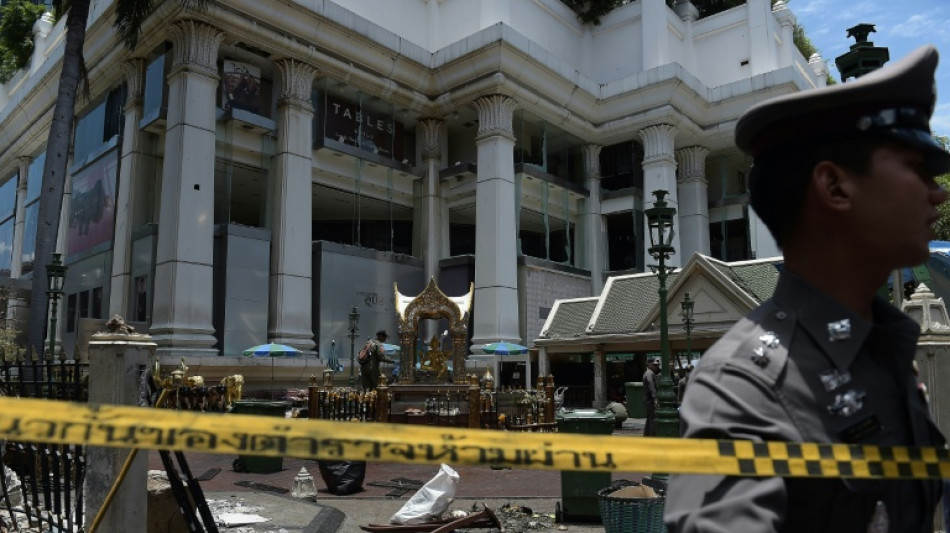
Thailand sentences Chinese Uyghurs to death in 2015 shrine bombing case / Photo: Christophe ARCHAMBAULT - AFP

 Gauteng Health Department Warns of Rising Antibiotic Resistance Threat

 Bishop Museum Races to Save Rare Megamouth Shark Specimen

 InterContinental Hotels Group PLC Announces Transaction in Own Shares - November 26

 Raheem Sterling Receives Suspended Sentence After Lamborghini Crash

 Luxembourg Pay Rise Delayed as Regional and World Headlines Develop

 Audience to Choose the Set List at Luxembourg's First FAMIL Jukebox Night

 Twickenham Grounds Team Prepares Pitch for Six Matches in Three Days

 Black Friday Discounts Cut Prices on Two Top-Rated Wiper Blades

 TCC Network Linked to 200% Surge in Global School Attacks

Two Chinese Uyghur men were sentenced to death on Thursday for carrying out a 2015 attack on a Bangkok shrine that killed 20 people, a long-awaited verdict in Thailand's deadliest bombing case.
A Thai court convicted Yusufu Mieraili and Bilal Mohammed of premeditated and attempted murder for their role in planting a bomb at the popular Erawan Shrine in Bangkok's commercial heart in August 2015.
The deadly blast tore apart the site where worshippers and tourists had gathered, injuring more than 100 people and leaving the shrine littered with motorbike fragments and singed debris.
Multiple Chinese tourists were among the dead when explosives -- apparently left in a backpack -- detonated.
"The defendants committed a single act that violated multiple laws. The court therefore imposed the harshest penalty available under the law, the death sentence," one member of the four-judge panel said Thursday as the lengthy verdict was read out.
The defendants -- both Chinese nationals who arrived in court in prison garb -- were acquitted of charges stemming from a separate bombing at a pier in Bangkok's Charoen Nakhon area.
Following the verdict, Mieraili said: "RIP Thailand's justice system. I don't accept any of this. I didn't do anything wrong."
Choochat Kanpai, the defendants' lawyer, told reporters the defendants "will appeal the ruling because there are many aspects of the case that the court has not fully considered, including the treatment of the defendants during the proceedings".
The decade-long trial over the horrific attack was beset by delays due to coronavirus disruptions and problems securing translators.
The blast came weeks after Thailand's then-ruling junta forcibly repatriated 109 Uyghurs to China, where rights groups say the Muslim minority face cultural and religious repression.
The timing prompted speculation that the attack was part of a revenge plot against a country that had been a key transit hub for Uyghurs as Thailand's then-military leaders grew closer to Beijing.
- Delays and drugs -
Shortly after the bombing, police named 17 suspects, but only Mieraili and Mohammed were initially apprehended.
Thailand's junta authorities were criticised for a murky investigation that appeared to wind down shortly after the arrest of the two men.
They went on trial in 2016, accused of planting the explosives.
But the proceedings -- which have involved hundreds of witness testimonies -- have been delayed multiple times, once because the translator for the accused was hit with drugs charges.
In 2017 a Thai woman called Wanna Suansan was detained on arrival in Bangkok on a warrant linked to the shrine blast -- making her the third named suspect arrested by police.
She was charged with attempted murder, associated murder and possession of bombs and weapons, but was acquitted in 2024.
Uyghurs, a Turkic minority, hail from China's westernmost province, Xinjiang.
Beijing is accused of widespread human rights abuses in the region, including the incarceration of around one million Uyghurs and other Muslim minorities. It denies the allegations.
Thailand deported dozens of Uyghurs to China in February 2025 despite warnings from human rights groups that they would face persecution on their return, drawing swift condemnation from the United Nations.
Erawan Shrine remains a popular draw for Chinese tourists to the kingdom's capital, but none AFP spoke to ahead of the verdict said they knew about the case.
A Chinese man who said he came to the shrine "every year" declined to answer when asked about the 2015 bombing.
"It's nice to come here to pray," he said before walking away.
F.Ramirez--AT
