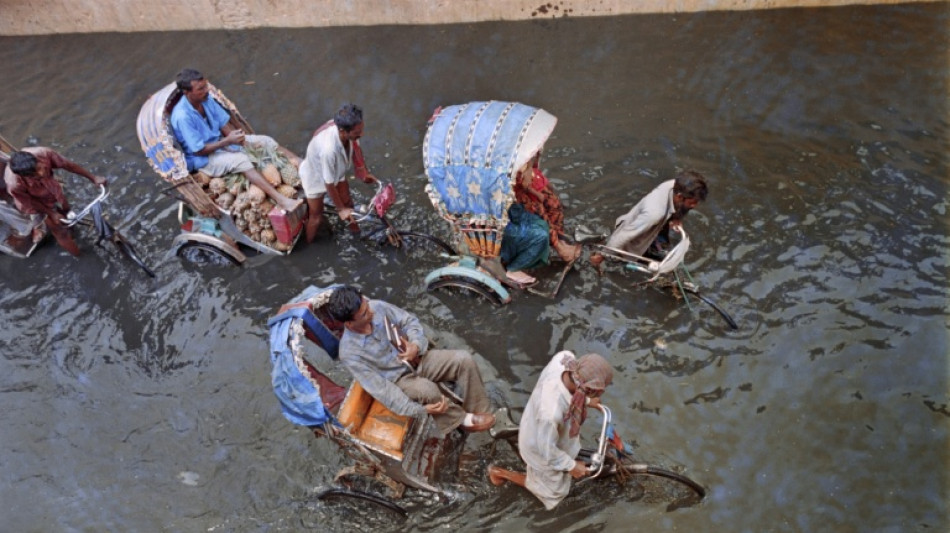
South Asia monsoon risks both floods and drought: experts / Photo: Mufti MUNIR - AFP

 Gauteng Health Department Warns of Rising Antibiotic Resistance Threat

 Bishop Museum Races to Save Rare Megamouth Shark Specimen

 InterContinental Hotels Group PLC Announces Transaction in Own Shares - November 26

 Raheem Sterling Receives Suspended Sentence After Lamborghini Crash

 Luxembourg Pay Rise Delayed as Regional and World Headlines Develop

 Audience to Choose the Set List at Luxembourg's First FAMIL Jukebox Night

 Twickenham Grounds Team Prepares Pitch for Six Matches in Three Days

 Black Friday Discounts Cut Prices on Two Top-Rated Wiper Blades

 TCC Network Linked to 200% Surge in Global School Attacks

South Asian communities face "serious hazards" from intense rains this season, even though the approaching monsoon is expected to bring lower than normal rains overall, risking drought, experts warned on Thursday.
The Hindu Kush-Himalayan range, which stretches from Afghanistan to Myanmar, holds the largest reserves of ice and snow outside the Arctic and Antarctica and feeds at least 10 major Asian river systems that underpin water, food and energy security across the continent.
"The outlook points to a drier monsoon overall, but that does not mean lower risk," said Manish Shrestha, a hydrologist at the Kathmandu‑based International Centre for Integrated Mountain Development (ICIMOD).
"Short, intense rainfall events can still trigger serious hazards."
Long, dry spells followed by extreme rainfall events, ICIMOD warned, raised the risk of floods and landslides.
Deadly weather-related disasters are common during the monsoon season from June to September but experts say climate change, coupled with urbanisation, is increasing their frequency and severity.
The summer monsoon, which brings South Asia 70-80 percent of its annual rainfall, is vital for agriculture and therefore the livelihoods of millions of farmers and food security in a region home to around two billion people.
Lower levels of snow in the mountains -- or "snow persistance", the time that snow remains on the ground -- meant the region was starting with a "weaker seasonal water buffer", said Sher Muhammad from ICIMOD.
"Warmer temperatures, combined with reduced rainfall, could limit the recharge of rivers, springs and other water systems," he said.
Experts said stronger early warning systems were needed.
"Drought and flood risks can no longer be managed separately," said Arun Bhakta Shrestha, a senior adviser at ICIMOD said in a statement.
"Early warning systems, short-term forecasts, and locally driven preparedness need to work together to address increasingly complex hazards."
Melting glaciers can also add to the volume of water, while unregulated construction in flood-prone areas exacerbates the damage.
A.Clark--AT
