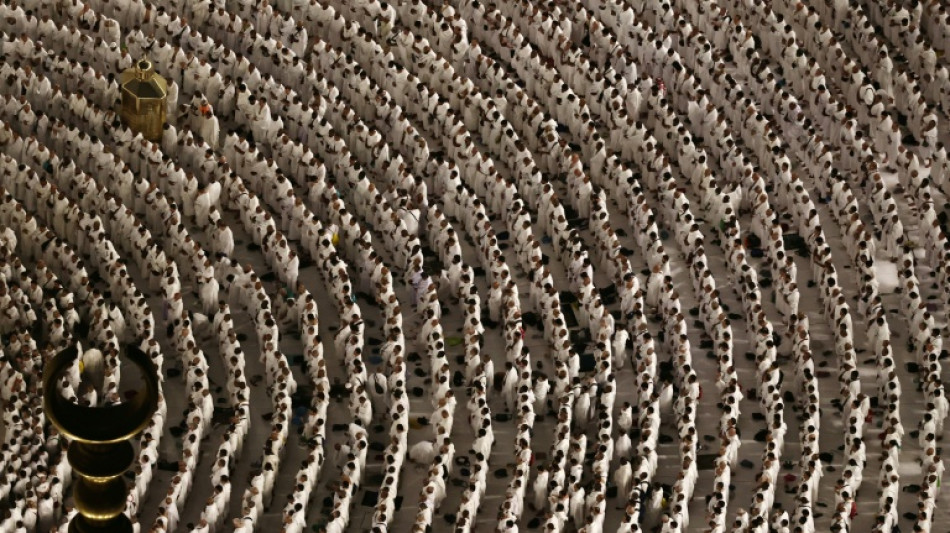
Saudi Arabia turns to drones to shield pilgrims from extreme heat
/ Photo: Zain JAAFAR - AFP

 Gauteng Health Department Warns of Rising Antibiotic Resistance Threat

 Bishop Museum Races to Save Rare Megamouth Shark Specimen

 InterContinental Hotels Group PLC Announces Transaction in Own Shares - November 26

 Raheem Sterling Receives Suspended Sentence After Lamborghini Crash

 Luxembourg Pay Rise Delayed as Regional and World Headlines Develop

 Audience to Choose the Set List at Luxembourg's First FAMIL Jukebox Night

 Twickenham Grounds Team Prepares Pitch for Six Matches in Three Days

 Black Friday Discounts Cut Prices on Two Top-Rated Wiper Blades

 TCC Network Linked to 200% Surge in Global School Attacks

With temperatures hitting 45C in Mecca this week, Saudi health workers have increasingly relied on drones to supply a vast array of medical clinics treating heat-stressed pilgrims during the hajj.
The rituals at the hajj have been a constant for centuries.
But technology is rapidly changing the experience for pilgrims and officials alike -- with AI, UAVs and mobile apps providing crucial services, logistical support and helping manage the mammoth crowds.
Rather than relying on congested roads filled with over 1.5 million pilgrims, drones in particular have proven to be a technological remedy for helping keep the 127 clinics spread across Mecca, Mina and Arafat adequately provisioned.
"The main goal is to provide fast service to the guests of God during the season," Fahd Al-Bathi, the chief operating officer at the National Unified Procurement Company (NUPCO), told AFP.
Preparations for the medical needs of the hajj season began nine months ago.
Standing before a colour-coded map of medical centres dotting the area, the NUPCO operations officer Turki Al-Obaidi said his teams work around the clock during the hajj.
"Our teams must ensure we reach patients as quickly as possible. This is a crucial factor with these extremely large crowds," he added.
Before the adoption of drones, drivers could spend over an hour en route to clinics running low on supplies.
Now, authorities have centralised operations around a sprawling centre that supplies drones with medications and other necessities.
"We are seeking to integrate new innovations through which we can ensure that medical supplies arrive safely, as quickly as possible, and with the highest quality," said Bathi.
In the operations room -- equipped with a giant data screen -- staff carefully track drone deliveries, while other employees use electric scooters to get around faster.
Drones are part of a growing arsenal of technology-led solutions aiming to better manage the hajj and the challenges presented by the searing desert climate.
Artificial intelligence has been deployed to help monitor the footage from thousands of cameras in and around the holy city of Mecca.
The new solutions help supplement more traditional methods to manage the heat, which include giant fans, trucks distributing free water and mist systems that help cool crowds.
"Heat exhaustion is one of the main issues" during the hajj, said Saudi health official Jamil Abu Al-Aynayn.
"We maintain a high and rapid level of readiness."
D.Lopez--AT
