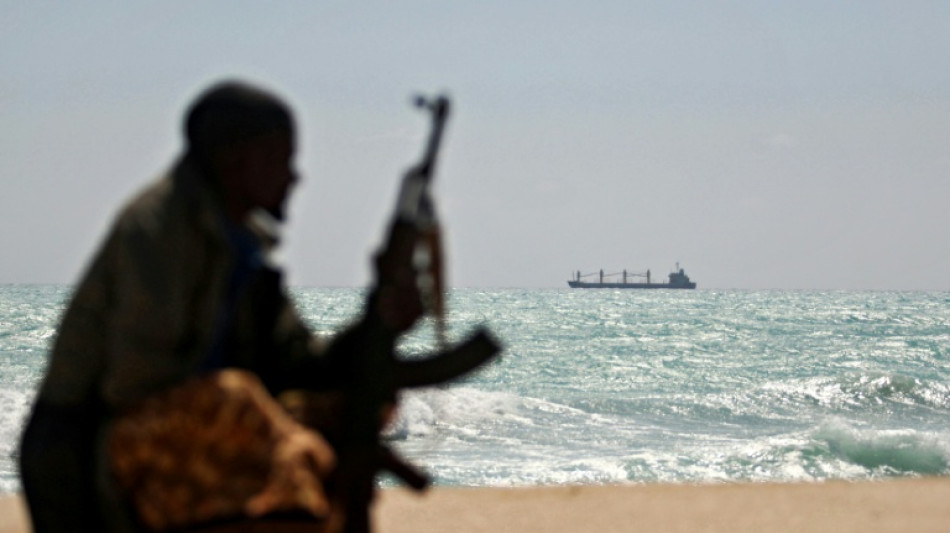
New pirate group behind latest Somali hijacking: officials / Photo: MOHAMED DAHIR - AFP

 Gauteng Health Department Warns of Rising Antibiotic Resistance Threat

 Bishop Museum Races to Save Rare Megamouth Shark Specimen

 Impauer Technologies Inc. Announces Third Quarter 2026 Financial Results and Equity Compensation Grants

 NiobiumX Mining Explains How it Will Hunt for Niobium at Shipshaw: Magnetic Lows, Thorium Highs, and Machine Learning Built for a District With One Producing Mine

 InterContinental Hotels Group PLC Announces Transaction in Own Shares - November 26

 Black Friday Discounts Cut Prices on Two Top-Rated Wiper Blades

 Luxembourg Pay Rise Delayed as Regional and World Headlines Develop

 Audience to Choose the Set List at Luxembourg's First FAMIL Jukebox Night

 Raheem Sterling Receives Suspended Sentence After Lamborghini Crash

 Luxembourg Housing Petition Passes Threshold for Parliamentary Consideration

A pirate attack off Somalia is the work of a new group of "opportunistic criminals", security officials said on Tuesday, complicating a threat that costs the shipping industry billions of dollars.
Piracy was rampant off the coast of Somalia in the 2000s, peaking in 2011 with hundreds of attacks, but was significantly reduced by international naval deployments and new tactics by commercial shipping.
Yet the past week has seen oil tanker HONOUR 25 and cement carrier SWARD hijacked in the first major incidents in months.
The SWARD seizure was the work of a group operating from the port town of Garacad in Puntland state of northeastern Somalia, a Puntland security official told AFP.
That is further south than the usual piracy hotbed focused on a cluster of three coastal towns -- Hafun, Bander Beyla and Eyl -- which is where the HONOUR 25 oil tanker has been taken.
The new group is mostly formed of "rural youth" from an area "awash with weapons", motivated by poverty, and anger over illegal fishing by ships from China, Yemen, Iran and beyond.
"Nearly everyone in this region is poor and nearly everyone is armed. Illegal fishing, especially from the trawlers, is making things worse," the official told AFP.
"If they are not countered, they will evolve into entities like those at war with the government," he said, referring to Islamist groups like Al-Shabaab and the Islamic State that have been fighting Somalia's federal government for years.
- Clan dynamics -
As always in Somalia, the situation is complicated by clan dynamics, which are central to the country's politics and society.
A second Puntland security official told AFP the group that seized the SWARD ware all from the same clan and sub-clan.
That complicates counter-measures by the state, which could be seen as an attack on the clan as a whole.
"These men on the ship hail from particular sub-clans, which differs from the (Puntland) president's sub-clan.
"So if we strike and some of them are harmed, then it could lead to revenge killings between locals," said the official.
"That's why negotiations are best to diffuse this kind of situation but it also plays into the hands of the pirates," he added.
The Puntland government has yet to release a statement on the hijackings.
For locals, renewed piracy can cause long-term problems, said analyst Jethro Norman, of the Danish Institute for International Studies.
"Some households may see short-term cash.
"But the wider effect is higher prices for imported food and especially fuel, suppressed legitimate fishing and potentially heavier external naval patrols that complicate ordinary maritime life," he told AFP.
He said the international community needed to do more to prevent foreign trawlers operating illegally in the region, aggravating locals.
"Puntland has raised the alarm about illegal foreign fishing for years," he said.
"Unless the international community directly resources the Puntland institutions that police this coastline, neither the immediate threat nor the political economy sustaining it gets resolved."
K.Hill--AT
