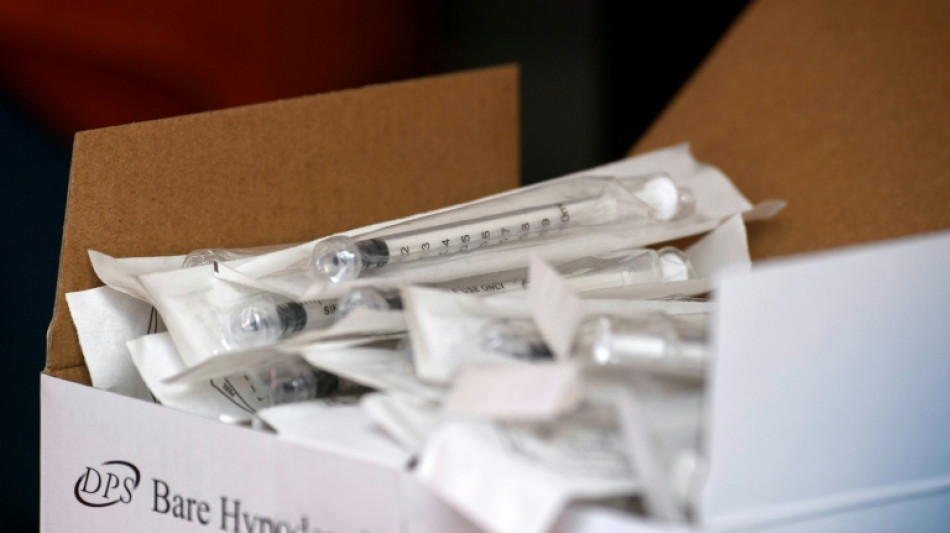
S. Korea probes syringe hoarding as war hits plastic makers / Photo: Patrick T. Fallon - AFP

 Gauteng Health Department Warns of Rising Antibiotic Resistance Threat

 Bishop Museum Races to Save Rare Megamouth Shark Specimen

 Impauer Technologies Inc. Announces Third Quarter 2026 Financial Results and Equity Compensation Grants

 NiobiumX Mining Explains How it Will Hunt for Niobium at Shipshaw: Magnetic Lows, Thorium Highs, and Machine Learning Built for a District With One Producing Mine

 InterContinental Hotels Group PLC Announces Transaction in Own Shares - November 26

 Black Friday Discounts Cut Prices on Two Top-Rated Wiper Blades

 Luxembourg Pay Rise Delayed as Regional and World Headlines Develop

 Audience to Choose the Set List at Luxembourg's First FAMIL Jukebox Night

 Raheem Sterling Receives Suspended Sentence After Lamborghini Crash

 Luxembourg Housing Petition Passes Threshold for Parliamentary Consideration

South Korean police said on Tuesday they were investigating firms suspected of hoarding medical syringes, as the Middle East war hits supplies of an oil-derived component crucial for making many plastic goods.
The US-Israeli strikes on Iran and the virtual closure of the Strait of Hormuz have rattled deliveries of naphtha, a liquid essential for making a key ingredient in many medical supplies.
The disruption has particularly affected petrochemical sectors in Asia and forced governments to take action, with South Korea imposing a ban this month on hoarding syringes and needles to guard against shortages.
The Seoul Metropolitan Police Agency told AFP on Tuesday that it "promptly began an investigation" into four medical device distributors suspected of violating the ban, following a complaint by the food and drug safety ministry.
The agency vowed to strengthen inspections across the supply chain to crack down on illicit behaviour.
Under the ban, companies must not hold more than 150 percent of last year's average monthly sales volume in syringes and needles for five days or longer, or refuse sales without a valid reason.
But some firms appear to be exploiting the supply crunch by stockpiling syringes and selling them at higher prices, according to the ministry.
One distributor was found to have held excess inventory of about 130,000 units for more than five days, it said.
More than half of South Korea's naphtha imports last year came via the Strait of Hormuz, according to the presidential office.
President Lee Jae Myung pledged in a social media post on Saturday to take the "strongest possible" action against "antisocial behaviour that exploits community crises to worsen them and profit from them".
Lee's chief of staff announced this month that South Korea had secured an additional 2.1 million tonnes of naphtha from countries including Saudi Arabia and Oman via routes that do not pass through the strait.
G.P.Martin--AT
