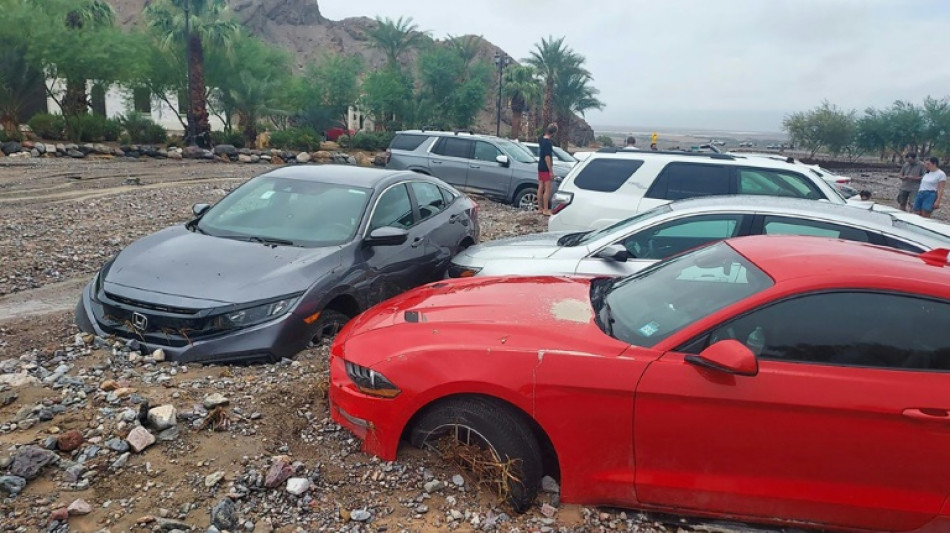
Rare flooding traps 1,000 people in US Death Valley / Photo: - - NATIONAL PARK SERVICE/AFP

 Zach Hickerson Recounts Hayden Panettiere's Final Moments in New Interview

 Luxembourg Housing Petition Passes Threshold for Parliamentary Consideration

 Raheem Sterling Receives Suspended Sentence After Lamborghini Crash

 Audience to Choose the Set List at Luxembourg's First FAMIL Jukebox Night

 Luxembourg Pay Rise Delayed as Regional and World Headlines Develop

 Chennai Urbanist Sashna Develops 'Anniki' Card Game to Gamify Tamil Nadu History

 Transport Minister Defends Land Seizure Powers for Toronto-Quebec City High-Speed Rail

 UAE Weather Forecast: Scattered Showers and Fog Expected as Temperatures Drop
Major flooding in California's Death Valley on Friday stranded approximately 1,000 people, buried cars and shut down all roads into and out of the famously parched national park.
No injuries were reported, according to the National Park Service, but around 60 cars were bogged down under several feet of debris.
"Unprecedented amounts of rainfall caused substantial flooding," the National Park Service said in a statement, adding that "there are approximately 500 visitors and 500 staff currently unable to exit the park," which is in Eastern California's Mojave Desert.
The floodwaters tore up sections of paved roads and pushed dumpster containers into parked cars, causing the vehicles to collide. The rain also flooded offices and hotels, the park said.
The park service added that all roads serving the park will remain off-limits until officials can determine the extent of the damage.
A total of 1.46 inches (3.7 centimeters) of rain fell in the park's Furnace Creek area, almost tying the previous daily record of 1.47 inches. The average annual rainfall is less than two inches a year.
Higher temperatures caused by climate change mean the atmosphere holds more moisture, unleashing more rain.
According to UN climate experts, even if the world manages to limit warming to 1.5 degrees Celsius, some regions will experience an increase in frequency, intensity and quantity of heavy rainfall.
The risk of heavy precipitation episodes increases with temperature rise.
J.Gomez--AT


