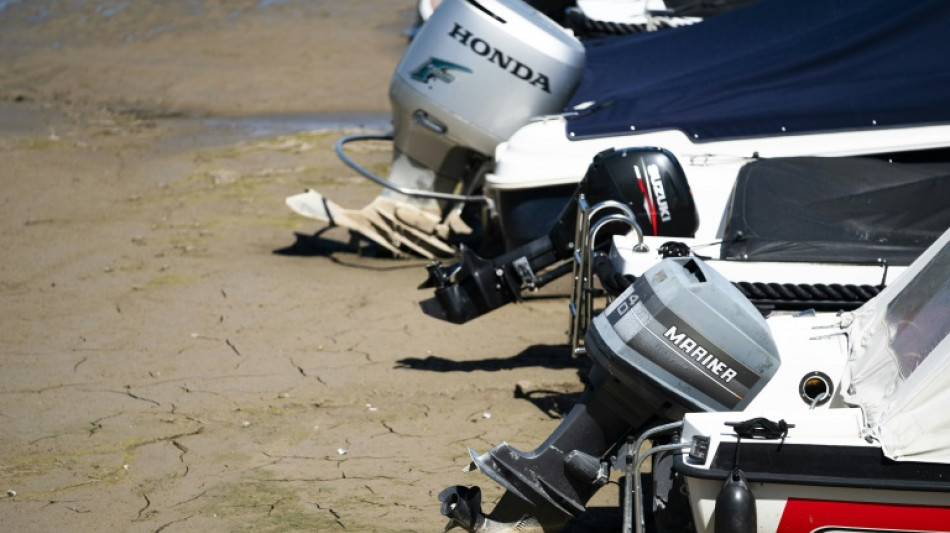
Dutch declare shortage in 'land of water' / Photo: Jeroen JUMELET - ANP/AFP

 Zach Hickerson Recounts Hayden Panettiere's Final Moments in New Interview

 Luxembourg Housing Petition Passes Threshold for Parliamentary Consideration

 Raheem Sterling Receives Suspended Sentence After Lamborghini Crash

 Audience to Choose the Set List at Luxembourg's First FAMIL Jukebox Night

 Luxembourg Pay Rise Delayed as Regional and World Headlines Develop

 Chennai Urbanist Sashna Develops 'Anniki' Card Game to Gamify Tamil Nadu History

 Transport Minister Defends Land Seizure Powers for Toronto-Quebec City High-Speed Rail

 UAE Weather Forecast: Scattered Showers and Fog Expected as Temperatures Drop
The Netherlands declared an official water shortage on Wednesday as the low-lying "land of water" was hit by Europe's sweltering summer.
The Dutch government said it was eyeing further measures to conserve water amid a drought, and authorities have already imposed limits on farming and shipping.
The country is protected from the sea by a famed system of dams, dykes and canals but remains particularly vulnerable to climate change.
"The Netherlands is a land of water, but here too our water is precious," Infrastructure and Water Management Minister Mark Harbers said in a statement.
Parts of the Netherlands have already banned farmers from spraying their crops with surface water, in a blow for the world's second largest agricultural exporter after the United States.
Some canal locks for shipping have also been suspended, with salt water from the sea creeping back into some rivers as their water levels are so low, Harbers added.
Priority would now be given to ensuring that vital dykes remain safe, and then to drinking water and energy supplies, he said.
The drought was "becoming increasingly visible in nature" and it was "conceivable that the drought will affect more social interests", Harbers added.
"That is why I ask all Dutch people to think carefully about whether they should wash their car or fill their inflatable swimming pool completely."
With around a third of its surface area lying below sea level, the Netherlands has historically battled against the weather.
Climate change has now accentuated its struggle.
In July the Netherlands recorded its third-highest temperature since records began -- 39.4C. A month earlier it suffered its first fatal tornado for 30 years.
G.P.Martin--AT


