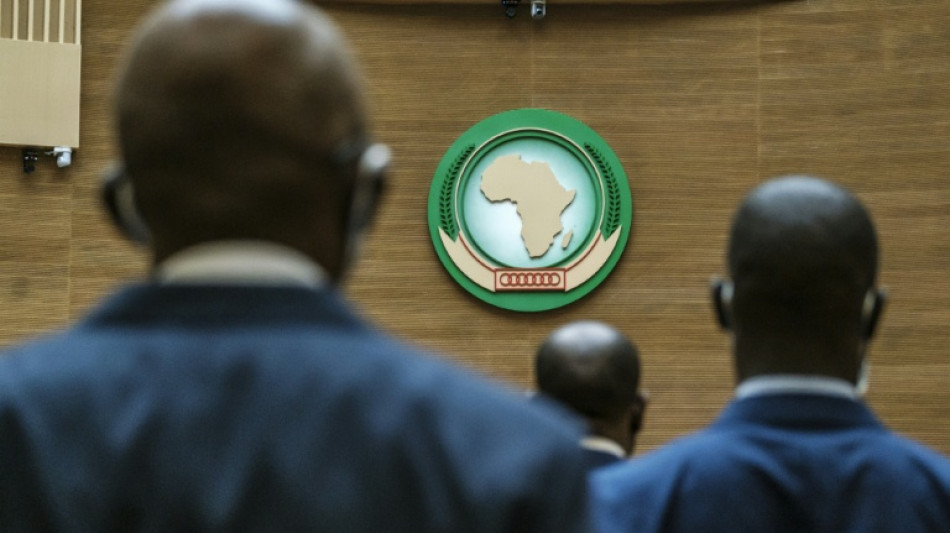
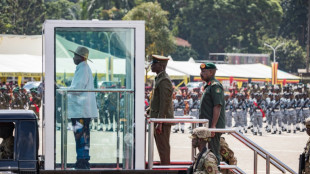
'Weak by design' African Union gathers for summit / Photo: EDUARDO SOTERAS - AFP

 Swallowed by silt: Survivors recount Nepal flood horror

 Germany's Merz hosts 'frugal' leaders ahead of EU budget battle
 Barca sign Croatia goalkeeper Livakovic
 Rain delays England's bid to put off-field incidents behind them
 World record holder Sawe withdraws from Berlin Marathon

 Driven by faith, activists stand up to fellow Jews to protect Palestinians
 Therapy Culture Performance: How the Lindsay Clancy Trial Sparked a Trend of Viral Maternal Distress
 Norway's King Harald, 89, in 'extremely serious' condition

 How a glacier collapse may have caused Nepal-Tibet disaster

 Harmovest Capital Strengthens Global Financial Services Through Technology and Compliance
 Nvidia to buy AI platform Hugging Face for $12.9 bn: report
 Palace intrigue in Uganda as succession battle heats up
 'Housing First' approach gets Swedish city's homeless off streets
 Czech duo Muchova and Mensik win US Open mixed doubles title
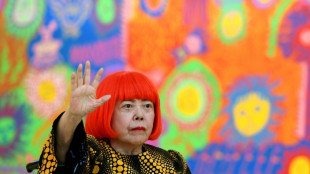 Japan's 'polka dot queen' artist Yayoi Kusama dies aged 97
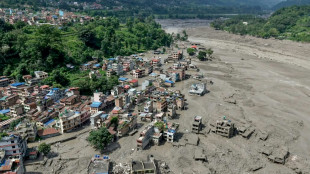
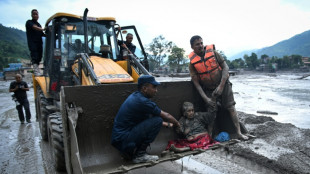 Nepal-Tibet disaster: what we know
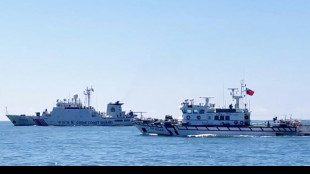 China deploys record number of ships around Taiwan as pressure grows
 Ruthless Bayern target treble as rivals reboot on Bundesliga return

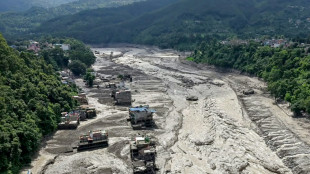 What experts know so far about Nepal's deadly floods

 UEFA set to withdraw FIFA boycott threat ahead of Champions League draw
 Sumo moves to beat Japan summer heat as temperatures rise
 'Be more honest': Markets crave clarity from cryptic Fed chair

 Climate change leaves its mark on America's largest reservoir
 CIA director warned Russia not to attack NATO members: US media
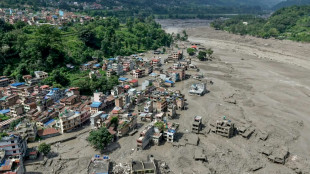 Search for missing after Nepal-Tibet floods kills at least 160
The African Union (AU) holds its annual summit in Ethiopia this weekend at a time of genocide, myriad insurgencies and coups stretching from one end of the continent to the other, for which it has few answers.
The AU, formed in 2002, has 55 member states who are often on opposing sides of conflicts. They have routinely blocked attempts to hand real enforcement power to the AU that could constrain their action, leaving it under-funded and under-equipped.
It has missed successive deadlines to make itself self-funding -- in 2020 and 2025. Today, it still relies for 64 percent of its annual budget on the United States and European Union, who are cutting back support.
Its chairman, Mahmoud Ali Youssouf, is reduced to expressing "deep concern" over the continent's endless crises -- from wars in Sudan and the Democratic Republic of Congo to insurgencies across the Sahel -- but with limited scope to act.
"At a time when the AU is needed the most, it is arguably at its weakest since it was inaugurated," said the International Crisis Group (ICG) in a recent report.
- Ignoring own rules -
With 10 military coups in Africa since 2020, the AU has been forced to ignore the rule in its charter that coup-leaders must not stand for elections. Gabon and Guinea, suspended after their coups, were reinstated this past year despite breaking that rule.
Meanwhile, there has been no "deep concern" over a string of elections marred by rigging and extreme violence.
Youssouf was quick to congratulate Tanzania's President Samia Suluhu Hassan after she won 98 percent in a vote in October in which all leading opponents were barred or jailed and thousands of protesters were killed by security forces.
The AU praised the "openness" of an election in Burundi in June described by Human Rights Watch as "dominated by repression (and) censorship".
The problem, said Benjamin Auge, of the French Institute of International Relations, is that few African leaders care about how they are viewed abroad as they did in the early days after independence.
"There are no longer many presidents with pan-African ambitions," he told AFP.
"Most of the continent's leaders are only interested in their internal problems. They certainly don't want the AU to interfere in domestic matters," he added.
- AU 'supports dialogue' -
AU representatives point out that its work stretches far beyond conflict, with bodies doing valuable work on health, development, trade and much more.
Spokesman Nuur Mohamud Sheekh told AFP that its peace efforts went unnoticed because they were measured in conflicts that were prevented.
"The AU has helped de-escalate political tensions and support dialogue before situations descend into violence," he said, citing the work done to prevent war between Sudan and South Sudan over the flashpoint region of Abyei.
But African states show little interest in building up an organisation that might constrain them.
Power remains instead with the AU Assembly, made up of individual heads of state, including the three longest-ruling non-royals in the world: Teodoro Obiang Nguema of Equatorial Guinea (46 years), Paul Biya of Cameroon (44) and Yoweri Museveni of Uganda (40).
"The African Union is weak because its members want it that way," wrote two academics for The Conversation last year.
This weekend, the rotating presidency of the AU assembly passes to Burundi's President Evariste Ndayishimiye, fresh from his party's 97-percent election victory.
Coups, conflicts and rights abuses may get discussed, but the main theme is water sanitation.
M.O.Allen--AT