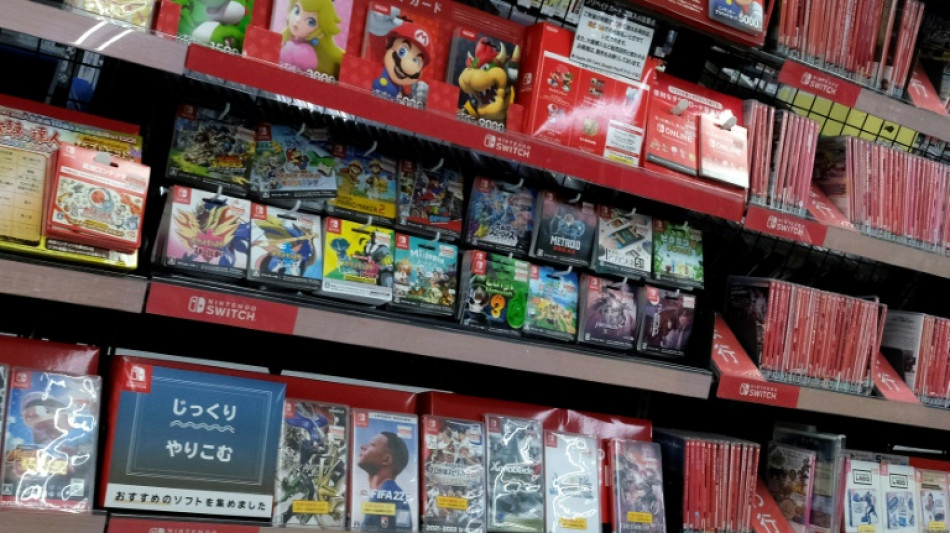
Nintendo Q1 net profit jumps thanks to weak yen / Photo: Kazuhiro NOGI - AFP

 Zach Hickerson Recounts Hayden Panettiere's Final Moments in New Interview

 Luxembourg Housing Petition Passes Threshold for Parliamentary Consideration

 Raheem Sterling Receives Suspended Sentence After Lamborghini Crash

 Audience to Choose the Set List at Luxembourg's First FAMIL Jukebox Night

 Luxembourg Pay Rise Delayed as Regional and World Headlines Develop

 Chennai Urbanist Sashna Develops 'Anniki' Card Game to Gamify Tamil Nadu History

 Transport Minister Defends Land Seizure Powers for Toronto-Quebec City High-Speed Rail

 UAE Weather Forecast: Scattered Showers and Fog Expected as Temperatures Drop
Nintendo said Wednesday its first-quarter net profit jumped 28 percent on-year, mainly thanks to a weaker yen, but hardware and software sales declined because of a chip shortage and Covid-19 supply issues.
The yen has plummeted more than 10 percent against the dollar this year as sky-high US inflation fuels a widening monetary policy gap -- a boon for Japanese companies like Nintendo who sell products overseas.
For the three months to June, the gaming giant posted a net profit of 118.9 billion yen ($893 million), citing the positive impact of "the depreciation of the yen".
But the company left its annual forecast unchanged, warning that the global shortage of semiconductors and other logistical snarl-ups could hamper console production and distribution.
New game releases got off to a good start, including "Nintendo Switch Sports" and "Mario Strikers: Battle League", it said, but sales were still no match for the previous year during the pandemic gaming boom.
"Due to the effects of supply shortages in semiconductors and other components among other factors, hardware sales were down 22.9 percent year-on-year, and software sales were down 8.6 percent year-on-year," Nintendo added.
Soaring demand for indoor entertainment during virus lockdowns sent the company's profits soaring to an annual record of 480 billion yen in 2020-21.
The firm nearly matched that figure in the last financial year, with its blockbuster Switch console continuing to perform well and strong software sales, especially for "Mario Party Superstars" and the latest Pokemon titles.
But Nintendo now has a more cautious outlook as life returns to normal, causing the gaming craze to slow, and expects to report a 340-billion yen net profit in 2022-23.
Hideki Yasuda, senior analyst at Toyo Securities, warned that the chip shortage and supply problems linked to Covid-19 lockdowns in China would continue to pose headaches for Nintendo.
"The company is feeling significant pressure on its supply chain," he told AFP before the earnings release. "The Switch is sold out at stores. There is not enough supply."
It will be "very difficult" for Nintendo to hit its annual production target for the console if the problems continue, Yasuda said, after Switch sales declined 20 percent on-year in 2021-22.
However, a recession in the United States or elsewhere is unlikely to pose a major problem, he said.
"Video gaming doesn't feel the impact of recessions. When the economy is strong, people buy products. When the economy weakens, people spend more time playing games."
N.Walker--AT


