
UK-Based Vesalic Limited Emerges from Stealth with Landmark Discovery of Potential Non-CNS Driver of Motor Neuron Diseases, including ALS, and Breakthrough Therapeutic and Diagnostic Opportunities

 Piracy attacks off Somalia surge in 2026: AFP analysis of IMO data

 Tottenham land Marmoush from Manchester City

 YZi Labs Backs TermMax to Advance On-Chain Bond Market Infrastructure

 Nvidia boosts tech stocks but caution dominates ahead of Fed speech

 Pogacar holds off Mas to claim Vuelta stage six victory

 A lasting Dolly Parton legacy: childhood literacy

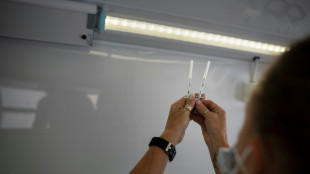 S.Africa sounds alarm as infant vaccinations plummet

 Toulouse have salary cap fine reduced on appeal

 Tech stocks lifted by Nvidia but caution dominates ahead of Fed speech

 'Smart cricketer' Dinusha helps Sri Lanka draw second India Test

 Zambia opposition leader surrenders to police: state media

 Alleged 9/11 mastermind to go on trial in June 2028

 Abbas's treble strike rocks England in second Test

 'Butcher of Bosnia' Ratko Mladic dead: Serbian state media

 New Zealand make three changes for second South Africa Test

 Stocktwits Expands CME Group Alliance with the Integration of Single Stock Futures Data

 'Mature' Colapinto extends contact with Alpine through 2027

 Atletico rule out any talks with Barcelona over Alvarez

 Tech stocks lifted by Nvidia as broader markets struggle

 Delap joins Nottingham Forest in club-record deal

 ICC President Akane Warns U.S. Sanctions Threaten Court's Future

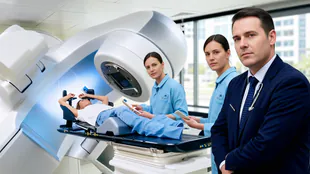 Delays in Cancer Radiotherapy and Surgery Target Times

 Acrid stench, charred walls reveal devastation of Pakistan infant ward fire

 Norway holds its breath as King Harald's health deteriorates

 Germany reports record 15,800 heat-related deaths this summer

This groundbreaking discovery has revealed a systemic metabolic dysfunction that creates a toxic exosome cargo in ALS patients, which is carried to the CNS, where it binds to and damages neurons
Vesalic is pioneering a novel therapeutic to intercept and neutralise these toxins, potentially slowing or halting progression of monogenic and sporadic forms of ALS
In addition, Vesalic has discovered a disease-specific alteration of the lipid composition in the membranes of exosomes circulating in the blood, and has developed a highly accurate biomarker-based technology to detect both monogenic and sporadic ALS
Based on its novel biomarker discoveries, Vesalic is also applying its biomarker technology for other neurodegenerative diseases, including Alzheimer's and Parkinson's
LONDON, UK / ACCESS Newswire / February 9, 2026 / Vesalic Limited, an early-stage neurodegenerative disease-focused biotech company, today emerged from stealth with the landmark discovery of a systemic process - largely external to the brain and central nervous system (CNS) - that is suspected to be a major contributor to motor neuron diseases (MND), including amyotrophic lateral sclerosis (ALS) and other neurodegenerative diseases (NDDs). This discovery could potentially transform understanding of the origin of these diseases. Vesalic is leveraging this groundbreaking finding, and the company's identification of a previously unknown blood-based disease signature of ALS, to advance breakthrough therapeutic and diagnostic solutions. These advances could revolutionise the treatment and diagnosis of this devastating disease and potentially have implications for other NDDs as well.
Unmet Therapeutic Need in ALS and Vesalic's Therapeutic Approach
Lack of therapeutic success with brain and CNS targets. ALS is the most common type of MND, with an estimated 350,000 people affected worldwide, and with an expected increase in the coming years due to the ageing population. ALS patients experience progressive degeneration and loss of neurons in the brain, brainstem and spinal cord, which results in the brain losing its ability to initiate and control muscle movement, leading to paralysis and death. ALS remains largely untreatable despite extensive investigation over many years of approaches targeting abnormalities in the brain and CNS. In addition, nearly all development efforts have focused on therapies for monogenic (or 'familial') forms of the disease, which account for around 10% of all ALS cases, out of which only about 3% can potentially access a therapy option. This offers little prospect of change for the remaining 90% of ALS patients with sporadic forms of the disease.
Vesalic's target: a non-CNS driver of monogenic and sporadic ALS. Vesalic has characterised a systemic metabolic dysfunction that creates a toxic exosome cargo in ALS patients, which is carried to the CNS, where it binds to and damages neurons, yielding a novel druggable target against the disease.
Vesalic is now pioneering a therapeutic to intercept and neutralise these toxins before they can damage neurons. This approach could potentially slow or halt progression of both monogenic and sporadic forms of the disease. Vesalic is now conducting in vivo studies to establish preclinical proof of concept for its therapeutic and to support a planned regulatory filing in 2027 to initiate clinical study.
Unmet Diagnostic Need in ALS and Vesalic's Diagnostic Approach
Lack of measurable biomarkers to diagnose ALS. In addition to a lack of therapeutic options, there is no definitive, non-invasive diagnostic method for ALS - especially in the early stages. Once other conditions are ruled out, a combination of techniques such as MRI scans, tests of nerve conduction and nerve and muscle electrical activity, and lumbar punctures, are utilised. The current diagnostic process typically takes many months, and in some cases over a year. There have been considerable efforts to identify biomarkers that would allow rapid, non-invasive and accurate diagnosis at symptom onset, or earlier, but with limited success to date.
Vesalic's highly accurate biomarker-based technology. Biomarker-based diagnostics currently in development for ALS are designed to detect various protein and RNA abnormalities. Vesalic has discovered that the signature of ALS is also expressed as an alteration of the lipid composition in the membranes of exosomes circulating in the blood. Based on this discovery, Vesalic has developed a biomarker-based technology with >90% accuracy in detecting both monogenic and sporadic forms of ALS, and which could be deployed in third-party clinical trials.
Vesalic believes that its biomarker test potentially could predict ALS years before a patient becomes symptomatic. The test holds the promise of drastically simplifying the diagnostic odyssey that patients and their families currently endure. In addition, the test potentially could be utilised to monitor treatment response in real time and guide therapeutic strategies. Beyond ALS, Vesalic is also applying its biomarker technology based on lipid alteration in exosomes for the detection of other NDDs, including Alzheimer's and Parkinson's.
Intellectual Property
Vesalic has worked with leading scientists to build the data to support the therapeutic and biomarker concepts and has built a broad patent estate around these.
Professor Kevin Talbot, Head of the Nuffield Department of Clinical Neurosciences at the University of Oxford, said, "Pushing boundaries to help us understand the causes and biological signatures of ALS is critical to delivering true progress against this devastating disease. It's incredibly exciting to see Vesalic advancing this therapy that could potentially address sporadic and monogenic ALS, alongside a simple, non-invasive biomarker test that could allow patients to be diagnosed much earlier. These efforts offer meaningful hope for the future to the ALS community."
Vesalic's Executive and Scientific Leadership
Incorporated in early 2023, Vesalic's founders include Dr. Valeria Ricotti (CEO), Professor Thomas Voit (Chief Scientific Officer) and John McLaren (Executive Chair). The company raised initial funding from individual investors, including its non-executive directors, Elie Vannier, Oscar Schafer and Simon Black, and prominent individual investors including Bertrand Meunier.
Dr. Ricotti said, "Our groundbreaking discoveries could fundamentally reshape the landscape in diagnosing and treating ALS, as well as other neurodegenerative diseases. We've made remarkable progress advancing our ALS therapeutic programme, our biomarker technology, and building our patent estate. We continue to push ahead, and we look forward to sharing more updates in the coming months."
Professor Voit said, "Years of focusing on brain and CNS-specific targets have been largely unfruitful in the search of both biomarkers and therapies for ALS and other neurodegenerative diseases. It's vital that we explore new scientifically driven hypotheses, including potential systemic pathogenic drivers. They could hold the key to unlocking desperately needed advancements for patients impacted by these diseases."
Dr. Ricotti is an entrepreneur and clinician-scientist with a strong track record in the development of advanced therapies and biomarkers, bridging academic innovation and biotech translation. Professor Voit leads Vesalic's scientific operations. In addition, he serves as Vice Dean for Innovation and Enterprise at the Faculty of Population Health Sciences, University College London, and Director of the National Institute of Health Research, Great Ormond Street Biomedical Research Centre.
Vesalic's Scientific Advisory Board
Vesalic's advancements are the result of close collaboration among the company's core scientific and advisory team of leading academic partners:
Professor Payam Barnaghi - Chair in Machine Intelligence Applied to Neuroscience, Imperial College London; specialist in AI-based biomarker and digital phenotyping
Professor Julie Dumonceaux, Director, Vesalic - Great Ormond Street Institute of Child Health, University College London; expert in biomarker discovery and translational molecular biology
Professor Albert Ludolph - Chair of Neurology at Universitätsklinikum Ulm; internationally recognised expert in ALS
Dr. Umesh Muchhal - Chief Scientific Officer, Stealth Biotech; over 20 years' experience in antibody design, preclinical, and clinical development
Professor Paolo Pinton, Dept. of Medical Sciences, University of Ferrara; a leading expert in pathology and cell-fate mechanisms in disease
Dr. Valeria Sansone, Dept. of Biomedical Sciences for Health, University of Milan; internationally recognised expert in ALS
Professor Dame Pamela Shaw - Director, Sheffield Institute for Translational Neuroscience; leading researcher in neurodegenerative disease pathogenesis and clinical translation
Professor Kevin Talbot - Head of the Nuffield Department of Clinical Neurosciences at the University of Oxford
Dr. Michiel Vandenbosch - Facility Manager, Imaging Mass Spectrometry Core Lab, Maastricht University; leader in proteomic and mass-spectrometry-based biomarker discovery
About Vesalic Limited
Vesalic is an early-stage biotech company focused on neurodegenerative diseases, initially ALS. Despite extensive investigation of approaches targeting abnormalities in the brain and CNS, ALS remains predominantly untreatable and lacks a definitive, non-invasive diagnostic method. Vesalic has discovered a systemic process - largely external to the brain and central nervous system - that is suspected to be a pathogenic driver of ALS. Vesalic is advancing breakthrough solutions that could revolutionise the treatment and diagnosis of this devastating disease, and potentially other neurodegenerative diseases, including Alzheimer's and Parkinson's.
Company Contact: | Media Contact: |
Dr. Valeria Ricotti | Liz Melone |
CEO, Vesalic | |
###
SOURCE: Vesalic Limited
View the original press release on ACCESS Newswire
W.Nelson--AT