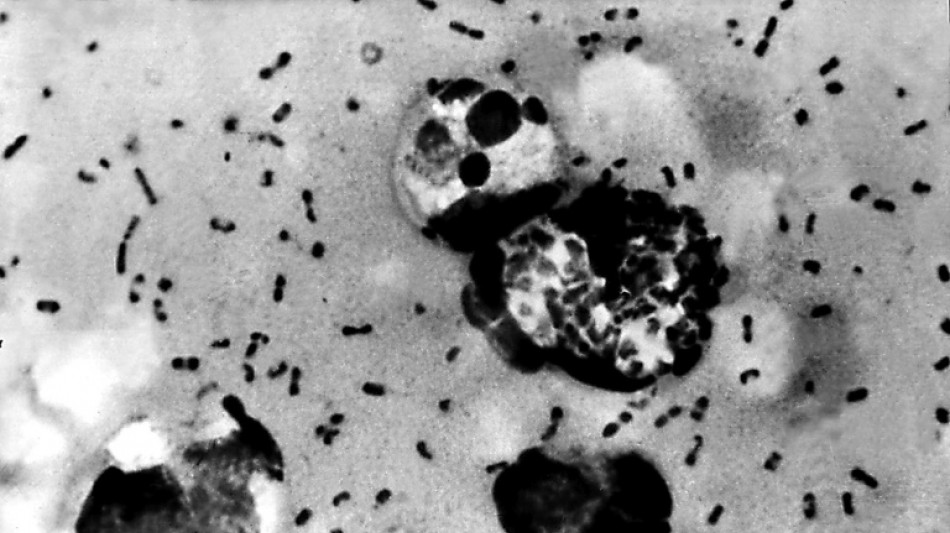
Volcanic eruptions may have brought Black Death to Europe / Photo: © CDC/AFP/File

 In war-split Myanmar 'spirit consorts' commune across divide
 Leaders of Russia, China, Iran to attend summit in Kyrgyzstan

 Hovland and Gerard share lead at Tour Championship

 Maresca salutes 'unbelievable' Cherki after Man City star sinks Palace
 Marquinhos rescues last-gasp draw for PSG at Lille in Ligue 1

 ICE detains British far-right activist Milo Yiannopoulos in Louisiana

 Milo Yiannopoulos held by ICE after missing immigration hearing

 Six Flags closes X2 rollercoaster after reports of severe brain injuries

 Jury ends second day without verdict in Lindsay Clancy murder trial

 Artist says criticised Ronnie O'Sullivan mural is unfinished

 UAE grants Starlink 10-year satellite broadband licence

 US says Hormuz mines cleared as diplomacy and military deployments continue

 Nepal-Tibet flood toll reaches 584 as more than 2,400 remain missing

 Cherki makes his point to Maresca as Man City sparkle in Palace rout
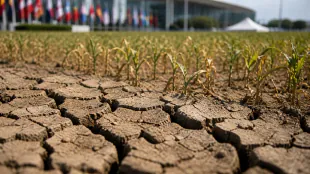 COP17 soil assessment links worsening land degradation to food and nutrition risks

 Medical AI paper predicts autonomous systems could outperform doctors in core clinical tasks by 2030

 REI Labor Day sale runs through September 7 with outdoor gear discounts

 Meta tests robots for cabling, server resets and maintenance inside data centers

 Nepal-Tibet flood rescue resumes after overflowing debris lake forces temporary withdrawal

 Extreme heat exposes vulnerabilities across Britain's rail network

 Dollar rallies after Fed chief lifts rate expectations

 Slumping Sabalenka 'confident' ahead of US Open three-peat bid

 Aston Villa seal swoop for Chelsea striker Jackson

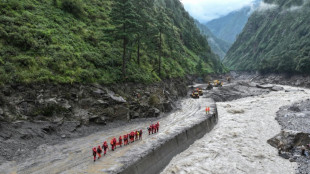 Number of missing in deadly Nepal, China floods jumps past 2,400

 Birmingham City Seek First Championship Win Against Wrexham

Previously unknown volcanic eruptions may have kicked off an unlikely series of events that brought the Black Death -- the most devastating pandemic in human history -- to the shores of mediaeval Europe, new research has revealed.
The outbreak of bubonic plague known as the Black Death killed tens of millions and wiped out up to 60 percent of the population in parts of Europe during the mid-14th century.
How it came to Europe -- and why it spread so quickly on such a massive scale -- have long been debated by historians and scientists.
Now two researchers studying tree rings have suggested that a volcanic eruption may have been the first domino to fall.
By analysing the tree rings from the Pyrenees mountain range in Spain, the pair established that southern Europe had unusually cold and wet summers from 1345 to 1347.
Comparing climate data with written accounts from the time, the researchers demonstrated that temperatures likely dropped because there was less sunlight following one or more volcanic eruptions in 1345.
The change in climate ruined harvests, leading to failed crops and the beginnings of famine.
Fortunately -- or so it seemed -- "powerful Italian city states had established long-distance trade routes across the Mediterranean and the Black Sea, allowing them to activate a highly efficient system to prevent starvation," said Martin Bauch, a historian at Germany's Leibniz Institute for the History and Culture of Eastern Europe.
"But ultimately, these would inadvertently lead to a far bigger catastrophe," he said in a statement.
- Deadly stowaways -
The city states of Venice, Genoa and Pisa had ships bring grain from the Mongols of the Golden Horde in central Asia, which is where the plague is thought to have first emerged.
Previous research has suggested that these grain ships brought along unwelcome passengers: rats carrying fleas infected with Yersinia pestis, the bacterium that causes plague.
Between 25 and 50 million people are estimated to have died over the next six years.
While the story encompasses natural, demographic, economic and political events in the area, it was ultimately the previously unidentified volcanic eruption that paved the way for one of history's greatest disasters, the researchers argued.
"Although the coincidence of factors that contributed to the Black Death seems rare, the probability of zoonotic diseases emerging under climate change and translating into pandemics is likely to increase in a globalised world," study co-author Ulf Buentgen of Cambridge University in the UK said in a statement.
"This is especially relevant given our recent experiences with Covid-19."
The study was published in the journal Communications Earth & Environment on Thursday.
P.A.Mendoza--AT