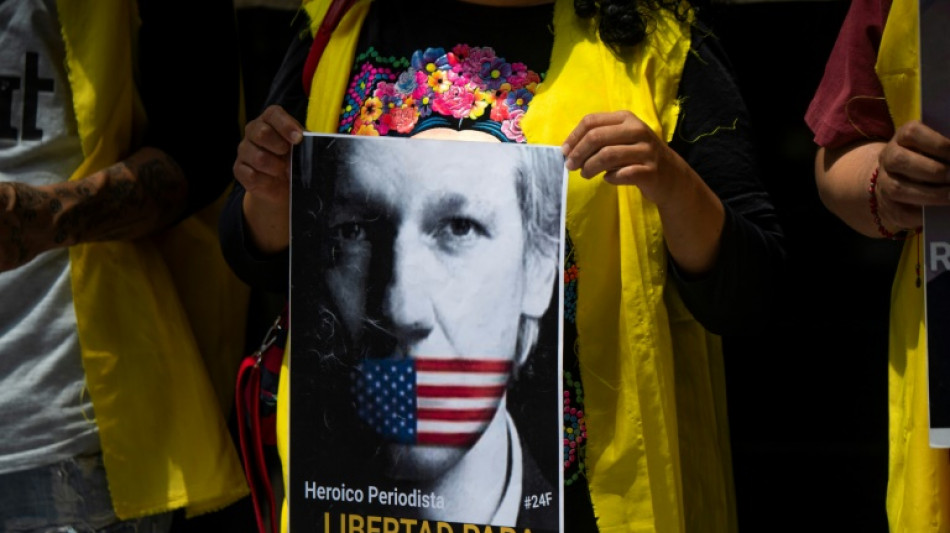
Assange committed no serious crime, Mexico president tells Biden / Photo: CLAUDIO CRUZ - AFP

 Zach Hickerson Recounts Hayden Panettiere's Final Moments in New Interview

 Luxembourg Housing Petition Passes Threshold for Parliamentary Consideration

 Raheem Sterling Receives Suspended Sentence After Lamborghini Crash

 Audience to Choose the Set List at Luxembourg's First FAMIL Jukebox Night

 Luxembourg Pay Rise Delayed as Regional and World Headlines Develop

 Chennai Urbanist Sashna Develops 'Anniki' Card Game to Gamify Tamil Nadu History

 Transport Minister Defends Land Seizure Powers for Toronto-Quebec City High-Speed Rail

 UAE Weather Forecast: Scattered Showers and Fog Expected as Temperatures Drop
Mexican President Andres Manuel Lopez Obrador said Monday he had interceded with US President Joe Biden on behalf of WikiLeaks founder Julian Assange, insisting that he had committed no serious crime.
Lopez Obrador renewed an offer of asylum for Assange, who is fighting extradition by Britain to the United States, where he could face decades in jail for allegedly violating the US Espionage Act.
Mexico's leftist leader delivered a letter to Biden when he visited Washington last week "explaining that Assange did not commit any serious crime," he told reporters.
"He did not cause the death of anyone, did not violate any human right and exercised his freedom," Lopez Obrador said.
Imprisoning the 51-year-old Australian publisher would amount to an "affront to freedom of expression," he said, adding that he had yet to receive a response from Biden.
Assange could face up to 175 years in jail if found guilty of violating the US Espionage Act by publishing military and diplomatic files in 2010 related to the Afghanistan and Iraq wars.
The British government last month approved his extradition to the United States, prompting an appeal.
Supporters portray Assange as a martyr to press freedom after he was taken into British custody and put in a high-security prison having spent seven years at Ecuador's embassy in London.
W.Nelson--AT


