New to The Street's Esteemed Partner, HPB, Says China's Export Controls Shows Where Europe's Battery Security Depends

 Nepal flood survivors return to ruins to salvage memories

 Killing of Palestinian children and teens by Israel surges in West Bank
 Educators keep 9/11 memory alive for next generation, 25 years on

 Venezuelans view US oil deal with doubt, hope

 Gobena and Jepchirchir power to Sydney Marathon victories

 Iceland in suspense after close EU vote

 Wallabies hold on for victory in Argentina

 Juve notch second straight win, Fiorentina's centenary party falls flat

 Rybakina eases injury fears ahead of US Open
 Djokovic kicks off latest Grand Slam quest under US Open lights

 'Sorry' De Zerbi won't panic after Spurs shambles

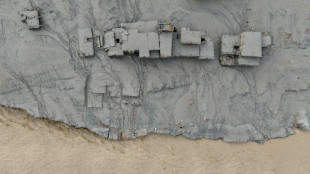 UN, Nepal warn of climate threat after deadly floods

 USTA boss says structure of new player council not yet set

 Tiny Elversberg stun Leverkusen on Bundesliga debut, Dortmund beat Hamburg

 BMC rejects negligence claims in three Rajawadi Hospital maternity cases

 Editorial questions Letitia James’ record as New York attorney general

 Los Angeles triplets weigh 19.3 pounds in unusually heavy birth

 Matt Leinart assesses Arch Manning and the leading names in college football

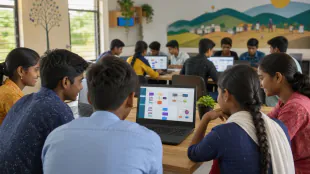 Rural Tamil Nadu students present 64 technology projects at IIT-M research park

 Tamil Nadu goalball team’s national silver highlights need for wider support

 Tamil Nadu and NUS agree to expand postgraduate and research links

 India and China have not named two new border meeting sites

 Ankle ligament tear ends Neeraj Chopra’s 2026 season

 Thirty-seven Mumbai pilgrims return after Nepal flood disruption

 French campaign sharpens as far right accuses left over civil disobedience calls

NEW YORK CITY, NY / ACCESS Newswire / October 27, 2025 / China's tightening of export rules for lithium batteries, cathode materials and graphite has revealed a structural weakness in Europe's energy transition. German solid-state battery technology developer HPB says that the solution will not come from new trade routes but from new materials. The answer lies not in stockpiling materials but in rethinking how batteries are designed and built.
In 2022, HPB's whitepaper titled Criticality and recycling of lithium-ion batteries - Putting the debate on a broader footing 1 warned that Europe's dependence on a few global suppliers for battery materials could undermine both sustainability and technological sovereignty. That foresight has now become reality, as the latest export controls target the very chemistries most widely used in electric vehicles and stationary storage.
Sebastian Heinz, CEO of HPB and co-author of the white paper, said, "The conversation cannot stop at diversifying supply. Europe must innovate away from dependency. If we keep building the same batteries, we'll keep importing the same risks. Europe's independence will come from chemistry and not control. The task is to invent systems that need less, last longer and can be built anywhere, from systems that use fewer critical materials, last longer and can be produced locally."
The company argues that Europe's industrial strategy should focus on three actionable priorities:
Build batteries that last longer. Longer life means fewer raw
materials, less waste and lower costs over time.
Produce closer to home. Regional manufacturing of batteries will
strengthen Europe's control over its own energy technology.
Redefine what sustainability means. The impact of a battery
should be measured not only in carbon emissions but also in how
secure and independent its supply chain is.
Heinz added: "Every 10,000-cycle battery means fewer mines, less transport and less exposure to geopolitical risk. Independence should be treated as a material property."
The company believes Europe now stands at a strategic turning point. Supply diversification will buy time, but only technological innovation can build permanence. The next phase of competitiveness will not be measured by gigafactory output alone, but by how efficiently each unit of raw material is used across its lifetime.
Safety, longevity, and recyclability will become the same industrial advantage but expressed in different forms. HPB's view is that the debate around batteries must evolve from "how much" to "how wisely". Europe's strength lies in science, process engineering and cooperation models. Turning these assets into durable technology is how the region can move from vulnerability to leadership.
About HPB
Based in Bonn, Germany, High Performance Battery (HPB) develops and licenses next-generation solid-state battery technologies that are safer, longer- lasting, and greener than conventional lithium-ion batteries. The HPB Solid-State Battery delivers over 12,500 full charge-discharge cycles under demanding conditions (1C/1C, 0-100% State of Charge, at room temperature). The technology achieves up to 50% improved environmental performance compared to traditional batteries, notably by avoiding critical raw materials such as cobalt.
For more information, visit HPB.ch
Press contact:
Ananya Borgohain
Head of Marketing & PR
[email protected]
SOURCE: New To The Street
View the original press release on ACCESS Newswire
B.Torres--AT