
Menhaden Fisheries Coalition Applauds Science-Based Review of Chesapeake Bay Menhaden Harvest Cap

 Nepal flood survivors return to ruins to salvage memories

 Killing of Palestinian children and teens by Israel surges in West Bank

 Educators keep 9/11 memory alive for next generation, 25 years on
 Venezuelans view US oil deal with doubt, hope

 Gobena and Jepchirchir power to Sydney Marathon victories

 Iceland in suspense after close EU vote

 Wallabies hold on for victory in Argentina

 Juve notch second straight win, Fiorentina's centenary party falls flat

 Rybakina eases injury fears ahead of US Open

 Djokovic kicks off latest Grand Slam quest under US Open lights

 'Sorry' De Zerbi won't panic after Spurs shambles
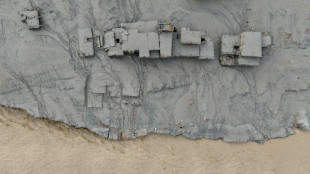 UN, Nepal warn of climate threat after deadly floods

 USTA boss says structure of new player council not yet set

 Tiny Elversberg stun Leverkusen on Bundesliga debut, Dortmund beat Hamburg

 BMC rejects negligence claims in three Rajawadi Hospital maternity cases

 Editorial questions Letitia James’ record as New York attorney general

 Los Angeles triplets weigh 19.3 pounds in unusually heavy birth

 Matt Leinart assesses Arch Manning and the leading names in college football

 Rural Tamil Nadu students present 64 technology projects at IIT-M research park

 Tamil Nadu goalball team’s national silver highlights need for wider support

 Tamil Nadu and NUS agree to expand postgraduate and research links

 India and China have not named two new border meeting sites

 Ankle ligament tear ends Neeraj Chopra’s 2026 season

 Thirty-seven Mumbai pilgrims return after Nepal flood disruption

 French campaign sharpens as far right accuses left over civil disobedience calls

Coalition supports new SCEMFIS-funded research roadmap to develop ecological foundation for Bay management; regulators' statements confirm current cap not based on science
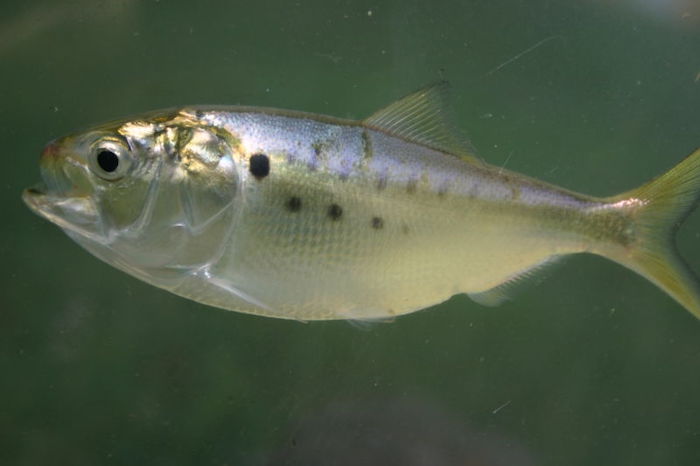
WASHINGTON, DC / ACCESS Newswire / October 24, 2025 / The Menhaden Fisheries Coalition today welcomed a newly funded Science Center for Marine Fisheries (SCEMFIS) project to produce a research roadmap for Atlantic menhaden in the Chesapeake Bay as a long-overdue opportunity to replace political compromise with sound science.
For nearly twenty years, the Chesapeake Bay menhaden harvest cap, a harvest limit that applies only to the reduction fishery, has been managed without biological justification. Regulators and scientists have repeatedly acknowledged this fact. The new project from SCEMFIS will identify the research needed to finally develop what the scientists leading the project call a "scientifically defensible and ecologically meaningful Chesapeake Bay cap."
Regulators Acknowledge Current Bay Cap Was Never Based on Science
When the cap was first imposed in 2006, it was a political compromise between Virginia, Maryland, and environmental groups, not a conservation measure grounded with a scientific justification. As the Atlantic States Marine Fisheries Commission's (ASMFC) own Executive Director at the time, Vince O'Shea, testified before Congress in 2008, the Bay Cap was established "in response to a political problem" and "there was not a science basis for the Cap."
That view was echoed by ASMFC's scientific staff. In 2012, the Menhaden Plan Development Team concluded, "The annual Chesapeake Bay harvest cap is not based on a scientifically quantified harvest threshold, fishery health index, or fishery population level study."
In a follow-up report that same year, the ASMFC Technical Committee stated: "The TC stands by its previous recommendation that, given the current fishery and history of landings, there has not appeared to be any biological benefit to the Chesapeake Bay Reduction Cap since it was implemented."
The Technical Committee reinforced this position during the Commission's December 2012 meeting, with the then-chairperson noting that, "Given the current structure of the industry right now, and the fish that they harvest, and the biological information that we're collecting, there doesn't seem to be any benefit" from the Bay Cap.
Previous ASMFC Chairman Confirms Lack of Evidence for Bay Cap
When Virginia appealed a 41% cut to the Bay Cap in 2018, ASMFC Chairman Jim Gilmore stated in a formal letter that "there is no evidence in Amendment 3 to support the view that lowering the Bay Cap was necessary to protect the Bay as a nursery area for menhaden and there is no evidence to suggest the Bay Cap is necessary to protect the Bay as a nursery for other species." He concluded: "Leadership agrees the Amendment does not provide sufficient evidence to support such claims."
Call for a Science-Based Approach
Despite repeated coastwide stock increases and consistent findings that the Atlantic menhaden population is not overfished and overfishing is not occurring, the Chesapeake Bay menhaden harvest cap has remained fixed at 51,000 metric tons, less than half the level originally set in 2006. Meanwhile, the ASMFC has allowed other Bay fisheries, including Maryland and Potomac River bait harvesters, to increase their quotas.
The Chesapeake Bay menhaden harvest cap has become a symbol of how fisheries policy can drift away from science with outside influence from special interest groups dictating management strategies. The ASMFC's own scientists have said for over a decade that there is no biological justification for this cap.
The Need for a Research Roadmap
The SCEMFIS-funded effort, led by scientists from the Chesapeake Biological Laboratory, the Virginia Institute of Marine Science, and NOAA, will begin by conducting an extensive review of the existing data on relevant issues such as Atlantic menhaden biomass, the movement of schooling pelagic fish, and the consumption of Atlantic menhaden by Chesapeake Bay predators. They will also work with the industry to review data sources such as landings data and spotter pilot reports to complement existing peer-reviewed studies and other sources of data.
After the review, the researchers will identify knowledge gaps, and will propose new study designs and methodologies to fill these knowledge gaps to inform a Chesapeake Bay menhaden harvest cap that is based on data and is scientifically defensible.
SCEMFIS is a collaborative project between the fishing industry and leading finfish and shellfish researchers aimed at improving our understanding of important commercial species and supporting sustainable management of the fisheries that depend on them. It is part of the National Science Foundation's Industry/University Cooperative Research Centers program.
About the Menhaden Fishery
Atlantic menhaden support the largest commercial fishery by weight on the U.S. East Coast and sustain hundreds of unionized, family-supporting jobs in rural Virginia communities where few comparable opportunities exist. Fishermen are represented by the United Food and Commercial Workers (UFCW) Local 400, earning family-sustaining wages and full benefits. The fishery is certified as sustainable by the Marine Stewardship Council, the gold standard for responsible fisheries, and the ASMFC has repeatedly found that menhaden is not overfished and overfishing is not occurring.
About the Menhaden Fisheries Coalition
The Menhaden Fisheries Coalition (MFC) is a collective of menhaden fishermen, related businesses, and supporting industries. Comprised of businesses along the Atlantic and Gulf coasts, the Menhaden Fisheries Coalition conducts media and public outreach on behalf of the menhaden industry to ensure that members of the public, media, and government are informed of important issues, events, and facts about the fishery.
Press Contact
Menhaden Fisheries Coalition
(202) 595-1212
www.menhaden.org
SOURCE: Menhaden Fisheries Coalition
View the original press release on ACCESS Newswire
W.Stewart--AT