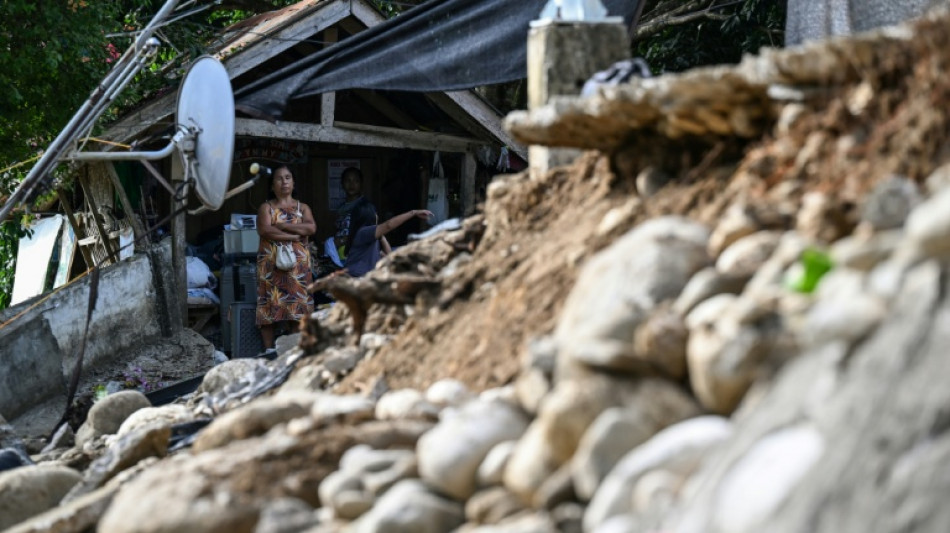
Philippines begins clean-up after powerful twin quakes / Photo: Jam STA ROSA - AFP

 ALIX LASERS shareholders remove Michael Sobitsch as managing director in view of the circumstances

 Panthers Seek NFC South Lead Against Ravens as Baltimore Ends Skid

 Ryde Group Ltd Announces Non-Binding Term Sheet for Proposed Minority Investment in Multi Genius Limited and MOU on Technology Collaboration

 Tosca's 2026 Sustainability Report Makes the Case for Packaging as Critical Supply Chain Infrastructure

 5 Fun Date Night Ideas That Don't Cost a Fortune

 Factory Worker Dies in Rare Rectal Explosion Incident in Czechia

 Decoding UNFCCC Legal Language: The Hierarchy of Verbs in Climate Negotiations

Dazed survivors of a pair of major earthquakes in the southern Philippines awoke on Saturday to scenes of devastation, after hundreds of aftershocks rocked the region overnight.
Many coastal residents of Mindanao island had slept outdoors, fearful of being crushed to death by aftershocks of the 7.4- and 6.7-magnitude quakes that struck off the coast within hours of each other on Friday.
Philippine authorities said at least eight people were killed but they were still assessing the extent of the damage.
In Manay, a Mindanao municipality of 40,000, people were removing debris and sweeping up broken glass from homes and other buildings Saturday morning.
"Our small house and our small store were destroyed," resident Ven Lupogan told AFP.
"We have nowhere to sleep. There's no electricity. We have nothing to eat."
The destruction came less than two weeks after a 6.9-magnitude quake struck the central Philippine island of Cebu, killing 75 people and wrecking about 72,000 houses.
- 800 aftershocks -
Some people in Manay slept in tents, under improvised tarps and hammocks, inside vehicles, and on mats laid out in parks or the sides of streets as aftershocks rippled across the region of 1.8 million people.
At the heavily damaged Manay government hospital, patients lay on beds outside waiting for treatment.
Many had been wheeled out on Friday because government engineers said the building had been structurally compromised.
Nearby shopkeepers cleaned up broken glass and put merchandise back on shelves, AFP journalists saw.
Vilma Lagnayo scrambled to save her family's clothes and belongings from their collapsed Manay home.
"Reconstructing (our home) is difficult now... Money is a problem," Lagnayo said.
The Philippine seismology office has recorded more than 800 aftershocks since the first quake struck Mindanao, which is riddled by major faults. It said these are expected to last for weeks.
In Mati, about two hours' drive southwest along the coast, Margarita Mulle and her relatives held a wake for her older sister who had earlier died from disease, even as neighbours stayed away after tsunami warnings that have since been lifted.
"In case something happens, they (relatives) will carry the body using a 'tora-tora'," a tearful Mulle said, using a local term for a hand tractor-drawn cart that is a major mode of transport in rural areas of the south.
Earthquakes are a near-daily occurrence in the Philippines, which is situated on the Pacific "Ring of Fire", an arc of intense seismic activity stretching from Japan through Southeast Asia and across the Pacific basin.
An 8.0-magnitude quake off Mindanao island's southwest coast in 1976 unleashed a tsunami that left 8,000 people dead or missing, the Philippines' deadliest natural disaster.
D.Johnson--AT