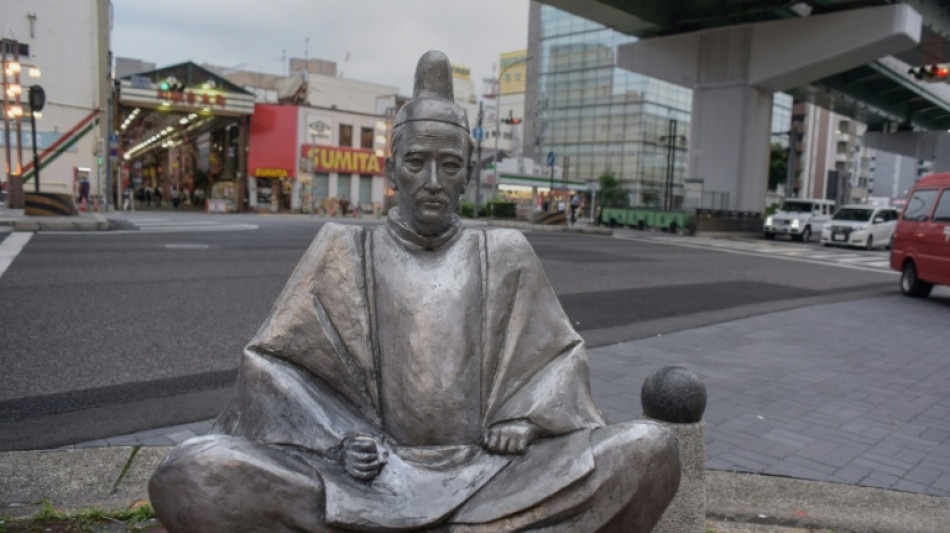
Feudal warlord statue beheaded in Japan / Photo: Richard A. Brooks - AFP

 Selena Gomez Launches Black Equality Fund to Support Racial Justice Organizations

 GTA 6 Release Date Confirmed for November 19; Troubleshooting Pre-load and Launch Errors

 ‘They want silence’: how the film NAZA is shaking Israel

 Dún Laoghaire-Rathdown €335m Budget Faces Mixed Reaction Over Housing and Cost of Living

 BING X: 22,624.66 SNC have disappeared at BingX – how safe are tokens on BingX? Will BingX’s MiCAR licence be suspended?

 Iran Strikes US Sites in Kuwait Following US Airstrikes on Qeshm Island
A statue of a powerful 16th-century warlord and samurai outside a shopping arcade in Japan has been beheaded, a shop official and media reports said Wednesday.
The statue is of Toyotomi Hideyoshi, who completed the unification of Japan in the 16th century, and is also known for his failed attempts to invade the Korean peninsula.
The association of the Endoji shopping arcade in Nagoya regards the statue as a symbolic figure of the mall, and "is considering filing a damage report with police," a member told AFP.
There was no information about who damaged the statue for what reasons, he added.
The vandalism came after similar damages to other warlord sculptures outside the same shopping arcade in central Japan that were reportedly donated by a real estate company in 2013.
In 2022, the one of Tokugawa Ieyasu, Toyotomi's rival and the first shogun of Tokugawa's Edo period that lasted until the late 19th century, was knocked down and had a hole made in its back.
The figure of Oda Nobunaga was found without an arm in 2019.
The three are Japan's most famous warlords who fought to unify Japan to end around 100 years of warring states period.
In other countries, statues of historical figures have become the subject of fierce debate in recent years, especially of figures related to colonialism and slavery.
B.Torres--AT