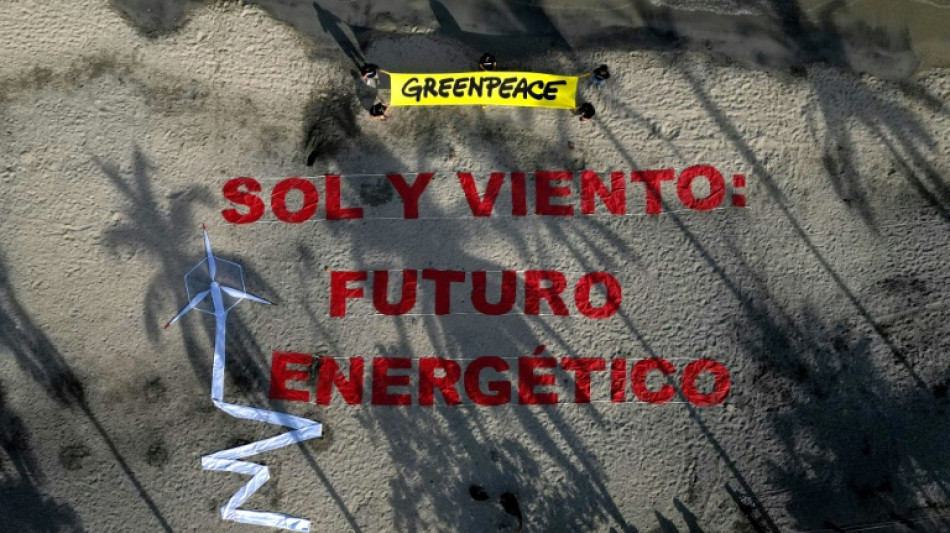
Nations urged to 'go further' as fossil fuel exit talks wrap in Colombia / Photo: Raul ARBOLEDA - AFP/File

 El Salvador's Bukele puts conditions on early release of gang prisoners
 Fire rages at town hall in France's Limoges after protests: authorities

 Unstoppable Barca thrash Betis to extend perfect start

 Maresca faces anxious wait over Haaland injury scare

 PSG fight back to beat Strasbourg after Dembele penalty miss

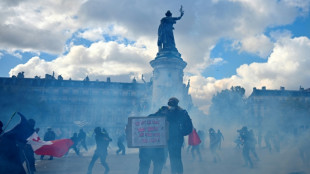
 Looting, blazes and clashes in France amid nationwide protests

 Walsh breaks her own 50 free world short course record

 Haaland brace extends Man City's winning start in Premier League

 'Special' Ombudsman storms to victory in Champion Stakes

 Brazil's right embraces election betting odds amid polls skepticism

 Four more Ebola cases detected in Kenya, bringing total to seven

 Clashes erupt in France as protesters vow to make government 'tremble'
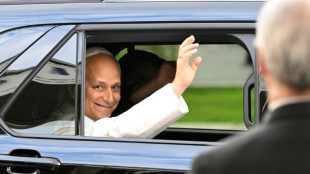
 Chwalinska downs Swiatek to set up Wuhan final with world number 170 Kartal

 Chacarra takes lead as McIlroy falls away in Delhi

 Neto double gives Chelsea win marred by Martinez injury

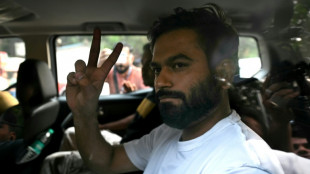 'Cockroach' party founder released from Indian police custody
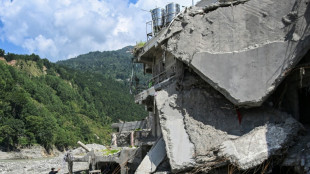 Nepal floods 'defining moment' for climate action: UN
 Albanian capital sees fifth straight day of violent clashes

 Leaders weigh 'huge benefit', risks of AI for global economy

 Zverev stunned by Davidovich Fokina in Shanghai semi-finals

 France faces day of cost-of-living protests
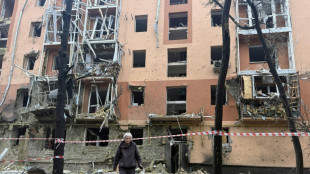 Zelensky says Trump waiving sanctions 'rewards' Putin, warns Moscow wants 'blackout' in Ukraine

 Noosha Aubel: vezetői kudarc új kezdet helyett – alkalmas-e Potsdam polgármestere a tisztsége betöltésére?

 Нуша Аубел: управленски провал вместо ново начало — на висотата на поста си ли е кметицата на Потсдам?

 Russia hails Trump waiving sanctions as 'historic'

Nearly 60 nations hailed progress in the fight to exit fossil fuels as a breakaway conference wrapped up in Colombia on Wednesday -- but now face the harder work of turning words into action.
Ministers and envoys gathered in the coal port of Santa Marta in the hope of speeding the shift away from planet-heating fossil fuels and breaking a stalemate at the UN climate talks.
The conference was announced last year after nations failed to include an explicit reference to fossil fuels in the final deal reached at the UN COP30 climate summit in Brazil.
But organizers say it gained momentum after the US-Israel attacks on Iran ignited a global energy crisis -- underscoring the risks of reliance even as some nations looked to fossil fuels to plug supply gaps.
From tiny island states to European powers and emerging markets, nations attended the conference voluntarily after an effort to tackle fossil fuels head-on at last year's COP30 failed.
"Countries are taking steps," said Dutch Climate Minister Stientje van Veldhoven, whose country co-hosted.
"Everybody who is here is here because they want to move further than where they are right now, and they think that we can be stronger together.
"Together we can be stronger -- and we can go further."
No binding commitments were expected but Colombian Environment Minister Irene Velez Torres said "big results" were achieved nonetheless.
She pointed to the creation of an expert panel of world-renowned climate scientists tasked with helping governments on their own transitions -- a daunting task in particular for developing nations dependent on oil and gas.
She thanked nations for coming together "to talk about the challenges (and) to talk about the taboos."
"When they look back at us from the future...They will remember that we were there and working on the challenges of our time," she said.
The climate-threatened Pacific nation of Tuvalu was also named as host of next year's conference with Ireland in what was seen as a crucial signal that the momentum would carry on beyond the first edition.
- 'Good atmosphere' -
Many major fossil fuel producers turned out for the event, from wealthy economies like Canada and Norway to developing oil giants like Angola and Brazil.
The United States, China, Saudi Arabia and Russia -- among other major producers and consumers of fossil fuels -- did not show up.
The conference bypassed the United Nations climate process altogether, reflecting a growing impatience with its failure to tackle fossil fuels, the main driver of global warming.
Many nations spoke of the relief at not having to cobble an agreement by consensus between nearly 200 nations -- a process that takes nearly two weeks at the annual COP climate summits and often ends in bitter disappointment.
"You could really feel it there -- that it's somehow a new beginning or a wake-up call, like things can't go on this way," German environment state secretary Jochen Flasbarth told reporters, noting "a very good atmosphere here."
Away from the conference rooms on the Caribbean coast, oil prices surged Wednesday to their highest level since early 2022, underlining the risk of fossil fuel reliance.
The global energy crisis triggered by the Middle East war dominated the talks, with fossil fuels cast as a threat to energy independence as much as the climate.
- Tough message -
For many nations -- particularly developing fossil fuel producers -- phasing out a major source of state revenue is easier said than done.
"Not phasing out -- phase down. That is the message," Onuoha Magnus Chidi, an adviser to Nigeria's regional development minister, told AFP in Santa Marta.
"People are going to lose their jobs...How are you trying to re-engage them in other sectors?" said the delegate from one of Africa's biggest oil and gas producers.
Nearly 200 countries agreed at COP28 in 2023 to transition away from fossil fuels, but efforts to turn that pledge into action have stalled.
The discussions in Santa Marta would feed into a voluntary "roadmap" aimed at moving the world away from fossil fuels being compiled by Brazil, said Ana Toni, CEO of last year's COP30.
T.Sanchez--AT