
DEA Unconstitutional Marijuana Playbook: How the DEA Is Repeating the DOL's Mistakes Against MMJ BioPharma

 French Top 14 boss offers 'no guarantees' for first Club World Cup

 Munoz reunites with Glasner after joining Forest from Palace

 Liverpool sign Barcola from PSG for £124 million

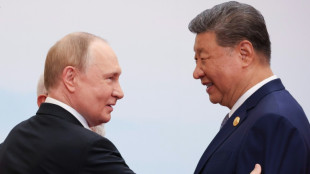
 Putin, Xi hold talks in Kyrgyzstan as regional summit begins

 ChatGPT becomes first AI chatbot to face tougher EU rules

 Man City sign Palmeiras winger Allan on five-year deal
 More flooding feared at Grand Canyon after storm leaves 15 missing

 RedHill Divests Talicia® to Apotex for $18 Million Cash Upfront Plus Milestones to Fuel Strategic Growth Opportunities

 MEXC Data: BTC Breaks $80,000, Major-Asset Spot Trading Volume Surges 300%

 G20 finance talks open as US seeks to ramp up pressure on Iran

 Solving Agent Sprawl: The Case for Enterprise Orchestration

 Springboks switch Kolbe to full-back for third All Blacks Test

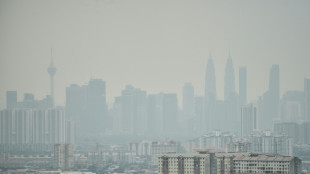 Malaysia's Sarawak eyes cloud seeding as haze worsens

 World leaders need to see rising oceans in Pacific: UN official

 Xiaomi Pad 9 Pro Leak Suggests 12.5-Inch Display and Massive Battery
 UK Homeowners Advised to Use Peppermint Tea Bags to Deter Spiders

 Nepal toll surges as rescuers struggle through 'unimaginable' disaster

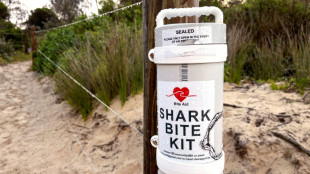 Mauled Australian swimmer recalls punching shark

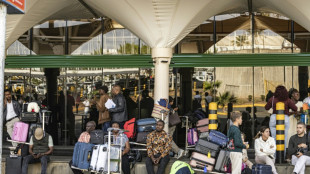 Passengers stranded overnight by Kenya airport strike

 Nepal recovers bodies but presses on for trapped tunnel workers
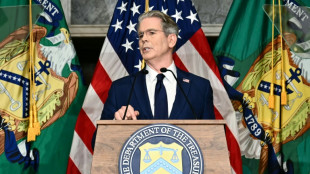
 Grand Canyon flash flood leaves one dead, around 15 missing

 Venus Williams falls at first hurdle in US Open

 At least five leaders skip annual Pacific Islands summit

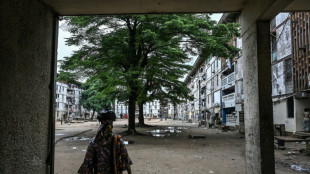 I.Coast home-hunters' saga highlights Africa housing crunch

 At least five leaders to skip annual Pacific Islands summit

"Two Federal Agencies, One Unconstitutional Playbook, all While Agency Overreach Crushes a 125 year old Family Farm and Paralyzes a Cannabis Cultivation Company for 7 years alike" says Duane Boise, CEO of MMJ International Holdings. DEA Administrator Terry Cole fix it!
WASHINGTON, D.C. / ACCESS Newswire / August 20, 2025 / In a landmark July 2025 decision, the Third Circuit Court of Appeals delivered a stinging rebuke to the Department of Labor for violating the Constitution through its system of in-house courts where agency employees served as prosecutor, judge, and jury. The case involved the Marino family, whose fourth-generation New Jersey farm was driven into collapse over a paperwork error and $500,000 in fines.

Yet even as this decision was being celebrated as a victory for due process, another federal agency, the Drug Enforcement Agency, was employing the same unconstitutional playbook against MMJ BioPharma Cultivation, a company seeking to produce FDA-grade cannabis for clinical trials on Huntington's disease and Multiple Sclerosis.
The parallel patterns reveal a disturbing trend of federal agencies operating outside constitutional constraints, with devastating consequences for small businesses and medical innovation.
The Pattern: Investigator, Prosecutor, Judge and Jury
The Marino family's ordeal began when Department Of Labor inspectors spent four days at their farm instead of the usual one, then waited months before levying staggering fines over a paperwork error-a mistakenly checked box regarding meal provisions for workers. The Marinos were then trapped in a Kafkaesque system where DOL agents investigated, DOL prosecutors argued the case, and a DOL judge decided the outcome.
MMJ BioPharma has faced nearly identical treatment from the DEA. The company filed its application for bulk manufacturing registration to grow cannabis for research in clinical trials in December 2018, yet seven years later, remains entangled in an administrative nightmare where DEA officials investigate, DEA attorneys prosecute, and DEA judges adjudicate-a system the Department of Justice has admitted may be constitutionally flawed.
Table: Comparison of Agency Actions
Agency Tactic | Department of Labor (Marino Case) | DEA (MMJ BioPharma Case) |
Initial Offense | Paperwork error (wrong box checked on meal provision form) | Regulatory interpretations (vault specifications, supply agreements) |
Financial Demand | $550,000 in fines and back wages | $20,000/month in facility costs without revenue |
Adjudication System | DOL administrative law judges | DEA administrative law judges |
Constitutional Status | Ruled unconstitutional by 3rd Circuit (2025) | DOJ concedes ALJ protections may violate Article II (2025) |
Business Impact | 125-year-old farm forced to close | FDA-grade research facility paralyzed |
Bureaucratic Obstruction: The DEA's Moving Goalposts
MMJ BioPharma's experience reads like a textbook case of regulatory weaponization. The company invested approximately $100,000 in a secure vault after DEA Investigator Thomas Cook from the Providence office insisted on concrete thickness specifications that exceeded requirements-demanding protection against hypothetical thieves tunneling underground despite seismic monitoring systems being an approved alternative.
The arbitrary demands continued at the highest levels. Deputy Administrator Matthew Strait instructed MMJ to provide a "bona fide supply agreement" and followed the DEA's December 2020 rule suggesting the agency would purchase cannabis and resell it to researchers. When MMJ produced an agreement with Catalent Pharma Solutions for API processing, DEA rejected it for not containing terms like those in a sample agreement the agency provided-despite the company following the DEA's own framework.
Perhaps most egregiously, DOJ attorney Cara Krysil advised MMJ that they could submit a $25 million NIH grant application using their DEA application number rather than a registration number-assurances that proved false when NIH rejected the application, costing the company critical research funding.
The Human and Medical Cost
For the Marino family, the financial and emotional toll was catastrophic. After nine years fighting DOL, they were forced to auction their 125-year-old farming operation-every tractor, combine, and piece of land-in a devastating two-day sale.
MMJ BioPharma has similarly bled under the weight of bureaucratic intransigence, spending over $20,000 monthly in facility costs without permission to operate. The human cost extends beyond financials to patients awaiting potential treatments for neurological conditions-patients who remain without access to standardized, FDA-grade cannabis medicines because of the DEA's obstruction.
"The public will be sickened to find out what DOL did," Joe Marino said after his victory. Similarly, medical advocates are increasingly alarmed by the DEA's pattern of behavior 1.
The Legal Landscape Shifts Beneath Them
Even as the DEA continues its administrative proceedings against MMJ BioPharma, the legal foundation for such agency tribunals is crumbling:
Jarkesy v. SEC (2024): The Supreme Court ruled that defendants facing civil penalties from agency proceedings are entitled to jury trials under the Seventh Amendment.
Marino v. DOL (2025): The Third Circuit unanimously ruled DOL's in-house court system unconstitutional.
DOJ Concession (2025): The Justice Department admitted that multiple layers of removal protections for ALJs "do not comport with the separation of powers and Article II" and would no longer defend them in litigation.
Despite these developments, the DEA continues its administrative proceeding against MMJ BioPharma, even as the Department of Justice has effectively conceded the constitutional deficiencies of the very system being used to judge the company.
A Path Forward
The solution to this constitutional crisis requires decisive action:
Stay DEA Proceedings: Administrator Terry Cole should immediately stay the administrative case against MMJ BioPharma and move it to Article III courts.
Establish Clear Guidelines: The DEA must publish workable, consistent standards for "bona fide supply agreements" that don't require impossible pre-conditions.
Credit Compliance: The agency should acknowledge investments already made in compliance with regulations rather than moving goalposts.
Transparent Timeline: The DEA must provide a public, accountable timetable for research registration decisions.
Independent Review: An external compliance panel without DEA ties should review requirements for rationality and consistency.
Conclusion: Justice Delayed Is Justice Denied
The Marino family ultimately received vindication from the Third Circuit, but only after losing everything. "We got our good name cleared, but more important than that, I'm truly thankful because I know our case will help others down the road," Joe Marino said.
MMJ BioPharma now seeks similar justice-not just for itself, but for the patients whose access to potential treatments hangs in the balance. The question is whether the DEA will continue defending its unconstitutional system or follow the growing judicial consensus that no agency should be both prosecutor and judge.
As Institute for Justice Attorney Bob Belden noted in the Marino case: "When a federal agency wants to take your money as punishment, it must prove its case against you in a real court, not in agency courts where the government plays investigator, prosecutor, judge, and jury".
The principle applies equally whether the agency is seeking fines or blocking medical research. The Constitution does not have exceptions for bureaucratic convenience or political objections to cannabis. Until the DEA acknowledges this fundamental truth, medical research and the patients it might benefit will remain collateral damage in the agency's unconstitutional war on a plant.
MMJ is represented by attorney Megan Sheehan.
CONTACT:
Madison Hisey
[email protected]
203-231-85832
SOURCE: MMJ International Holdings
View the original press release on ACCESS Newswire
P.Smith--AT