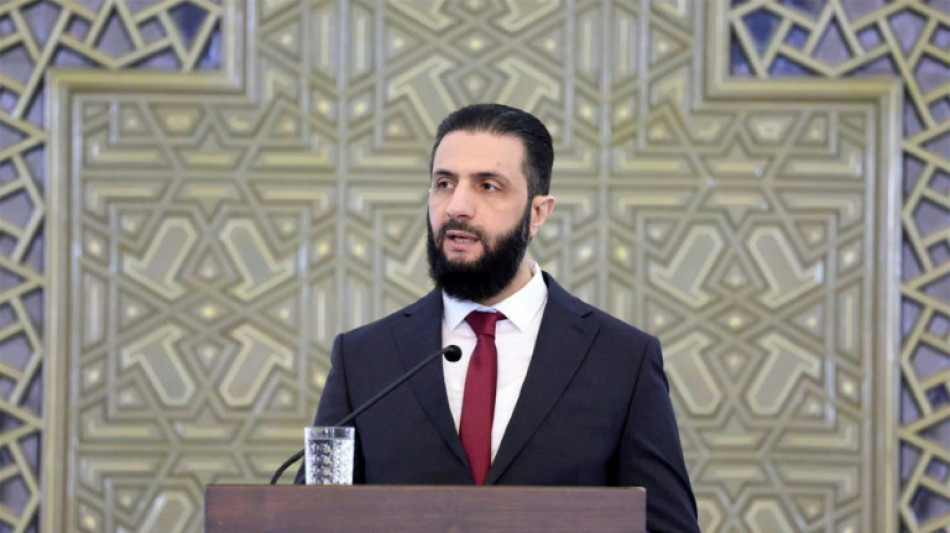
Syria national conference lays out post-Assad priorities / Photo: - - SANA/AFP

 Colombian judge bans strikes on guerrillas if minors are present

 Khachanov shocks ailing Auger-Aliassime, Swiatek and Osaka advance at US Open
 Lone juror blocking verdict in US mother's child murder trial: defense
 'Kinda chic' - Williams sisters set to launch US Open doubles bid
 Volkswagen says cutting 100,000 jobs by end of decade

 Russia slaps curfew on charity director over army criticism
 Ailing Auger-Aliassime upset by Khachanov at US Open
 Richarlison omitted from Tottenham's Premier League squad
 How El Nino is choking the Panama Canal

 Hamilton drives his Ferrari dream at Monza

 Senegal has an IMF loan, now what?

 Auger-Aliassime upset by Khachanov at US Open
 Hugging Face, the French start-up that became AI's warehouse
 World Cup winner Llorente retires from Spain team at 31
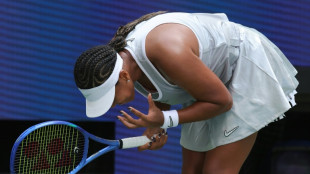 Osaka squeezes into US Open third round

 Apple faces £2 bn lawsuit in UK over app privacy feature
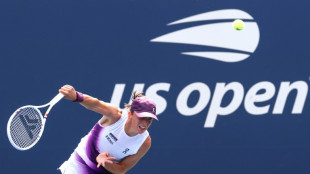 Former champ Swiatek eases into US Open third round
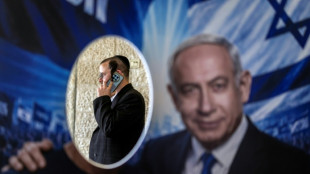
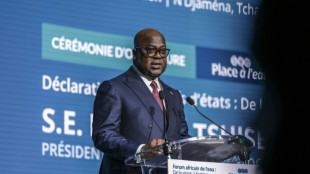 DR Congo latest to promise moving Israel embassy to Jerusalem
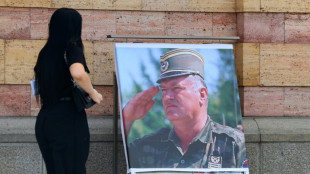 War criminal Mladic's body returns to Serbia with military honours

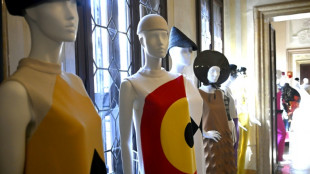 Pierre Cardin museum brings designer's futurist style to Venice

 Slovenian rookie Omrzel triumphs as Mas extends Vuelta lead
 British, French leaders talk migrants, EU relations
 Heading for Ferrari's home race, Leclerc still dreams of world title
 Cafe at centre of Israel culture clash agrees to shut on Sabbath

 Spacecraft bound for Mercury begins 'tricky' arrival
Syria's national dialogue conference, held Tuesday in Damascus, called for transitional justice, freedom and a state monopoly on arms to be among the cornerstones of the country's reconstruction after Bashar al-Assad's overthrow.
Interim President Ahmed al-Sharaa, in a speech earlier to the hundreds of attendees, said the country was at a "new historic phase" after more than a decade of civil war.
The closing statement, which is expected to be advisory rather than binding, included 18 points that "will serve as a basis" for the reform of state institutions and touch on Syria's political life, economy, defence policy and rights.
The statement read out by Houda Atassi, a member of the conference's preparatory committee, called for "a monopoly on weapons by the state" and a new professional national army.
Any "armed formations outside the official institutions" would be "outlawed", according to the statement -- an implicit reference to Kurdish-led forces and other factions that have refused to lay down their arms since Assad's toppling.
The statement also rejected "provocative statements" by Israeli Prime Minister Benjamin Netanyahu, who said his country "will not allow" Syrian armed forces to be deployed south of Damascus, and condemned "the Israeli incursion into Syrian territory".
It also rejected "all forms of discrimination based on race, religion or sect and the achievement of the principle of equal opportunities."
Civil society, religious communities, opposition figures and artists are represented at the hastily organised conference -- an initiative unheard of under Assad.
However, officials from the semi-autonomous Kurdish administration that controls swathes of the country's north and northeast criticised being shut out of the event, decrying "token representation" for minority groups.
The Kurdish administration said in a statement that it will "not be a part" of implementing the recommendations of the conference which "does not represent the Syria people".
Addressing the conference earlier, Sharaa said: "Syria has invited all of you today... to consult with each other on the future of your country."
"Syria is indivisible; it is a complete whole, and its strength lies in its unity," the interim president declared, adding that "the unity of arms and their monopoly by the state is not a luxury but a duty and an obligation."
Sharaa also said authorities would "work on forming a transitional justice body to restore people's rights, ensure justice and, God willing, bring criminals to justice".
- 'Restoring stability' -
Organisers said the semi-autonomous Kurdish administration and affiliated bodies were not invited due to the exclusion of armed groups, a reference to the US-backed, Kurdish-led Syrian Democratic Forces (SDF).
Kurdish administration official Hassan Mohammed Ali told AFP that the exclusion would have "negative repercussions and will not lead to solutions to the problems and crises that Syria has been suffering from for decades".
Swathes of northern and northeastern Syria are controlled by the SDF, which spearheaded the territorial defeat of the Islamic State group jihadists in Syria in 2019.
Sharaa, whose Islamist group Hayat Tahrir al-Sham (HTS) led the rebel alliance that toppled Assad in December, has previously said Kurdish-led forces should be integrated into Syria's national army, rejecting any Kurdish autonomy.
Organisers of the national dialogue conference announced on Sunday that the event would start the following day, and some Syrians living abroad said they could not attend due to the short notice.
Organisers said after the event that around 10,000 people attended online, many of them from abroad, with workshops addressing issues including freedoms and the constitution.
Atassi, from the preparatory committee, said earlier on X that she hoped the event would be "a real beginning for a path of restoring Syria's stability and unity".
- 'Rule of law' -
Caretaker authorities have been charged with managing affairs until March 1, when a new government is due to be formed.
In his speech, Sharaa emphasised the importance of the rule of law and highlighted the interim authorities' work "pursuing those who committed crimes against Syrians".
"We must build our state on the rule of law, and the law must be respected by those who establish it," he said.
Syria's Foreign Minister Asaad al-Shaibani said the country's foreign policy would be based on "balance and openness".
"We are keen to develop strong relations with countries that have respected our sovereignty, while keeping the door open for dialogue with any party willing to rebuild its relations with us based on mutual respect."
Sharaa's HTS has its roots in Syria's former Al-Qaeda affiliate, and is proscribed as a terrorist organisation by many governments including the United States.
But the group has moderated its rhetoric and vowed to protect Syria's religious and ethnic minorities.
Sharaa said earlier this month that it could take four to five years to organise elections in Syria and two to three years to rewrite the constitution.
Syria is also without a parliament, after the Assad-era legislature was dissolved following his December 8 ousting.
P.Smith--AT