Mohamed Al-Fayed, outsider shunned by British high society / Photo: SHAUN CURRY - AFP

 Apple’s 20th Anniversary iPhone to Skip Action Button for Camera Control Integration

 Family of Woman Who Died at Voting Station Condemns Official Silence
 Karen Wazen Launches First Standalone Boutiques in Cairo
 Making Your Home Safer for Aging Parents: Accessibility Renovations That Add Value

 Top Chef Winner Nicole Gomes Opens Lucky Lily Asian Brasserie at YVR

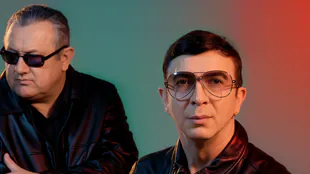 Marc Almond to Close Soft Cell Era After Final 'Danceteria' Tour
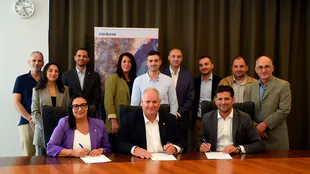 Malta Chamber of Commerce and FIMBank Sign Alliance Agreement to Boost Corporate Finance
 Rene Eyre Revisits Autobiographical Performance 'Say A Little Prayer' in London
 UAE's HCT Holds Record Graduation and Announces Major Training Expansion
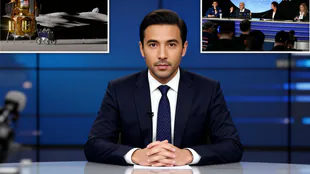 NASA Awards $10B Lunar Contract Framework to SpaceX, Blue Origin
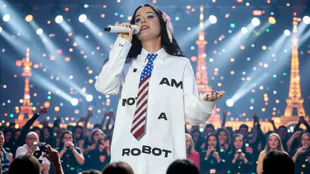 Katy Perry Tells Fans Ex-Husband Russell Brand 'Should Be in Jail' During UK Concert
Mohamed Al-Fayed spent years trying to gain admission to the upper echelons of UK society but ultimately failed to win either acceptance or British citizenship.
In his quest for the recognition he craved, the Egyptian billionaire, who died last year aged 94, repeatedly attempted to ingratiate himself with the royal family.
His efforts included becoming a sponsor of the Royal Windsor Horse Show, one of the late Queen Elizabeth II's favourite annual events.
In 1985 he also purchased Harrods, the luxury department store in London's Knightsbridge, where the multiple women and girls he is now accused of raping and sexually assaulting were employees.
Other lavish purchases that failed to secure his objectives include Fulham football club and the Ritz hotel in Paris.
His son Dodi's fateful relationship with Princess Diana which he engineered might have led to a degree of acceptance.
Instead it marked his permanent estrangement after he insisted -- without evidence -- the queen's husband Prince Philip had ordered the Paris car crash in which Diana and Dodi were killed to prevent her marrying a Muslim.
Fayed's claims against the royal family came at a price.
Harrods lost a royal warrant bestowed by Prince Philip in 2000 after what Buckingham Palace called "a significant decline in the trading relationship" between the prince and the store.
The Establishment "dislike my outspokenness and determination to get the truth", he said, as he announced his exile to Switzerland in 2003 because of his claims and what he said was the "unfair" treatment at the hands of the tax authorities.
Fayed, known for his outspoken and often foul-mouthed manner, was once dubbed the "phoney Pharaoh" by British media after a government report described his claims of a wealthy ancestry as "completely bogus".
Far from being the scion of a dynasty of cotton and shipping barons as he had portrayed himself, Fayed was the son of a poor Alexandrian schoolteacher who, after an early venture flogging lemonade, set out in business selling sewing machines.
He later had the good luck to start working for the arms dealer Adnan Khashoggi, who recognised his business abilities and employed him in his furniture export business in Saudi Arabia.
He became an advisor to the Sultan of Brunei in the mid-1960s and moved to Britain in the 1970s.
- 'Cash for questions' -
Fayed bought the Ritz in 1979 with his brother and the pair snapped up Harrods six years later after a long and bitter takeover battle with British businessman Roland "Tiny" Rowland.
A subsequent government investigation into the takeover, officially published in 1990, found that Fayed and his brother had been dishonest about their wealth and origins to secure the takeover.
Five years later, his first application for British citizenship was rejected.
Revenge followed swiftly. Soon after, Fayed told the press that he had paid Conservative MPs to ask questions in parliament on his behalf.
This brought down two prominent politicians, while Fayed also exposed cabinet minister Jonathan Aitken's involvement in a Saudi arms deal.
Aitken was later jailed for perjury and perverting the course of justice.
After the death of Dodi and Diana, Fayed further alienated himself, with the commissioning of two ill-judged memorials to the couple at Harrods.
One, unveiled in 1998, was a kitsch pyramid-shaped display with photos of Diana and Dodi, a wine glass purported to be from their final dinner and a ring that he claimed his son bought for the princess.
The other, a copper statue of the couple releasing an albatross, was entitled "Innocent Victims" -- a reflection of his view that Dodi and Diana "were murdered".
Fayed sold Harrods in 2010 to the investment arm of Qatar's sovereign wealth fund for a reported £1.5 billion ($2.2 billion).
According to Forbes list of the world's billionaires, Fayed was worth $1.9 billion in November 2022.
W.Nelson--AT