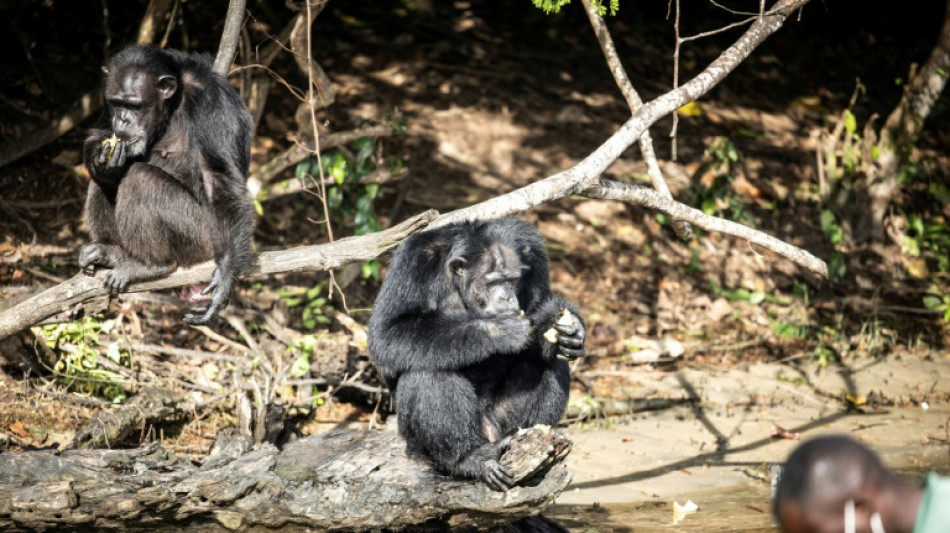
After life of trauma, Liberian lab chimps settle into retirement / Photo: JOHN WESSELS - AFP

 Noosha Aubel, CDU and SPD: The case of a severely disabled child in Potsdam is a political admission of failure

 Rybakina ensures rise to No.1 by reaching US Open semis

 Evacuations in Malibu after waves open sinkhole at Nicolas Cage's house
 England on top in third Test after latest Pakistan collapse

 England edge ahead in third Test after latest Pakistan collapse

 'Alarm bells ringing': US summer heat shatters record
 IAEA board refers Iran to UN Security Council
 Rubio pushes extraditions, anti-drug fight in Ecuador
 Amboss and Aureo Connect the Lightning Network to Mexico's Banking System
 Brent oil passes $100 on Mideast flare-up, stoking inflation fears
 Israeli settlement winemaker defiant after UK-led trade sanctions

 Josh Kerr: I pick my races and never get 'greedy'

 Carrick confident Man Utd can go far in 'magical' Champions League

 France far right expels policeman member over racist remarks

 Pakistan collapse to 133 all out against England in 3rd Test

 Heat forces French champagne makers to stiffen their drink
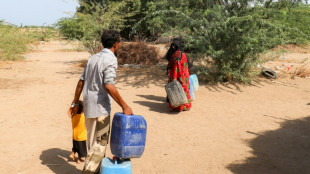
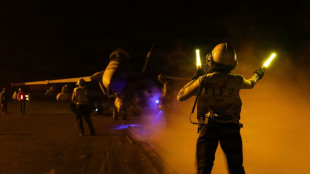 Iran war drives oil prices to $100 per barrel as Tehran strikes ships

 Pakistan collapse to 100-7 against England in 3rd Test
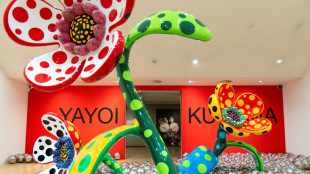
 Workers, migrants focus of documentaries by Oscar winners at Venice

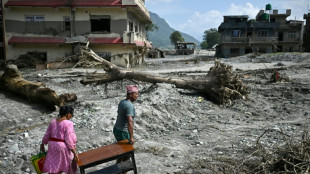 Nepal seeks survivors two weeks after deadly floods

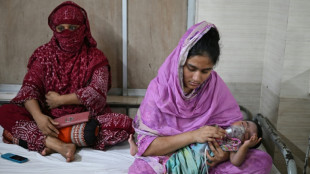 Bangladesh measles crisis kills more than 1,000 children

 Pakistan collapse to 26-4 against England in 3rd Test

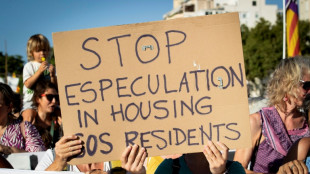 EU helps cities tighten screws on Airbnb, holiday rentals

 Courtois to put Belgium career on hold
 RavenDB Launches Quill to Bring Production AI Agents to Enterprise SQL Systems, No Migration Required

Floating on a river boat near a Liberian island, vet Richard Ssuna watches intently as animal carers wade towards the shore hurling fruits and imitating chimpanzee calls as they go.
The beach is empty, but the sound of rustling and chimpish grunts begins to fill the green undergrowth. Slowly, an ape knucklewalks out onto the beach to grab some food.
He's a high-ranking member of his troop, explains Ssuna, as more chimpanzees follow. The younger ones gambol and hoot in delight as carers throw them bananas, palm nuts and cassava.
Sixty-five chimps are spread across six uninhabited river islands near the Atlantic Ocean, about 55 kilometres (34 miles) south of the West African country's capital Monrovia.
But their joy in feeding belies a dark past.
The chimps are the remainders of a group of about 400 ex-test subjects of a US-funded research project -- and have survived decades of invasive experiments. Some of the animals underwent several hundred biopsies.
"They were traumatised," says Ssuna, who's also a director of Humane Society International (HSI), a rights group that now cares for the primates.
Chimp testing in Liberia began 1974, when the New York Blood Center (NYBC) funded biomedical research related to hepatitis B and other diseases at a complex by the Farmington River.
During Liberia's devastating 1989-2003 civil war, the chimpanzees nearly starved to death as the country imploded around them.
Research staff in the impoverished country had to dig into their own pockets to provide basic sustenance.
The researchers retired many of the chimps to the river islands in the mid-2000s but their ordeal continued.
For reasons that remain unclear, NYBC cut funding in 2015 -- in a move that provoked global outrage -- abandoning the apes on the tiny river islands incapable of supporting them.
Activists picketed NYBC headquarters in New York and Hollywood stars such as Joaquin Phoenix and Ellen Page signed a petition urging the blood bank to reinstate funding.
Brian Hare, a US-based primatologist who launched the petition, wrote at the time: "Effectively they have left these poor chimpanzees to suffer from dehydration and starvation".
- 'Victim of torture' -
Liberia is one of the world's poorest countries, where 44 percent of the population lives on less than $1.90 per day, according to the World Bank.
Local staff at the research centre kept showing up to work to help the chimps when NYBC cut funding -- at a time when an Ebola epidemic was raging in Liberia. Rights groups and US financial giant Citigroup also provided relief funds during the turbulent period.
Under pressure, NYBC eventually struck an agreement to split the long-term care costs for the chimps with the Humane Society in 2017, pledging $6 million.
NYBC did not respond to questions from AFP about why it withdrew funding.
Years on, the former lab chimps now enjoy veterinary care and two daily meals. But many still bear the scars of their grim past.
At another island, during morning feeding, Ssuna points to a grizzled ape who's missing an arm. The vet says the animal is "essentially victim of torture."
The chimp, named Bullet, lost the limb as a infant when poachers killed his mother and ripped him from her arms. He then ended up at the research lab.
The carers are trained to form close attachments with the chimpanzees and to be gentle, explains Ssuna, who says certain stimuli can trigger negative memories in chimps, as in humans.
- Bright future -
None of the chimpanzees can be released into the wild, and are confined to the islands for life.
They never learned to fend for themselves and there are also fears they would spread disease if humans came into contact with them.
Keeping them fed is a serious operation.
Carers prepare about 200 kilogrammes (440 pounds) of food every morning, and 120 kilos (264 pounds) in the afternoon -- amounting to about 10 tonnes a month.
Care will continue until every ape on the islands dies, according to Ssuna.
He estimates that their lifelong care will last some 50 years. Many of the chimps are around 20 years old and have a lifespan of about 60.
There are also a small number of babies. HSI plans to vasectomise the males to prevent further births.
"The future is very bright, as much as we would like to leave them back in the wild," says Ssuna back on the mainland after the feeding, standing near the rusted animal cages of the old research complex.
"They’re in a better place."
B.Torres--AT