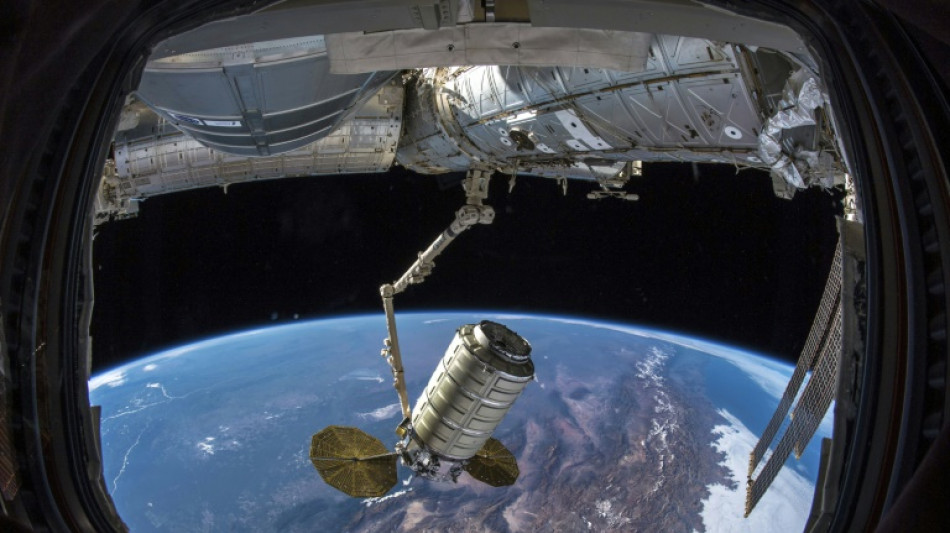
NASA touts space research in anti-cancer fight / Photo: HO - NASA/AFP

 Forex Expo Dubai to Take Place as Scheduled on 22–23 September 2026

 Russia pounds Kyiv, ending three-day halt for US talks

 Flights resume gradually in Indonesia after volcanic eruption

 French AI firm Mistral valued at 21 bn euros after latest funding
 Sweden heads to the polls in close election race

 Australia's Big Bash T20 teams face sale to private investors

 Russia resumes strikes on Kyiv after three-day halt

 Canada's counter-tariffs take effect on various US goods

 China's trade booms as focus turns to expected Trump-Xi summit

 Is Champions League three-peat really possible for PSG?

 Russia pummels Kyiv after three-day halt

 Mongolians wait hours for fuel as reliance on Russia bites

 Blockx first Belgian man to reach US Open quarter-finals

 Praying for rain as fires, haze plague Indonesian Borneo

 Rybakina tops Osaka, sets US Open quarter-final clash with Zheng

 Apex Expands Trinity Zone with Step-out Hole Returning 197.5 m Interval of 2.12% REO at the Rift Rare Earth Project in SE Nebraska
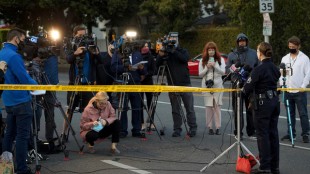 BioNxt Advances Sublingual Everolimus ODF for Organ Transplant Rejection with Initiation of Large-Animal Pharmacokinetic Study
 Genflow Biosciences PLC Announces Primary Endpoint in SLAB Clinical Trial Met

 Gaming Realms PLC Announces Interim Results

 Panama Canal considering more cuts in transits due to El Nino

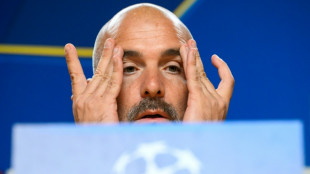 Maresca agrees with Haaland that players started season jaded

 Hurricane warning issued for westernmost Hawaiian islands

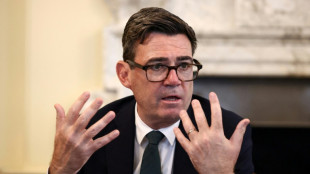 UK PM denounces 'politics of poison' after anti-migrant protests

 Comeback queen Zheng strikes again for US Open quarter-final berth

 Third absence for injured Hadjar as Lawson fills in again in Spain

Experiments in the weightless environment of space have led to "crazy progress" in the fight against cancer, NASA officials said at a recent event highlighting an important and personal initiative of US President Joe Biden.
Space is "a unique place for research," astronaut Frank Rubio said at the event in Washington.
The 48-year-old, a physician and former military helicopter pilot, conducted cancer research during his recent mission to the International Space Station (ISS), orbiting some 400 kilometers (250 miles) above the Earth's surface.
Not only do cells there age more rapidly, speeding up research, their structures are also described as "purer."
"They all don't clump together (as they do) on Earth because of gravity. They are suspended in space," enabling better analysis of their molecular structures, NASA chief Bill Nelson told AFP in an interview.
Research conducted in space can help make cancer drugs more effective, Nelson added.
Pharmaceutical giant Merck has conducted research on the ISS with Keytruda, an anti-cancer drug that patients now receive intravenously.
Its key ingredient is difficult to transform into a liquid. One solution is crystallization, a process often used in drug manufacturing.
In 2017, Merck conducted experiments to see if the crystals would form more rapidly in space than on Earth.
Nelson used two pictures to demonstrate the difference. The first showed a blurry, transparent spot. But on the second, a large number of clear gray spots had emerged.
That photo showed that smaller, more uniform crystals were forming in space -- and "forming better," Nelson said.
Thanks to such research, researchers will be able to make a drug that can be administered by injection in a doctor's office instead of through long and painful chemotherapy treatments, he added.
Merck identified techniques that can help it imitate the effects of these crystals on Earth as it works to develop a drug that can be stored at room temperature.
Still, it can take years between research in space and the wide availability of a drug developed there.
Cancer research in space began more than 40 years ago but has become "revolutionary" in recent years, said Nelson, a former Democratic senator who traveled into space himself in 1986.
"We use the languages of space to tell the limits of cancer," added W. Kimryn Rathmell, director of the National Cancer Institute, a federally funded research body.
- 'Moonshot' -
Biden launched a "Cancer Moonshot" initiative in 2016, when he was then vice president, echoing a speech by John F. Kennedy some 60 years earlier outlining the bold goal of sending an American to the moon.
The goal of the "Moonshot" is to halve the death rate from cancer over the next quarter century, saving four million lives, according to the White House.
The battle against cancer, the country's second-leading cause of death after heart disease, hits home for Biden, who lost his son Beau to brain cancer in 2015.
"We all know someone -- and most of us love someone -- who has battled this terrible disease," Xavier Becerra, Biden's secretary of health and human services, told reporters Thursday at NASA headquarters.
"As we did during the race to the Moon," he added, "we believe our technology and scientific community are capable of making the impossible a reality when it comes to ending cancer as we know it."
Political realities may hinder that ambitious goal, though. Congress has earmarked just over $25 billion to NASA for 2024, two percent less than the previous year and well below what the White House had sought.
But Rathmell of the Cancer Institute holds out hope.
"The ability of space to capture the imagination is huge," she said. And space cancer research has a firm goal: "It can save lives."
E.Flores--AT