
-
 Nepal flood death toll rises as rescuers scour tunnels
-
Nicaragua accuses Germany of multiple violations of law in Gaza genocide case
-
 France's Mistral sees value soar with 3 bn euro cash infusion
-
Dutch peanut butter artwork proves a sticky attraction
-
 Nepal glacier saw exceptional heat before collapse caused deadly floods: researcher
-
Forex Expo Dubai to Take Place as Scheduled on 22–23 September 2026

-
 Ethiopia boosts drone production to fight rebels
-
Russia pounds Kyiv, ending three-day halt for US talks
-
 Yemen rebels hit Saudi Arabia with wave of strikes, wounding 73
-
Flights resume gradually in Indonesia after volcanic eruption
-
 Nepalis mark a year since deadly protests that toppled government
-
French AI firm Mistral valued at 21 bn euros after latest funding

-
 Rubio launches Latin America tour to cement US influence
-
Sweden heads to the polls in close election race
-
 France tries 14 over deadliest Channel migrant crossing disaster
-
Australia's Big Bash T20 teams face sale to private investors
-
 Australia threatens hefty fines if big tech fails 'duty of care'
-
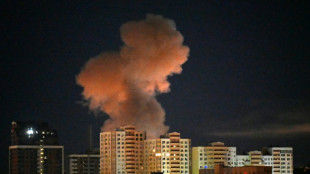
Russia resumes strikes on Kyiv after three-day halt
-
 Zverev romps into quarter-finals as Darderi downed
-
Canada's counter-tariffs take effect on various US goods
-
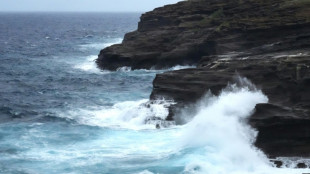 Kauai on tornado watch as Hurricane Lowell nears Hawaiian islands
-
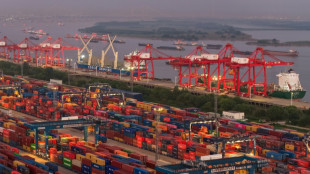
China's trade booms as focus turns to expected Trump-Xi summit
-
 Pakistan roll the dice in search of consolation win over England
-
Is Champions League three-peat really possible for PSG?

-
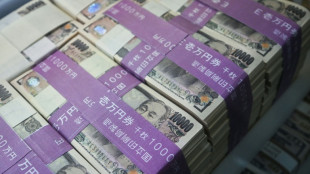 Yen extends gains as traders eye rate hike, tech rallies again
-
Russia pummels Kyiv after three-day halt
-
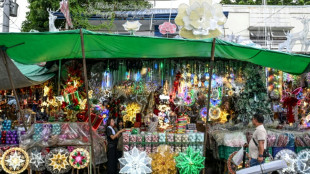 'The ber months': Christmas arrives early in the Philippines
-
Mongolians wait hours for fuel as reliance on Russia bites
-
 N. Korea calls Russia bridge a sign of tighter ties
-
Blockx first Belgian man to reach US Open quarter-finals

-
 US sanctions threaten to crush Iranian students' dreams
-
Praying for rain as fires, haze plague Indonesian Borneo
-
 Former champ Gauff holds off Jovic to reach US Open quarter-finals
-
Rybakina tops Osaka, sets US Open quarter-final clash with Zheng

-
 Battery X Metals to Appoint Accomplished Technology and Consumer Brands Executive Nicholas Reichenbach to Board of Directors
-
Apex Expands Trinity Zone with Step-out Hole Returning 197.5 m Interval of 2.12% REO at the Rift Rare Earth Project in SE Nebraska
-
 Equitech-Bio Expands Reagent Portfolio with New IgG Offering and Publication-Backed Product Validation from Bioz
-
OMP Asia Conferences to Showcase How Industry Leaders Kraft Heinz, Mars, Medac, And Nestlé Approach AI-Powered Supply Chain Planning At "Decision Velocity"

-
 CPG Life Fund I Launches $20 Million Operator-Led CPG Fund
-
Datameds, AI., and Tollo Health Partner with the NFL Alumni Association for Health Lives Here National Campaign Rollout
-
 Who is the Best Female Cosmetic Surgeon in Florida?
-
The Eye Drink will be placed in Keg N Bottle stores, Expanding Retail Presence Across San Diego

-
 CANEX Metals Announces C$6.5 Million Strategic Financing Led By C$3 Million Investment by Eric Fier
-
Who Does the Best Facelift in Florida?

-
 Helio Sets September Roadshow Across Austin, Houston, Phoenix, Scottsdale
-
BioNxt Advances Sublingual Everolimus ODF for Organ Transplant Rejection with Initiation of Large-Animal Pharmacokinetic Study
-
 Gaming Realms PLC Announces Interim Results
-
InterContinental Hotels Group PLC Announces Transaction in Own Shares - September 08

-
 Universal Edge Technologies Establishes Senior Advisory Committee, Names Mark Powell and Mark P. Mills as Founding Members
-
Genflow Biosciences PLC Announces Primary Endpoint in SLAB Clinical Trial Met
Volcano erupts again on Iceland peninsula
Icelandic police declared a state of emergency Saturday as lava spewed from a new volcanic fissure on the Reykjanes peninsula, the fourth eruption to hit the area since December.
A "volcanic eruption has started between stora Skogfell and Hagafell on the Reykjanes Peninsula," said a statement from the Icelandic Met Office (IMO). Live video images showed glowing lava and billowing smoke.
Iceland's Department of Civil Protection and Emergency Management announced it had sent a helicopter to narrow down the exact location of the new fissure. The authority also said the police had declared a state of emergency due to the eruption.
According to the IMO, it occurred close to the same location as a previous eruption on February 8. Lava appeared to flow south towards the dykes built to protect the fishing village Grindavik, it said.
Just after 2200 GMT, "the southern lava front was just 200 metres from the barriers on the eastern side of Grindavik and moving at a rate of about one km per hour," it added.
- Almost no warning -
Lava was also flowing west, as it had on February 8, and the length of the fissure was estimated to be 2.9 kilometres (1.8 miles), said the IMO.
"From initial assessments of web camera imagery and aerial photographs from the helicopter flight, the eruption is thought to be the largest (in terms of magma discharge) of the three previous fissure eruptions from the Sundhnukur crater row," IMO said, stressing the assessment was based on the first hour of "eruptive activity."
Minutes before the eruption, the agency had issued a statement saying that seismic activity indicated that there was an increased chance of an eruption.
"The pre-eruptive warning phase was very short," the IMO said.
On Friday, the IMO said that magma was accumulating under the ground in the area "which could end with a new magma intrusion and possibly an eruption". That could happen "with very little warning", it said.
Local media reported that Iceland's famed Blue Lagoon geothermal spa had been evacuated as well as Grindavik.
The roughly 4,000 residents of Grindavik were only cleared to return to their homes on February 19 after having been evacuated on November 11, though only around a hundred chose to do so.
On that occasion, hundreds of tremors damaged buildings and opened up huge cracks in roads.
The quakes were followed by a volcanic fissure on December 18 that spared the village.
- New era -
But a fissure opened right on the town's edge, in January, sending lava flowing into the streets and reducing three homes to ashes, followed by a third eruption near the village on February 8.
As of Friday, more than 300 of Grindavik's inhabitants had put in requests to sell their house to the state.
The eruptions on the Reykjanes peninsula have also raised fears for the Svartsengi power plant, which supplies electricity and water to around 30,000 people on the Reykjanes peninsula.
The plant was evacuated and has been run remotely since the first eruption in the region, and dykes have been built to protect it.
Iceland is home to 33 active volcano systems, the highest number in Europe.
It straddles the Mid-Atlantic Ridge, a crack in the ocean floor separating the Eurasian and North American tectonic plates.
But until March 2021, the Reykjanes peninsula had not experienced an eruption for eight centuries.
Further eruptions occurred in August 2022 and in July and December 2023, leading volcanologists to say it was probably the start of a new era of seismic activity in the region.
P.A.Mendoza--AT