
Activists decry Tibet 'cultural genocide' ahead of China rights review / Photo: JOSH EDELSON - AFP

 South Korea to prosecute students cheating with smart glasses

 Surging costs of living top US voter concerns

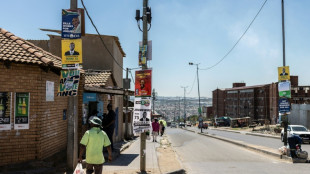 Basic services, fading loyalties loom over South Africa's vote

 Shock, vindication, regret: Scientists react to AI roiling life's work

 Crypto platform Binance confirms $6.3 bn hack

 Boozer shines as Grizzlies top Blazers in battle of NBA unbeatens
 Jorge Martin confirmed to race at Malaysian MotoGP

 Bayern and Kane host Dortmund after week of 'extremes'

 Packers beat Panthers 27-19 as Watson returns from hospital

 Affordable supermarket fashion offers designer-inspired autumn alternatives
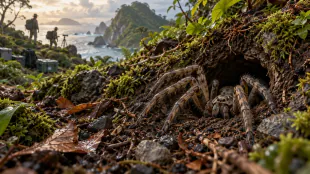
 Judge throws out Australian mushroom killer's appeal, imposes harsher sentence
 Pelicans down Kings for first win of NBA season

 Tech firms take fresh hit as earnings misses fan AI fears

 Worcestershire leaders back renewed two-unitary council reorganisation

 India's animal megacentre vows reset after criticism
 Dodging fuel price hikes, Damascus drivers turn to electric cars
 Alvechurch manager praises resilience but seeks improvement after Anstey draw

 Crypto platform Binance confirms major hack, more than $2.5bn frozen

 Sports chiefs face losing battle to keep sport separate from politics
 Nvidia's web of AI bets: smart strategy or bubble risk?
 Carrick fights for Man Utd job, Arsenal face Liverpool test

 Apple TV crime drama Nocturne brings a Scandinavian thriller to Pennsylvania

 Charity crowdfunds millions to buy historic English estate

 How to Build a "Fun Fund" Without Guilt

 InterContinental Hotels Group PLC Announces Transaction in Own Shares - October 30
Activists accused China of seeking to "erase" Tibetan cultural and religious identities, urging a review of Beijing's rights record at the UN on Tuesday to focus on its "cultural genocide" in the region.
United Nations experts and activists estimate that more than a million Tibetan children between the ages of three and 18 have been separated from their families and placed in a network of residential boarding schools.
"That represents nearly 80 percent of Tibetan school-aged children," said Lhadon Tethong, head of the Tibet Action Institute.
Beijing has defended the boarding school system as respectful to cultural rights, and insisted it is needed especially in remote, high-altitude and scarcely-populated areas, where children often need to travel long distances to get to school.
But a group of independent UN experts last year warned that the system "appears to act as a mandatory large-scale programme intended to assimilate Tibetans into majority Han culture, contrary to international human rights standards".
In the schools, the children face "very intensive indoctrination", Tethong told AFP, adding that they often come out barely able to communicate in Tibetan and voicing criticism of Tibetan traditions.
"It is a case of cultural genocide, a clear-cut case," she said.
She and other advocates for Tibetan rights took part in an event at the UN in Geneva on Monday ahead of a review of China's rights record on Tuesday.
Beijing will be undergoing a so-called Universal Periodic Review (UPR) -- an examination all 193 UN member states must face every four to five years to assess their human rights record.
A civil liberties crackdown, Hong Kong's draconian national security law and repression in Xinjiang are among concerns expected to be raised.
- Political indoctrination -
The Tibetan advocates appealed Monday for countries not to forget about the situation in Tibet, where they accuse Beijing of a worsening crackdown and efforts to erase the cultural and religious identity.
"We have seen a worsening of rights in China, especially in Tibet," Thinlay Chukki, a representative of Tibet's spiritual leader the Dalai Lama, told Monday's gathering.
Tibet has alternated over the centuries between independence and control by China, which says it "peacefully liberated" the rugged plateau in 1951 and brought infrastructure and education to the previously underdeveloped region.
But many exiled Tibetans accuse China's ruling Communist Party of repression and eroding their culture.
And the network of residential boarding schools was the main tool for erasing Tibetan culture, according to Tethong.
She said the system was similar to the colonial boarding schools in Canada and the United States.
While the Canadian and US schools aimed from the late 19th century to forcibly assimilate Indigenous children to "white and Christian" culture, she said that in China "we're talking about political indoctrination".
"It's not just stripping the kids of their traditional identity, language and culture and religion, but it's really trying to imprint on them this sort of hyper-nationalist Chinese identity with this Communist Party as its foundation."
She said it was important to shine a spotlight on what was happening, urging countries to raise the issue during China's UPR.
"This is the opportunity to put the Chinese government on notice... that the system is known and that it is wrong," she said.
Governments, she said, must "call for the Chinese government to stop this very obvious campaign of assimilation... of elimination of Tibetan children's identity and culture through the school system."
AFP has sought a comment from the Chinese mission in Geneva.
E.Flores--AT