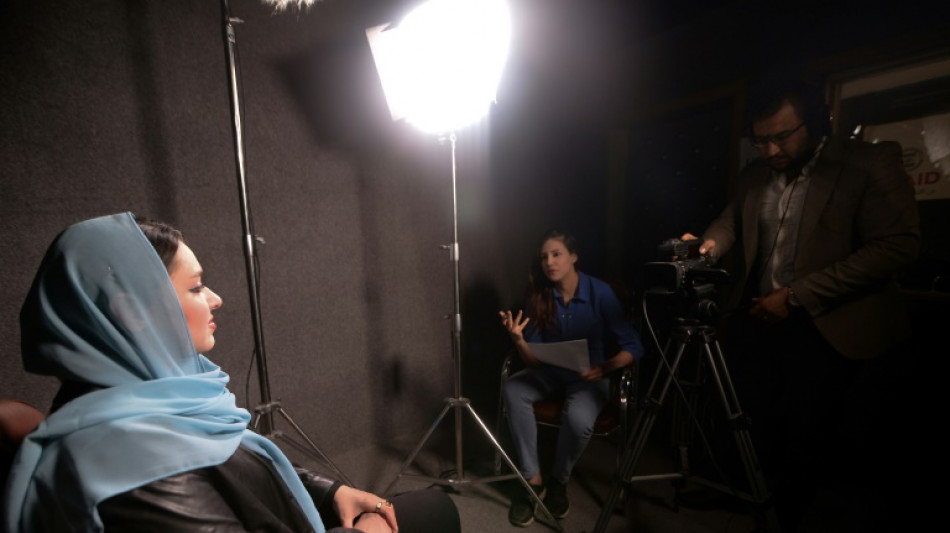
'Witnessing catastrophe': Iraq preserves memories of IS reign / Photo: Zaid AL-OBEIDI - AFP

 Gauteng Health Department Warns of Rising Antibiotic Resistance Threat

 Bishop Museum Races to Save Rare Megamouth Shark Specimen

 Impauer Technologies Inc. Announces Third Quarter 2026 Financial Results and Equity Compensation Grants

 NiobiumX Mining Explains How it Will Hunt for Niobium at Shipshaw: Magnetic Lows, Thorium Highs, and Machine Learning Built for a District With One Producing Mine

 InterContinental Hotels Group PLC Announces Transaction in Own Shares - November 26

 Black Friday Discounts Cut Prices on Two Top-Rated Wiper Blades

 Luxembourg Pay Rise Delayed as Regional and World Headlines Develop

 Audience to Choose the Set List at Luxembourg's First FAMIL Jukebox Night

 Raheem Sterling Receives Suspended Sentence After Lamborghini Crash

 Luxembourg Housing Petition Passes Threshold for Parliamentary Consideration

The horrors they endured under the Islamic State group may be in the past for the people of Iraq, but the traumatic memories remain.
Now a research project is recording their witness testimonies for posterity.
Omar Mohammed, founder of the Mosul Eye project, rose to prominence during the IS reign by bravely sharing news via Twitter from inside the city under jihadist rule.
Years later, he wants to make sure nothing is forgotten.
"When I was in Mosul recording everything myself, I felt the need to include all the people, to record our history in their own voice," he told AFP.
Bereaved mother Umm Mohammed, 55, is among those who have shared their memories of terror, suffering and loss with the non-governmental group.
The Sunni extremists of IS came for her family one night in 2015 and took away her son Ahmed, then a 27-year-old construction worker.
His brother Mohammed, 10 years younger, then made a fateful choice: he decided to join the ranks of IS, with a daring plan to find and liberate Ahmed.
"I told him: 'My son, don't join them'," recounted Umm Mohammed, her hair under a dark scarf.
"He said: 'It's none of your business. I'm going to get my brother. I'll go into the prisons.'"
The elderly woman told AFP, with sadness in her voice, that Mohammed left "and never came back".
And neither did Ahmed.
Both are presumed to be among the many killed under the group's self-declared "caliphate" that cut across swathes of Iraq and Syria.
Umm Mohammed said she suspects the jihadists felt that Mohammed "was not one of them. They must have thought he was a spy."
- Murder, rape, torture -
Speaking about those dark days years later for the Mosul Eye project has brought up a storm of emotions, but ultimately had a cathartic effect for Umm Mohammed.
"I had a volcano inside me," she said. "When I spoke I felt joy, sadness, despair, relief."
Iraq had already endured years of war and sectarian turmoil that followed the US-led invasion that toppled Saddam Hussein 20 years ago when IS launched its campaign of murder, rape, torture and enslavement.
Sweeping out from their base in Syria, the Sunni extremists in mid-2014 rampaged across northern Iraq's ancient city of Mosul and Nineveh province.
There were fears they would attack Baghdad before they were pushed back by a US-supported alliance that eventually deprived IS of its Iraqi territory in late 2017.
Gruelling urban battles left much of Mosul in ruins and many of the survivors deeply traumatised.
Mosul Eye, with funding from the US Agency for International Development, has trained 10 students to conduct and film interviews, mostly in Mosul but testimonies have also been collected from people hailing from elsewhere in Iraq.
The youngest of the 70 witnesses are barely 10 years old. Others are in their 80s. The oldest is 104.
The footage will be kept at the group's archives at Mosul University, and George Washington University in the US capital, for use by researchers and for future generations.
"We wanted to show the world how the people of Mosul overcame this experience," said a spokesman for Mosul Eye, Mohannad Ammar.
- 'Opening wounds' -
Another witness is Moslem Hmeid, a 27-year-old law student whose Sunni Arab family endured five months of jihadist rule in Sinjar in 2014 before fleeing.
Seared in his mind especially is the "bloody first week, impossible to erase from memory".
He relived with pain how IS targeted the local Yazidi minority, whose non-Muslim faith the extremists considered heretical.
Hmeid remembered watching helplessly as the jihadists came and loaded Yazidi girls and women into lorries.
"Once I saw two or three trucks full of women," he told AFP. "And a few men, but mostly young women, aged 17 to 30, maybe."
Entire Yazidi villages were emptied and many fell victim to crimes since recognised as genocide by the United Nations and courts in several countries.
Women were forced into sexual slavery and the men were killed, while "those who could fled into the mountains," Hmeid said.
"Witnessing such a catastrophe happen to your neighbours and not being able to help... We were heartbroken," said Hmeid. "Psychologically, we were devastated."
With three of his brothers in the military and on the IS kill list, the family fled to Turkey but later returned to Iraq.
"By talking about these topics, we reopen wounds," said Hmeid. But, added the father of two, "the next generations must know exactly what happened".
L.Adams--AT
