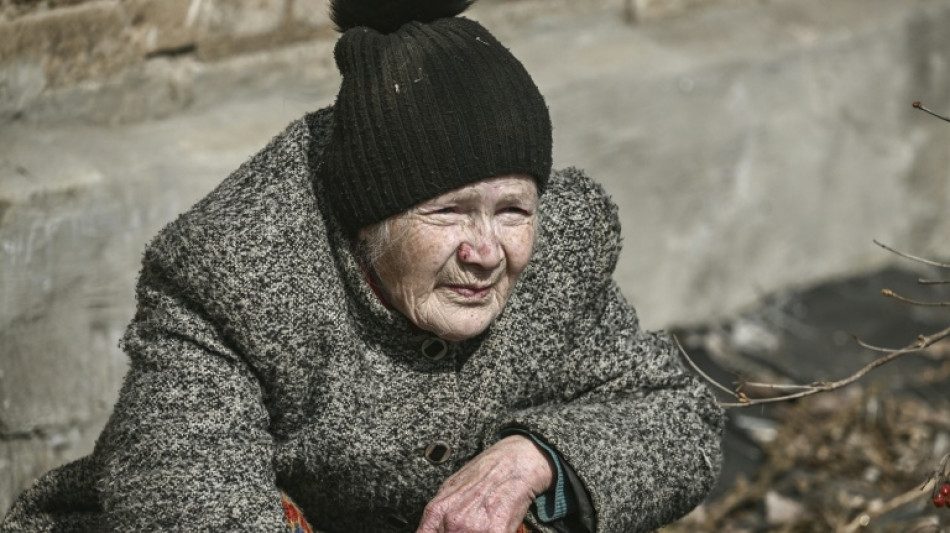
As winter ends, a garden takes shape near Ukraine frontline / Photo: Aris Messinis - AFP

 Gauteng Health Department Warns of Rising Antibiotic Resistance Threat

 Bishop Museum Races to Save Rare Megamouth Shark Specimen

 Impauer Technologies Inc. Announces Third Quarter 2026 Financial Results and Equity Compensation Grants

 NiobiumX Mining Explains How it Will Hunt for Niobium at Shipshaw: Magnetic Lows, Thorium Highs, and Machine Learning Built for a District With One Producing Mine

 InterContinental Hotels Group PLC Announces Transaction in Own Shares - November 26

 Black Friday Discounts Cut Prices on Two Top-Rated Wiper Blades

 Luxembourg Pay Rise Delayed as Regional and World Headlines Develop

 Audience to Choose the Set List at Luxembourg's First FAMIL Jukebox Night

 Raheem Sterling Receives Suspended Sentence After Lamborghini Crash

 Luxembourg Housing Petition Passes Threshold for Parliamentary Consideration

Galyna hunches over her small garden in Chasiv Yar, her frail silhouette in stark contrast with the powerful tanks rumbling past her home near the frontline in eastern Ukraine.
"I love gardening, you know," the 69-year-old says as she plans a fresh crop at the end of a harsh wartime winter. Her face lights up at the mention of her passion.
"Last year, I had incredible tomatoes here, even watermelons, small ones, but it's a treat, believe me," she enthuses as she spoke to AFP.
The town where she has lived for 38 years is the first to the west of Bakhmut, a city in eastern Ukraine that has been destroyed in the longest and bloodiest battle of the Russian invasion.
Already facing regular bombings, Chasiv Yar, home to 13,000 people before the war, could be the next target of Moscow's army if Bakhmut falls.
But Galyna plans to plant more tomatoes and flowers anyway.
Her garden is an unmarked patch of land at the back of her three-storey apartment building, where she lives in a first-floor apartment with her disabled son, who is around 40 years old.
Just ahead lies a road where armoured vehicles and tanks make their way to and from the frontline.
The crash of cannon and mortar fire aimed at Russian positions regularly sound in the small town.
Galyna, who uses her little garden as an outlet for the stress of the war, has grown used to the racket.
"When I realised the war had started, I brought violets and many different types of flowers here. They grow in the forest, so I plant them here so that I don't miss them," she said.
"I feel happy every time I look at them."
- 'A smaller shovel' -
But now, as the spring approaches, Galyna -- dressed in an elegant, mottled grey coat buttoned to the neck, multicoloured trousers and fur boots -- is frustrated.
"I just need a smaller spade to dig up the ground for my flower seeds," she said, pointing to a bulky tool almost as tall as her.
She also regrets not having "much time to garden. I need to take care of my neighbour. She is 93, the same age my mom would have been. I take her water and bread."
Few people still live in the crumbling neighbourhood of Soviet-era buildings. The roofs of some of them have been ripped apart by Russian strikes.
"There, you can see a bomb struck it," Galyna said, pointing to a nearby building. She said two people she knew who lived there had been moved to "another house because it was no longer safe to live there, there was no longer a roof".
Widowed in 1994, she is staying in Chasiv Yar to care for her son.
"One day, my son went to the humanitarian aid centre. His friend was injured there (by shrapnel), and an ambulance came and they treated him. My son was very scared. He used to charge his phone there, but now he doesn't," says Galyna.
She also has a daughter, who lives in Germany, is married and has three children.
"When there was phone service, we could communicate. About a month ago I think she was saying 'I wish you could come here, to our house'."
But she added: "I think I am going to stay here."
Suddenly, a Russian shell whistled and exploded a few hundred metres east of the city.
"There's nothing to fear. You see, I'm not shaking. I'm used to it," Galyna said with a small smile.
Two other shells followed, setting two houses on fire.
"I hope to stay safe," she said.
When she goes down to the garden, she added: "I feel an angel saying 'Don't go'.
"But I go anyway."
F.Wilson--AT
