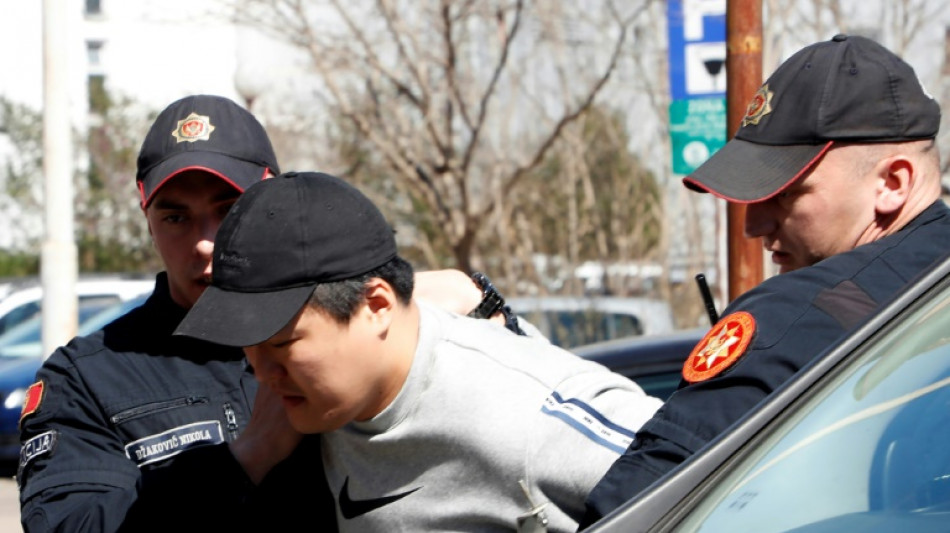
Do Kwon: S. Korea's crypto 'genius' turned disgraced fugitive / Photo: STRINGER - AFP

 Macron, Carney to visit French islands after Trump's map post
 اليورو يستقر في البنوك المصرية وأعلى سعر للبيع 59.85 جنيه

 فليك يضم حمزة عبد الكريم إلى قائمة برشلونة بعد أربعة أهداف في الإعداد
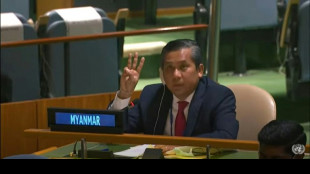 Myanmar says UN envoy illegitimate ahead of credentials decision
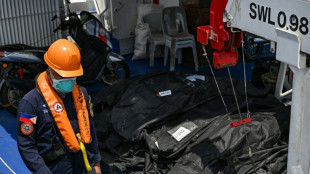 Philippine rescuers pull more victims from charred ferry

 ستاندرد آند بورز تثبت تصنيف السعودية عند A+

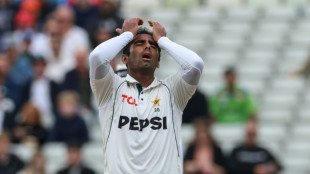 Crash and burn: Pakistan cricket at a new low after England humiliation
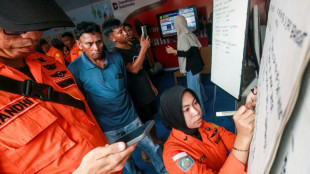
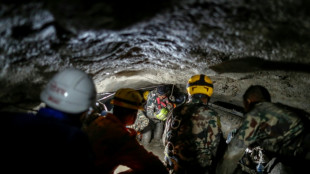 'Second life': Nepal tunnel survivor recalls ordeal
 Hong Kong homes flattened for US$28 bn high-tech hub
 'Be careful what you wish for': 'Obsession' director and star reflect on success
 Messi scores but Miami held by Nashville
 US Open champ Rybakina on top of world after injury scare
 Rybakina reigns serene as new world number one

 Defiant Sabalenka motivated by US Open defeat

 Houthis say hit Saudi base after renewed fighting with Yemeni govt forces

 Akron fan's honorary play-calling stint ends with opening-drive fumble

 Japanese floating parking platform is designed to lift cars above floodwater

 Anthropic details Claude misuse as US targets major illicit online marketplace

 Fifth Circuit upholds dismissal of Jackson residents' constitutional water claims

 Winston County trash-debt prosecutions face challenge from civil-rights lawyers

 Marmot research gains over $140,000 from meme-coin fees alongside wildlife contest

 Cristian Mungiu's Fjord examines a family's conflict with Norwegian child authorities

 United States beats Spain 76-66 to set up World Cup final against France

 Christa Pike seeks clemency before September 30 execution in Tennessee

 Utah hosts Arkansas as both programs begin seasons under new coaches

Once hailed as a genius, South Korean entrepreneur Do Kwon -- now facing multiple criminal charges over his failed cryptocurrency -- was a brash industry figure whose fame disintegrated into global notoriety.
After months on the run, the 31-year-old, whose full name is Kwon Do-hyung, was arrested Thursday in Montenegro after being caught trying to catch a flight using fake Costa Rican travel documents.
He is accused of fraud over the dramatic implosion last year of his company Terraform Labs, which wiped out about $40 billion of investors' money and shook global crypto markets.
Immediately after his arrest the United States hit him with a slew of charges over what they called a "multi-billion-dollar crypto asset securities fraud" and South Korea, where he faces separate charges, said it wants to extradite him.
The cryptocurrency he created, an "algorithmic stablecoin" called Terra, was in reality a glorified Ponzi scheme, experts say.
Yet as recently as March 2022, Kwon was being described in glowing South Korean media reports as a "genius" as thousands of private investors lined up to pour cash into his company.
"Kwon and his story are a product of our times," Cho Dong-keun, an economics professor emeritus at Myongji University, told AFP.
"He knew how to win the hearts of those who so desperately wanted to make a fortune in one stroke. He also knew how to exploit their anxiety and turn it into massive profits."
- Elite connections -
Born in 1991, Kwon attended South Korea's elite Daewon Foreign Language High School where, according to a book he wrote about his school days, he founded an English-language student paper and competed in various English debating championships.
He went on to major in computer science at Stanford University in the US, and reportedly interned at Apple and Microsoft before returning to Asia to start his own business.
In 2018, he co-founded Terraform Labs with Daniel Shin -- who is linked to South Korea's elite Samsung family through his uncle -- and developed the TerraUSD and Luna currencies.
He quickly rose to fame, partly thanks to Shin's connections, successfully branding himself as a young industry luminary.
TerraUSD was marketed as a "stablecoin", a type of cryptocurrency which is typically pegged to stable assets such as the US dollar to prevent drastic price fluctuations.
In 2019, he featured in Forbes' 30 under 30 Asia list.
Forbes wrote that Kwon's "price-stable cryptocurrency, or stablecoin, attracted 40 million users to work with the company at launch in January 2018".
"With the aim of building a blockchain-based payment system, Terra has raised $32 million from crypto-giants such as Binance," it said.
- 'S Korean Elizabeth Holmes' -
But experts had long warned Kwon's model was fundamentally flawed, with some outright calling it a Ponzi scheme.
Unlike other stablecoins backed by real-world assets such as cash or gold, TerraUSD was algorithmic -- pegged only to sister currency Luna, using maths and incentive mechanisms to maintain their peg.
"Algorithmic stablecoins like Terra/Luna were doomed from the very beginning," Christian Catalini, founder of MIT's Cryptoeconomics Lab, told AFP.
"Things can work for a while, while the ecosystem is growing, but are destined to run into a death spiral at some point."
A full investigation of Kwon should help clarify what happened when Terra/Luna collapsed, he said, adding this was necessary to improve the crypto industry as a whole.
"We need to make sure that bad actors are not able to use the technology to design scams and perpetuate other forms of fraud or financial crime," he said.
Kwon's impressive rise and precipitous fall are now being compared to those of convicted American fraudster Elizabeth Holmes, the disgraced founder of the medical technology startup Theranos.
Kwon "is just like Holmes, another elite who went to Stanford", the Korea Economic Daily newspaper wrote.
Cory Klippsten, CEO of crypto trading app Swan.com, made a similar parallel on Twitter last year.
Kwon had "major Elizabeth Holmes vibes", he wrote ahead of the collapse. "Creepy levels of cockiness on display, 99.99% of the time means fraud."
Kwon slipped out of South Korea before disaster struck in May last year, and has effectively been in hiding ever since -- even as he claimed on Twitter that he was not "on the run".
South Korea eventually revoked his passport, and asked Interpol to place him on the red notice list.
"A responsible adult and entrepreneur would have stayed and explained," professor Cho at Myongji University said.
"The fact that he tried to avoid authorities by even using forged passports shows his character."
T.Perez--AT