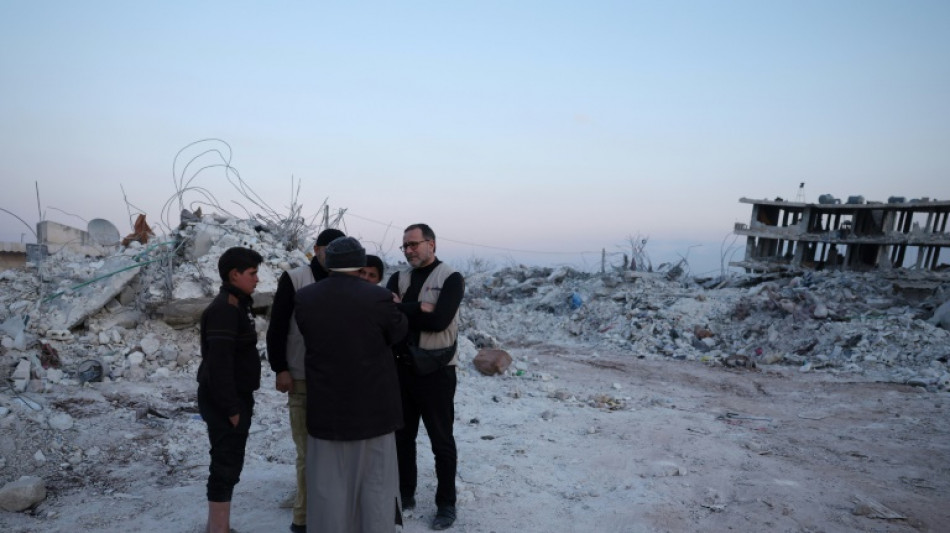
Quake-hit Syrians brace for subdued Ramadan / Photo: OMAR HAJ KADOUR - AFP/File

 Gauteng Health Department Warns of Rising Antibiotic Resistance Threat

 Bishop Museum Races to Save Rare Megamouth Shark Specimen

 Impauer Technologies Inc. Announces Third Quarter 2026 Financial Results and Equity Compensation Grants

 NiobiumX Mining Explains How it Will Hunt for Niobium at Shipshaw: Magnetic Lows, Thorium Highs, and Machine Learning Built for a District With One Producing Mine

 InterContinental Hotels Group PLC Announces Transaction in Own Shares - November 26

 Black Friday Discounts Cut Prices on Two Top-Rated Wiper Blades

 Luxembourg Pay Rise Delayed as Regional and World Headlines Develop

 Audience to Choose the Set List at Luxembourg's First FAMIL Jukebox Night

 Raheem Sterling Receives Suspended Sentence After Lamborghini Crash

 Luxembourg Housing Petition Passes Threshold for Parliamentary Consideration

Umm Esmat, a mother living in war-torn Syria, is preparing for the onset of Ramadan this year with a heavy heart, after a deadly earthquake forced her from her home.
Now displaced in the rebel-held countryside of northern Syria, she places on the bare ground of her shelter a few bags of bulgur, dates, rice and sweets for breaking the fast during the Muslim holy month which begins on Thursday.
"Ramadan this year will not be like the year before, or the year before that," she said with a sigh, sitting in a desolate tent near her house, furnished only with mattresses and a heater.
The walls of her home either collapsed or cracked in the powerful 7.8-magnitude earthquake that struck on February 6, killing nearly 6,000 people in Syria and tens of thousands more in neighbouring Turkey.
The disaster heaped more misery on the people of northwestern Syria who have been battered by 12 years of war.
The conflict, which erupted in 2011 with the brutal repression of peaceful protests, cost the lives of more than 500,000 people and uprooted around half of the country's pre-war population from their homes.
At a nearby camp in the heavily quake-damaged town of Jindayris, Hilal Safarjali sells chocolate bars, biscuits and sweets from a makeshift stall to get by after he lost his home.
"I cannot say happy Ramadan. We are not OK after the earthquake," said the man in his 50s, displaced from Damascus.
The United Nations warned last week that Syria faced "unprecedented levels of poverty and food insecurity".
Yet funding gaps could force the World Food Programme to stop providing assistance to nearly four million Syrians by summer unless more donations come in, the UN agency has said.
Safarjali's neighbour Umm Jumaa said she was still mourning her husband who was killed in the tremor.
"This Ramadan without my husband will be very difficult," she said with tears in her eyes.
"We lost him, and he was the head of the household."
The daytime fasting month of Ramadan is one of the five pillars of Islam.
Observant Muslims refrain from eating and drinking from dawn to dusk. They traditionally gather with family and friends to break their fast in the evening.
F.Ramirez--AT
