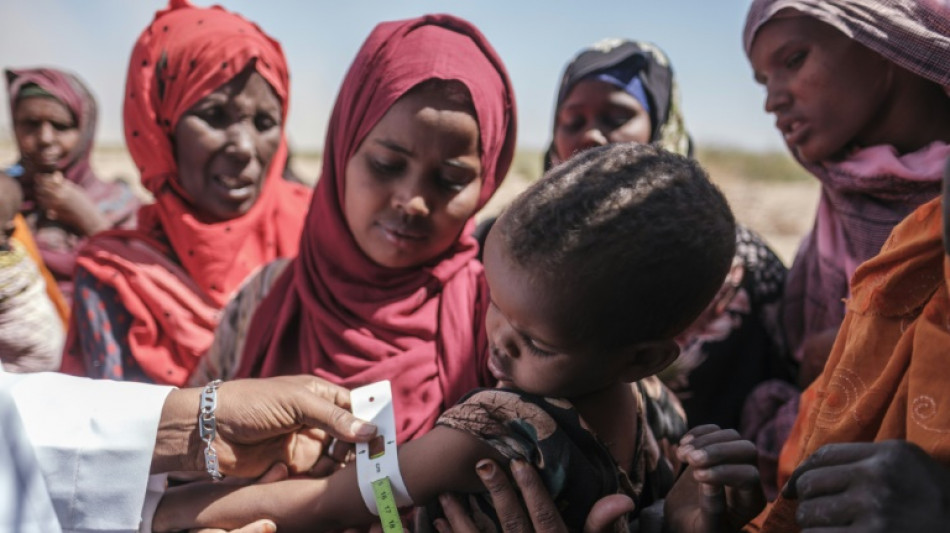
Somalia drought could lead to 135 deaths a day: UN study / Photo: EDUARDO SOTERAS - AFP/File

 Gauteng Health Department Warns of Rising Antibiotic Resistance Threat

 Bishop Museum Races to Save Rare Megamouth Shark Specimen

 Impauer Technologies Inc. Announces Third Quarter 2026 Financial Results and Equity Compensation Grants

 NiobiumX Mining Explains How it Will Hunt for Niobium at Shipshaw: Magnetic Lows, Thorium Highs, and Machine Learning Built for a District With One Producing Mine

 InterContinental Hotels Group PLC Announces Transaction in Own Shares - November 26

 Black Friday Discounts Cut Prices on Two Top-Rated Wiper Blades

 Luxembourg Pay Rise Delayed as Regional and World Headlines Develop

 Audience to Choose the Set List at Luxembourg's First FAMIL Jukebox Night

 Raheem Sterling Receives Suspended Sentence After Lamborghini Crash

 Luxembourg Housing Petition Passes Threshold for Parliamentary Consideration

The record drought sweeping the Horn of Africa may lead to 135 deaths a day in Somalia between January and June this year, the health ministry, WHO and UNICEF said in a study released Monday.
Earlier this month, the World Health Organization (WHO) warned that nearly 100,000 people in the fragile country were facing catastrophic levels of hunger due to the worst drought to hit the region in four decades.
Monday's study used a statistical model to estimate that up to 135 Somalis could lose their lives to drought-related causes every day during the first six months of this year, with the total deaths projected to be between 18,100 and 34,200.
It also said that the extreme weather conditions may have led to 43,000 "excess deaths" last year compared to a 2017 drought, with children under the age of five accounting for half the victims.
The study was commissioned by UNICEF and WHO and carried out by the London School of Hygiene and Tropical Medicine and Imperial College London.
"We are racing against time to prevent deaths and save lives", said Mamunur Rahman Malik, WHO representative to Somalia.
"The cost of our inaction will mean that children, women and other vulnerable people will pay with their lives while we hopelessly, helplessly witness the tragedy unfold."
Five straight failed rainy seasons in parts of Kenya, Ethiopia and Somalia have killed millions of livestock, destroyed crops, and forced more than one million people from their homes in search of food and water.
Weather forecasters say a sixth rainy season is also expected to fail, confirming the fears of aid agencies who have warned of an unprecedented humanitarian catastrophe on the horizon.
While famine thresholds have not been reached, the United Nations says more than half of Somalia's population will need humanitarian assistance this year.
Somalia was hit by a famine in 2011 which killed 260,000 people, more than half of them children under six, partly because the international community did not act fast enough, according to the UN.
In 2017, more than six million people in the country, more than half of them children, needed aid because of a prolonged drought across East Africa.
But early humanitarian action averted famine that year.
The conflict-wracked nation is considered one of the most vulnerable to climate change but is particularly ill-equipped to cope with the crisis as it battles a deadly Islamist insurgency.
A.Taylor--AT
