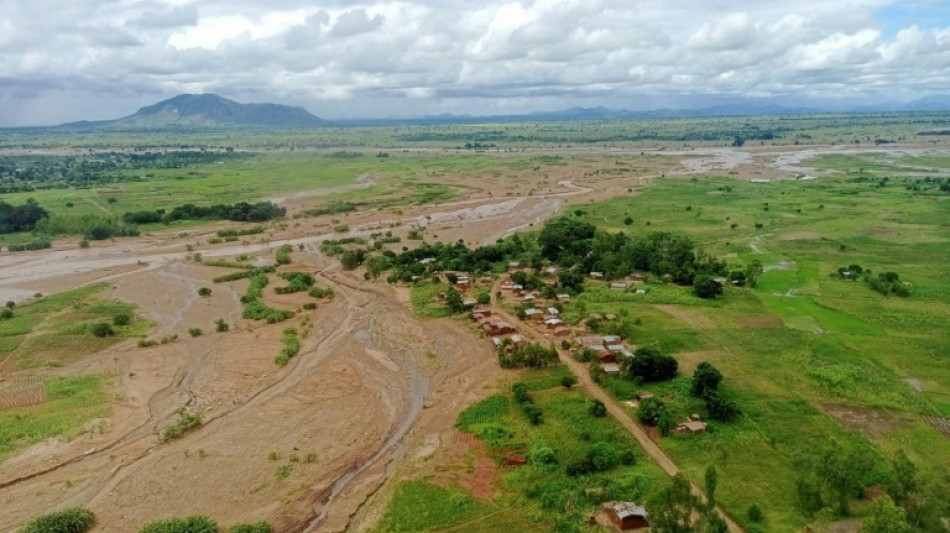
Cut off by cyclone, Malawian villagers face hunger, perilous journeys / Photo: Jack McBrams - AFP

 Gauteng Health Department Warns of Rising Antibiotic Resistance Threat

 Bishop Museum Races to Save Rare Megamouth Shark Specimen

 Impauer Technologies Inc. Announces Third Quarter 2026 Financial Results and Equity Compensation Grants

 NiobiumX Mining Explains How it Will Hunt for Niobium at Shipshaw: Magnetic Lows, Thorium Highs, and Machine Learning Built for a District With One Producing Mine

 InterContinental Hotels Group PLC Announces Transaction in Own Shares - November 26

 Black Friday Discounts Cut Prices on Two Top-Rated Wiper Blades

 Luxembourg Pay Rise Delayed as Regional and World Headlines Develop

 Audience to Choose the Set List at Luxembourg's First FAMIL Jukebox Night

 Raheem Sterling Receives Suspended Sentence After Lamborghini Crash

 Luxembourg Housing Petition Passes Threshold for Parliamentary Consideration

A husband holds his heavily pregnant wife's hand as the two wade across roaring floodwaters in southern Malawi.
She is due any moment but their village has been cut off by Cyclone Freddy, leaving them no other option than to make a perilous 15-kilometre trip to the nearest clinic on foot.
"We will find a way to get her to the hospital today," Pilirani Aironi says as his wife Mercy, in a traditional yellow and red dress, stands barefoot by his side.
Freddy hit the southern African country earlier this week, triggering flooding and mudslides that swept away homes, roads and bridges.
It dumped so much rainfall -- about six months' worth in six days -- that new waterways have appeared in some areas.
When AFP meets them on Saturday, Mercy and Pilirani Aironi have already crossed three such streams.
"We know there are more rivers along the way but we have no choice," he says.
Their village in Muloza, near the Mozambican border, was badly affected by the cyclone, which has killed 438 people, injured 918 and displaced more than 345,000, according to the latest government update.
Located on a mountain side, it was almost completely wiped away by a rockfall unleashed by floodwaters.
Today, large white boulders, sand and floodwaters cover the area where homes once stood.
- Relatives missing -
The injured also had to be taken to the hospital on foot. Among them were eight of Winditoni Makava's relatives.
"We carried them on our shoulders or on some stretchers," says Makava, 75.
Nine other members of his family died in the flooding. Only five of their bodies have been found so far.
Leaving town is difficult -- and relief is also struggling to come in. AFP reached the area on an army helicopter that delivered vital medical aid. But food is scarce.
"We are surviving by the grace of God," says local traditional leader Manuel Nachidwa. "Most of us are surviving on the bananas that" are left on the trees, he says.
Cyclone Freddy, which dissipated this week after a record-breaking rampage, has caused more than 570 deaths in southern Africa.
In Malawi it affected more than half a million people, according to the UN.
The storm first struck southern Africa in late February, hitting Madagascar and Mozambique.
It then moved back out over the Indian Ocean, where it drew more power from the warm waters before making a rare course reversal to slam into the mainland a second time.
At least 89 people died in Malawi's Mulanje district, according to government figures. But locals say the actual toll is much higher.
"A lot of people are still buried under these rocks," says Nachidwa.
T.Sanchez--AT
