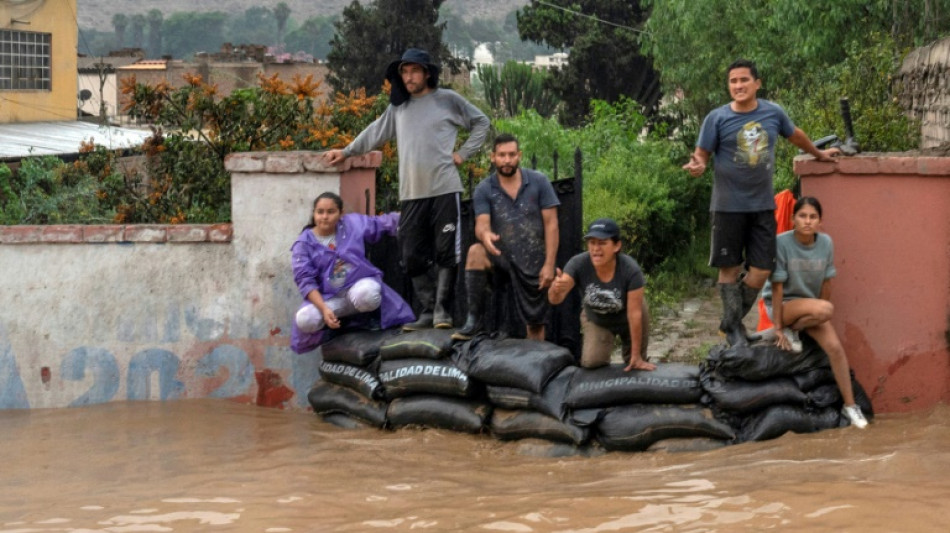
Sorrow in Peru as mudslides destroy homes / Photo: Cris BOURONCLE - AFP

 Gauteng Health Department Warns of Rising Antibiotic Resistance Threat

 Bishop Museum Races to Save Rare Megamouth Shark Specimen

 Impauer Technologies Inc. Announces Third Quarter 2026 Financial Results and Equity Compensation Grants

 NiobiumX Mining Explains How it Will Hunt for Niobium at Shipshaw: Magnetic Lows, Thorium Highs, and Machine Learning Built for a District With One Producing Mine

 InterContinental Hotels Group PLC Announces Transaction in Own Shares - November 26

 Black Friday Discounts Cut Prices on Two Top-Rated Wiper Blades

 Luxembourg Pay Rise Delayed as Regional and World Headlines Develop

 Audience to Choose the Set List at Luxembourg's First FAMIL Jukebox Night

 Raheem Sterling Receives Suspended Sentence After Lamborghini Crash

 Luxembourg Housing Petition Passes Threshold for Parliamentary Consideration

One mudslide after another finally destroyed the house of Elvis Palomino in Chaclacayo, east of Peru's capital Lima, where others are stacking sandbags they hope will save them from a similar fate.
As heavy rains continue to drench the region, they fear the rising waters of the Rimac -- Quechua for "talking river" -- could also turn them into casualties of the natural disasters that have claimed several dozen lives this year.
"It took my entire house, left me with nothing," said Palomino, a 58-year-old security guard with four children who lives in a middle-class suburb of brick houses.
He barely managed to contain his tears as he stood looking at the only two walls left of what used to be his family home, destroyed by torrents of mud and stone, known locally as huaicos, that swept through Chaclacayo this week.
Three other homes nearby were also razed.
"It is not easy to accept this reality," Palomino told AFP. "I do not wish this on anyone. I don't have a bed, I don't have a radio, all my stuff is gone."
The clothing on his back was all he had left.
The rainy season that started in January and could last until April has left 50 dead and some 8,000 affected by damage countrywide, according to relief agencies.
Unusually intense this year, the downpours have seen rivers burst their banks and caused landslides in the Peruvian Andes.
- 'Frightened' of the river -
In Chaclacayo, some 30 kilometers (18.6 miles) east of Lima, rivers of mud flooded the main highway, stranding hundreds of vehicles with cargo and passengers.
Ray La Rosa, a neighbor of Palomino, said that for him, "the most worrying thing is that we are without water and electricity because of the huaicos two days in a row."
Nearby, 56-year-old Charo Matos was scooping water from her flooded house with a bucket, saying she was now "frightened" of the rising Rimac.
Authorities have set up a camp on dry ground with 15 tents to receive families evacuated from the banks of the river, as the meteorological office warned moderate to intense rains would persist until Friday.
The downpours were triggered by cyclone Yaku, a type of extreme event experts say are associated with the weather phenomenon El Nino, which warms the south Pacific and pummels the coasts of Peru and Ecuador with heavy rains.
K.Hill--AT
