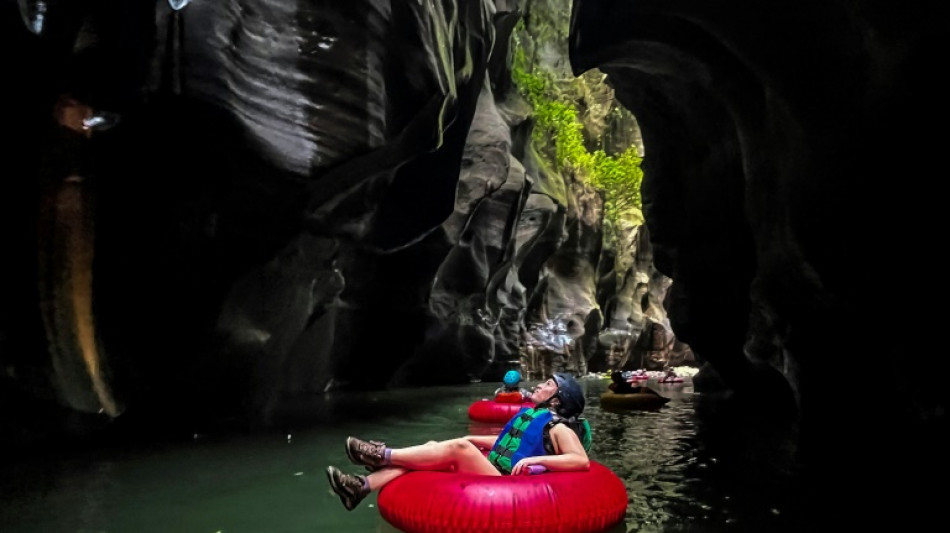
Hidden Colombia canyon transformed from rebel route to tourist draw / Photo: Juan BARRETO - AFP

 Gauteng Health Department Warns of Rising Antibiotic Resistance Threat

 Bishop Museum Races to Save Rare Megamouth Shark Specimen

 InterContinental Hotels Group PLC Announces Transaction in Own Shares - November 26

 Twickenham Grounds Team Prepares Pitch for Six Matches in Three Days

 Luxembourg Pay Rise Delayed as Regional and World Headlines Develop

 Audience to Choose the Set List at Luxembourg's First FAMIL Jukebox Night

 Raheem Sterling Receives Suspended Sentence After Lamborghini Crash

 Black Friday Discounts Cut Prices on Two Top-Rated Wiper Blades

 TCC Network Linked to 200% Surge in Global School Attacks
For years, the crystal clear river flowing between giant boulders served as a strategic guerilla route in Colombia's bloody armed conflict.
But today tourists bob happily down it in multi-colored inflatables, accompanied by birdsong and the rush of water.
The Guape Canyon, a 35-meter (115-foot) deep natural wonder in the town of La Uribe in the southern Meta department, was hidden for decades by the fighting between Bogota and the Revolutionary Armed Forces of Colombia (FARC).
Its passageways -- illuminated by scant bars of sunlight that cross immense caves -- were rediscovered thanks to the historic peace agreement signed by the two sides in 2016.
Now, instead of armed rebels, tourists float down its sometimes turbulent and sometimes serene waters. Some close their eyes and let themselves be carried away by the sounds and sensations of the jungle.
"Before, people used to pass through here armed with rifles.... To see this, the way it has changed, is impressive," says one of the guides, all young victims of violence, before embarking on a tour accompanied by an AFP photojournalist.
La Uribe rose to fame in the 1980s and 1990s as an enclave of the most powerful guerrillas on the continent.
Anchored in the Eastern Plains, between the country's Andean center and the Amazon, the town was the scene of one of the failed peace negotiations between the state and the FARC.
It was also the epicenter of a bloody rebel onslaught that destroyed police and army stations.
In 2017, after the peace deal was signed, the story took a turn. Rebels still in camouflaged uniforms and carrying rifles emerged from the thick jungle that hides the canyon to await their disarmament and transformation into a political party.
"In spite of all the vicissitudes and problems that have been occurring for decades... today nature itself is in charge of giving rebirth to the communities," declares an official bulletin about a place that until recently was largely unknown to Colombians.
The peace agreement disarmed the bulk of the FARC and pacified certain regions.
But some armed and dissident groups continue to fight for control of Colombia's illicit drug trafficking business and illegal mining in an internal conflict that saw some nine million people killed, injured, kidnapped or displaced over more than 50 years of conflict.
N.Walker--AT
