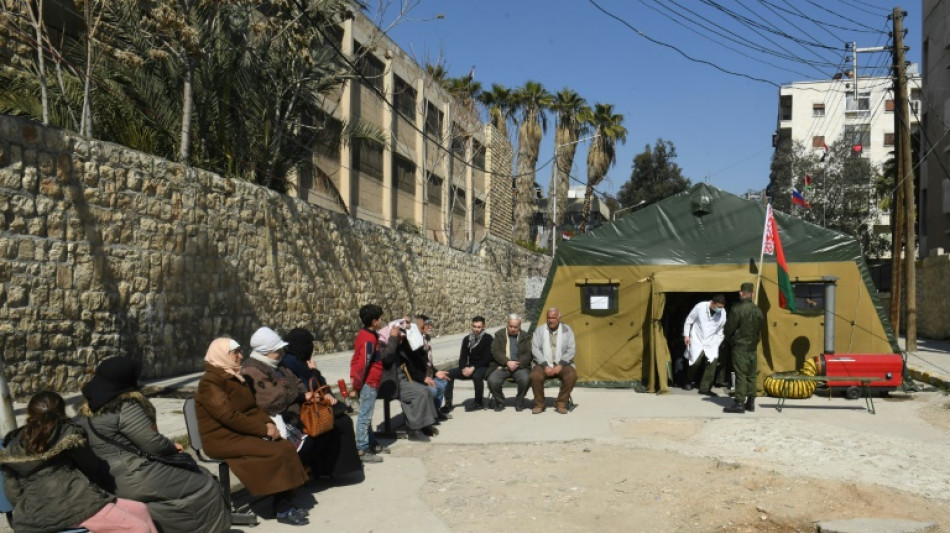
New 6.4-magnitude quake hits southern Turkey / Photo: - - AFP

 Gauteng Health Department Warns of Rising Antibiotic Resistance Threat

 Bishop Museum Races to Save Rare Megamouth Shark Specimen

 InterContinental Hotels Group PLC Announces Transaction in Own Shares - November 26

 Twickenham Grounds Team Prepares Pitch for Six Matches in Three Days

 Luxembourg Pay Rise Delayed as Regional and World Headlines Develop

 Audience to Choose the Set List at Luxembourg's First FAMIL Jukebox Night

 Raheem Sterling Receives Suspended Sentence After Lamborghini Crash

 Black Friday Discounts Cut Prices on Two Top-Rated Wiper Blades

 TCC Network Linked to 200% Surge in Global School Attacks
A 6.4-magnitude earthquake was recorded Monday in Turkey's southern province of Hatay, the hardest hit by a February 6 tremor which left more than 41,000 dead in the country, the disaster response agency AFAD said.
The quake hit the town of Defne at 8:04 pm (1704 GMT) and was strongly felt by AFP teams in Antakya and Adana, 200 kilometres (300 miles) to the north.
AFP teams felt the tremor also in Lebanon and Syria.
The disaster management agency said on Twitter another 5.8-magnitude tremor followed three minutes later and its epicentre was Samandag district in Hatay.
An AFP journalist reported scenes of panic in Antakya, adding that the new tremors raised clouds of dust in the devastated city.
The walls of badly damaged buildings crumbled while several people, apparently injured, called for help.
On a street in Antakya, Ali Mazlum, 18, told AFP: "We were with AFAD who were looking for the bodies of our family when the quake hit.
"You don't know what to do... we grabbed each other and right in front of us, the walls started to fall. It felt like the earth was opening up to swallow us up."
Mazlum, who has lived in Antakya for 12 years, was looking for the bodies of his sister and her family as well as his brother-in-law and his family.
A few metres away, a digger was clearing a road was covered with rubble after the new quake.
- Aftershocks -
"This one just fell," a rescuer said, referring to a collapsed building.
Hatay province is on the Mediterranean Sea and the disaster agency said the sea level could rise by 50 centimetres, warning people to stay away from the coast.
Turkish Vice President Fuat Oktay on Twitter urged people to stay away from damaged buildings and to follow officials' warnings.
According to AFAD, more than 6,000 aftershocks have been recorded since the 7.8-magnitude hit Turkey and Syria, leaving millions homeless.
Officials said after the February 6 quake that aftershocks would be felt for a year because of the force of the first tremor.
AFP correspondents in the city of Aleppo, Syria's second city, said people flocked to the streets after the new quake.
An AFP photographer in the city of Azaz, further north, said that of buildings that had been damaged in the previous quake collapsed.
The February 6 earthquake killed 41,156 people in Turkey and 3,688 in Syria, but experts expect the toll to rise as the rubble is cleared and rescue operations come to an end.
Eleven provinces were hit by the previous tremors and on Sunday, officials said rescue operations continue only in two: Hatay and Kahramanmaras.
Turkish President Recep Tayyip Erdogan on Monday promised to build nearly 200,000 new homes within a year that were more sturdy and no more than four-storeys high.
burs-raz/ach
A.Moore--AT
