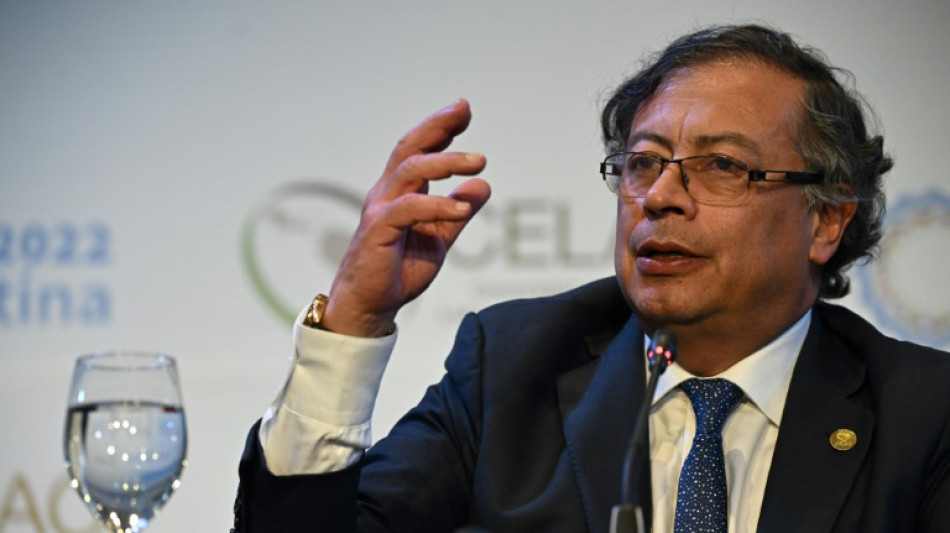
Colombia mulls proposal to benefit repentant narcos / Photo: Luis ROBAYO - AFP/File

 Gauteng Health Department Warns of Rising Antibiotic Resistance Threat

 Bishop Museum Races to Save Rare Megamouth Shark Specimen

 InterContinental Hotels Group PLC Announces Transaction in Own Shares - November 26

 Twickenham Grounds Team Prepares Pitch for Six Matches in Three Days

 Luxembourg Pay Rise Delayed as Regional and World Headlines Develop

 Audience to Choose the Set List at Luxembourg's First FAMIL Jukebox Night

 Raheem Sterling Receives Suspended Sentence After Lamborghini Crash

 Black Friday Discounts Cut Prices on Two Top-Rated Wiper Blades

 TCC Network Linked to 200% Surge in Global School Attacks
Colombia's government on Thursday said it would submit a bill to parliament offering reduced sentences and other benefits to drug traffickers who quit and compensate victims.
Drug traffickers who cease their activities would see their prison sentences limited to between six and eight years.
It is part of leftist President Gustavo Petro's "total peace" strategy to end more than half a century of armed conflict involving radical left-wing rebels, right-wing paramilitaries, drug traffickers and the security forces.
"These criminal organizations must acknowledge responsibility, tell victims the truth, dismantle criminal apparatus, hand over hostages, recruited children, weapons, inventories of assets, drug trafficking routes, money laundering mechanisms, say who their collaborators are and if this happens then they can submit themselves to justice," legislator Alirio Uribe, who coauthored the bill, told Blu Radio.
The bill was to be submitted later in the day to a government assessment body that reviews criminal policy before an expected debate in Congress at a later date.
Among the other benefits the government is offering to repentant drug traffickers is keeping up to six percent of their ill-gotten gains.
"After their prison sentences they would have an additional period of four years ... a type of conditional release with reparative activities for victims," said Justice Minister Nestor Osuna.
The offer would be open to nonpolitical hierarchical armed groups, but not to those considered political or belligerent.
It would not include, for example, the National Liberation Army (ELN) Marxist guerrillas, with whom the government has restarted peace negotiations that stalled under the government of conservative Ivan Duque.
Petro has blasted Duque's "failed" antidrug trafficking policies, which were far more bellicose, and says he wants to focus on dissuading drug consumption in developed countries.
Colombia is the world's largest producer of cocaine, with the United States its main market.
D.Johnson--AT
