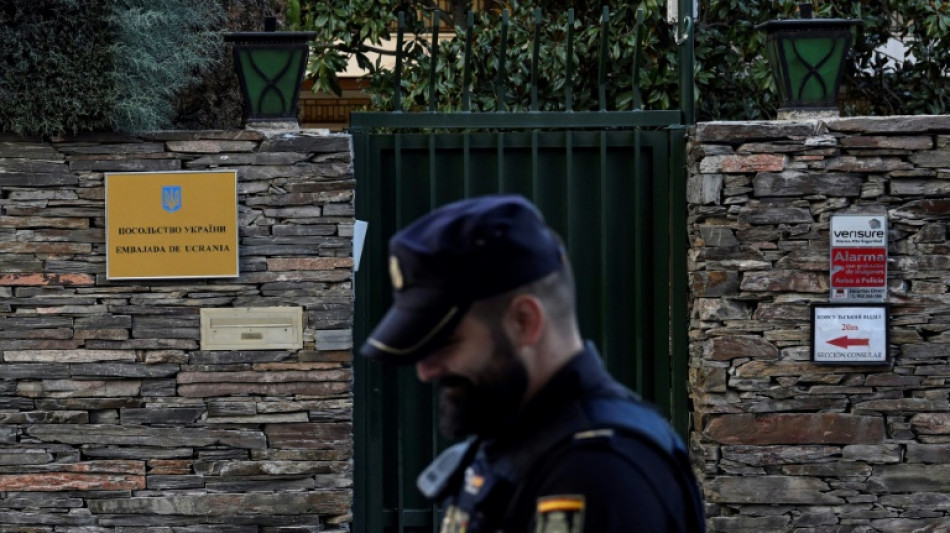
Spain jails letterbomb suspect to avoid 'flight to Russia' / Photo: OSCAR DEL POZO - AFP/File

 Gauteng Health Department Warns of Rising Antibiotic Resistance Threat

 Bishop Museum Races to Save Rare Megamouth Shark Specimen

 InterContinental Hotels Group PLC Announces Transaction in Own Shares - November 26

 Raheem Sterling Receives Suspended Sentence After Lamborghini Crash

 Luxembourg Pay Rise Delayed as Regional and World Headlines Develop

 Audience to Choose the Set List at Luxembourg's First FAMIL Jukebox Night

 Twickenham Grounds Team Prepares Pitch for Six Matches in Three Days

 Black Friday Discounts Cut Prices on Two Top-Rated Wiper Blades

 TCC Network Linked to 200% Surge in Global School Attacks

The pensioner who allegedly sent letter bombs to Spain's prime minister and the Ukrainian embassy was placed in pre-trial detention on Friday on grounds he could flee to "Russian territory".
The 74-year-old suspect, arrested Wednesday at his home near the northern town of Burgos, appeared before a judge at the Audiencia Nacional, Spain's top criminal court, facing one charge of terrorism, court documents showed.
He is accused of having sent six letter bombs to targets including Spanish ministers and embassies to push Madrid into halting its support for Kyiv in its fight against Russia's invasion.
The home-made devices were sent in late November and early December to Spain's prime minister and defence minister, the Ukrainian and US embassies, the EU Satellite Centre near Madrid and to a Spanish arms manufacturer in the northeastern city of Zaragoza.
In his ruling, the judge said the suspect sought to "force" the Spanish authorities to "refrain from supporting Ukraine in the face of Russia's aggression", which made him a flight risk.
"The importance of his violent actions as a means of propaganda for Russia's invasion of Ukraine could facilitate his flight to Russian territory with help from Russian citizens," he concluded.
If convicted, he could face up to 20 years in jail on terror offences.
But the judge said there were no indications of his involvement "with any other terrorist group".
Nobody was killed by the devices but a Ukrainian embassy staffer sustained light injuries while opening one of the packages.
At his home, investigators found a workshop containing soldering equipment, tools, metal parts and screws compatible with the letter bombs sent, and indications of preparatory work to construct more, the interior ministry said.
The suspect was "very active on social networks" and had "technical and computer expertise", it said.
Investigators had determined the letters were sent by the same person and found three of them were posted from Burgos, the ministry added. They then narrowed it down by an "exhaustive analysis" of the stamps, envelopes and parts used to build the devices.
After the embassy attack, Ukraine's Spain ambassador Serhii Pohoreltsev pointed the finger at Russia, and Kyiv ramped up security at its embassies around the world.
O.Brown--AT
