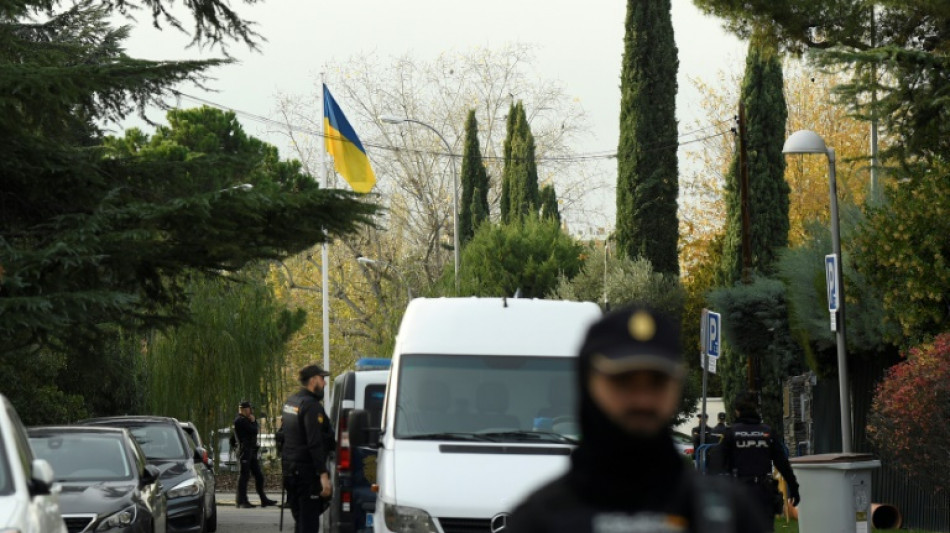
Spain detains suspect over Ukraine embassy, PM letter bombs / Photo: OSCAR DEL POZO - AFP/File

 Gauteng Health Department Warns of Rising Antibiotic Resistance Threat

 Bishop Museum Races to Save Rare Megamouth Shark Specimen

 InterContinental Hotels Group PLC Announces Transaction in Own Shares - November 26

 Raheem Sterling Receives Suspended Sentence After Lamborghini Crash

 Luxembourg Pay Rise Delayed as Regional and World Headlines Develop

 Audience to Choose the Set List at Luxembourg's First FAMIL Jukebox Night

 Twickenham Grounds Team Prepares Pitch for Six Matches in Three Days

 Black Friday Discounts Cut Prices on Two Top-Rated Wiper Blades

 TCC Network Linked to 200% Surge in Global School Attacks

Spanish police arrested a suspect Wednesday in the letter bombing campaign that targeted the prime minister and the Ukrainian embassy, authorities said.
The Spanish citizen was taken into custody in Miranda de Ebro in northern Spain and police were searching the home of the man, who a police source said was 74 years old.
Nobody was killed by the six letter bombs sent in late November and early December to various sites in Spain, but an employee of the Ukrainian embassy was lightly injured while opening one of the packages.
Among the sites targeted was the official residence of Prime Minister Pedro Sanchez, Spain's defence ministry and an air base near Madrid from which weapons donated by Spain are sent to Ukraine.
The headquarters of a military equipment firm in the northeastern city of Zaragoza which makes the grenade launchers that Spain has sent to Ukraine was also targeted.
Kyiv ramped up security at its embassies abroad after the embassy in Madrid was targeted by a letter bomb.
The arrest comes after the New York Times reported Sunday that Russian military intelligence officers had "directed" associates of a white supremacist militant group based in Russia to carry out the campaign in Spain.
US officials told the newspaper that the Russian officers who directed the campaign appeared intent on "keeping European governments off guard" and "may be testing out proxy groups in the event Moscow decides to escalate a conflict".
Investigators suspect the Russian Imperial Movement (RIM), a radical group that has members and associates across Europe, of being behind the letter bomb campaign.
The group, which is designated a global terrorist organisation by the United States, is believed to have ties to Russian intelligence agencies.
"Important members of the group have been in Spain, and the police there have tracked its ties with far-right Spanish organisations," the newspaper said.
The newspaper based its report on anonymous "US and allied officials".
- 'Terrorist methods' -
According to Stanford University's Center for International Security and Cooperation, RIM "maintains contacts with neo-Nazi and white supremacist groups across Europe".
"The group has provided paramilitary training to Russian nationals and members of like-minded organisations from other countries at its facilities in St. Petersburg," it added.
Ukraine's ambassador to Spain, Serhii Pohoreltsev, had appeared to blame Russia for the letter bomb at its embassy.
"We are well aware of the terrorist methods of the aggressor country," he said during an interview with Spanish public television on November 30 just hours after the letter exploded.
Russia's embassy to Spain condemned the letter bomb campaign.
"Any threat or terrorist act, especially those that target a diplomatic mission, is to be totally condemned," it said in a tweet at the time.
Spain's National Court had opened an investigation for "terrorism" over the letter bombing campaign.
In addition to sending arms to help Ukraine after Russia sent troops into the country in February last year, Spain is also training Ukrainian troops as part of a European Union programme and providing humanitarian aid.
Ch.Campbell--AT
