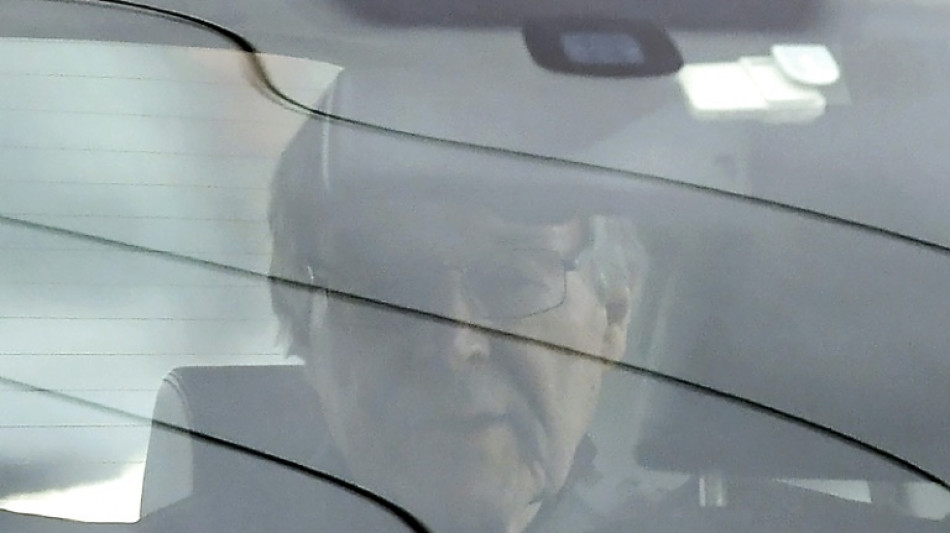
Cardinal Pell: a divisive figure cleared of sexual abuse / Photo: William WEST - AFP

 Gauteng Health Department Warns of Rising Antibiotic Resistance Threat

 Bishop Museum Races to Save Rare Megamouth Shark Specimen

 InterContinental Hotels Group PLC Announces Transaction in Own Shares - November 26

 Raheem Sterling Receives Suspended Sentence After Lamborghini Crash

 Luxembourg Pay Rise Delayed as Regional and World Headlines Develop

 Audience to Choose the Set List at Luxembourg's First FAMIL Jukebox Night

 Twickenham Grounds Team Prepares Pitch for Six Matches in Three Days

 Black Friday Discounts Cut Prices on Two Top-Rated Wiper Blades

 TCC Network Linked to 200% Surge in Global School Attacks

Cardinal George Pell, a powerful Roman Catholic figure who died at the age of 81, leaves a legacy forever marked by a paedophilia conviction that was later overturned.
Pell, once widely seen as the right-hand man to Pope Francis, served 12 months in jail before a court quashed his conviction on five counts of sexually abusing 13-year-old choirboys in the 1990s.
The ruling in April 2020 allowed the cardinal, who died Tuesday evening in Rome, to walk free from Barwon Prison near Melbourne.
Pell left Australia five months later to live at an apartment in Vatican City, but the charges, which Pell always denied, left a permanent mark on his life and his memory.
Asked how he felt when the allegations first surfaced, Pell told a BBC interviewer in 2021: "You've got a sinking feeling in your stomach."
But he added: "I was always determined to fight them, because I was innocent."
Of his time in jail, Pell said: "The worst single thing I suppose were the strip searches. They were brief, humiliating. The ignominy of it is probably the worst of it."
From his time as a priest in rural Australia to the Vatican's inner circle, Pell stood as a champion of Catholic orthodoxy.
At home, he was considered a religious and conservative hero, with a tough stance on euthanasia and gay marriage while rejecting climate science.
- 'Disgraceful rubbish' -
Former conservative Australian prime minister Tony Abbott previously called Pell "one of the greatest churchmen that Australia has seen".
But over the years, Pell was the subject of multiple rumours and accusations of serious wrongdoing, and he fervently denied claims that he covered up abuse by priests in the state of Victoria where he worked.
"What a load of absolute, disgraceful rubbish," Pell told Australian police when they first interviewed him in Rome in late 2016 about the sexual assault of two choirboys in Melbourne's St Patrick's Cathedral when he was Archbishop of the diocese in the 1990s.
After being charged a few months later, Pell dismissed the allegations as "products of fantasy".
Born in June 1941, Pell grew up in Ballarat, a rural Australian gold rush town about 100 kilometres (60 miles) from Melbourne.
He was a keen member of his college debating team and a lead actor in school productions.
His devout Catholic mother was reportedly pleased that her son decided to pursue a career in the church, but his father, an Anglican, was bewildered he'd turned down a contract from one of the country's top Australian rules football teams.
- College of cardinals -
Having chosen the religious path, Pell completed part of his studies in Rome before being ordained as a priest for the Ballarat diocese in 1966.
His star rose and he went on to become Archbishop of Melbourne and then of Sydney at the behest of Pope John Paul II.
In 2003, he was named to the Vatican's powerful College of Cardinals, a position that allowed him to vote in the conclaves that elected popes Benedict and Francis.
In 2014, he was handpicked by Pope Francis to run the Vatican's finances, viewed as the third-most powerful position in the church.
From the pulpit, and publicly, Pell espoused traditional Catholic values.
His star faded somewhat, however, following a national inquiry into alleged child sex abuse by Catholic priests in Australia between 1950 and 2010.
The inquiry heard that there were 4,444 alleged victims of paedophilia, and in some dioceses more than 15 percent of priests were perpetrators.
Repeatedly questioned during hearings about paedophile priests in the Ballarat diocese in the 1970s and 80s, Pell apologised on behalf of the church but insisted he had no memory of claims of sustained mistreatment.
He did, however, admit he "mucked up" in dealing with paedophile priests in the 1970s, but said he was deceived by senior clergy about what was happening during a time of "crimes and cover-ups".
A.Clark--AT
