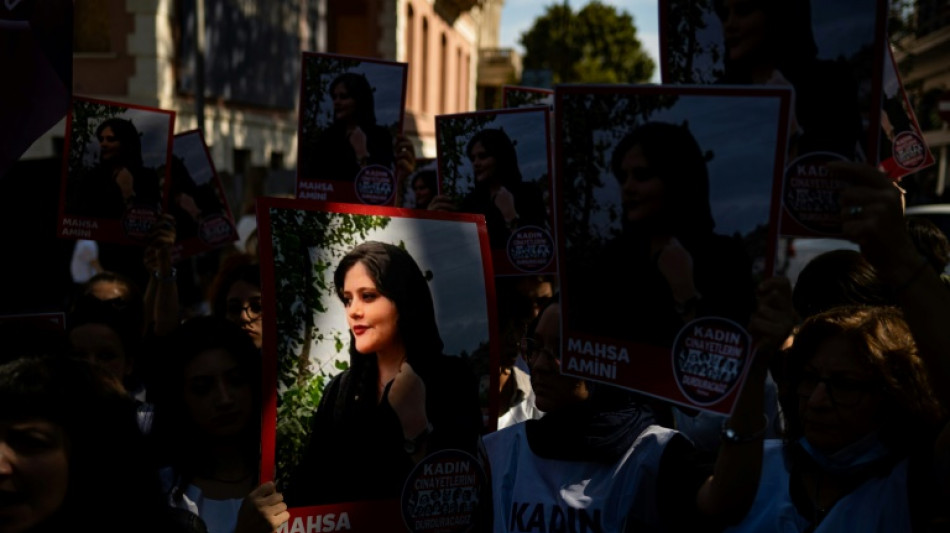
Iranians hit streets again as protests enter fourth month / Photo: Yasin AKGUL - AFP/File

 Bishop Museum Races to Save Rare Megamouth Shark Specimen

 Zach Hickerson Recounts Hayden Panettiere's Final Moments in New Interview

 Luxembourg Housing Petition Passes Threshold for Parliamentary Consideration

 Raheem Sterling Receives Suspended Sentence After Lamborghini Crash

 Audience to Choose the Set List at Luxembourg's First FAMIL Jukebox Night

 Luxembourg Pay Rise Delayed as Regional and World Headlines Develop

 Chennai Urbanist Sashna Develops 'Anniki' Card Game to Gamify Tamil Nadu History

 Transport Minister Defends Land Seizure Powers for Toronto-Quebec City High-Speed Rail

Dozens took to the streets Friday in Iran's restive southeast, footage shared by rights groups showed, as a wave of protests sparked by Mahsa Amini's death entered a fourth month.
Protesters in Zahedan, the Sistan-Baluchistan provincial capital, chanted "Death to the dictator", taking aim at supreme leader Ayatollah Ali Khamenei, according to a video shared by Oslo-based Iran Human Rights (IHR) and verified by AFP.
Other images from Zahedan show crowds of men, some raising posters with anti-regime slogans, and a group of black-clad women marching down what appears to be a nearby street, also chanting slogans.
The Islamic republic has seen waves of protests since the September 16 death in custody of Amini, a 22-year-old Iranian Kurd who had been arrested for allegedly violating the country's strict dress code for women.
Hundreds of people have been killed and thousands arrested in the unrest, leading to international condemnation, sanctions and Iran's removal Wednesday from the a UN women's rights body.
Sistan-Baluchistan, which lies on Iran's far southeastern border with Afghanistan and Pakistan, had been the site of often deadly violence even before nationwide protests erupted.
The province's Baluchi minority, who adhere to Sunni Islam rather than the Shiite branch predominant in Iran, have long complained of discrimination.
US-based rights group HRANA said hundreds rallied after Friday prayers in Zahedan, which has seen weekly protests since the security forces killed more than 90 people in the city on September 30, in what has been dubbed "Bloody Friday".
The trigger for that violence was the alleged rape in custody of a 15-year-old girl by a police commander in the province's port city of Chabahar.
But analysts say the Baluchi were inspired by the protests that flared over Amini's death, which were initially driven by women's rights but expanded over time to include other grievances.
- Hundreds killed -
Last week, a cleric was killed after being kidnapped from his mosque in Khash, a town in Sistan-Baluchistan.
Zahedan chief prosecutor Mehdi Shamsabadi said on Tuesday that the cleric Abdulwahed Rigi's killers had been arrested after allegedly seeking to stir trouble between Sunnis and Shiites.
The largely peaceful demonstrations sparked by Amini's death have been met with a crackdown by the Iranian security forces that has killed at least 458 protesters, according a toll issued on December 7 by the Norway-based IHR.
Iran's top security body, the Supreme National Security Council, said on December 3 that more than 200 people had been killed in the street violence, including security personnel.
The United Nations says Iran's security forces have arrested at least 14,000 people.
Iran's judiciary said it has handed down 11 death sentences in connection with the protests.
Iran executed Mohsen Shekari on December 8 and Majidreza Rahnavard on Monday. Both were 23 years old. The latter was hanged in public rather than in prison as has been usual in the Islamic republic in recent years.
Amnesty International said on Friday that at least 26 people are at risk of execution in connection with the protests in Iran, which according to the London-based rights group is already the world's most prolific user of the death penalty after China.
H.Romero--AT

